More tax-filing households left Miami-Dade than arrived in the IRS's 2022–2023 migration data. Yet the county gained approximately $500 million in income associated with those moves.
How can both be true?
Incoming tax filers reported considerably higher incomes, on average, than those who left.
That's a revealing starting point for wealth migration to South Florida. Behind the headlines about billionaires and waterfront mansions are different decisions about business, taxes, lifestyle, and where to live.
For someone considering the move, the question isn't simply why wealthy people are choosing Florida. It's whether South Florida fits their own financial and everyday priorities.
Define Wealth Migration and Its Evidence
Wealth migration to South Florida involves several different trends: household relocations, changes in reported income, business moves, and real estate purchases.
They overlap, but they aren't interchangeable.
A business can establish a Miami headquarters without moving every employee. Someone can purchase a waterfront condo while maintaining their primary residence elsewhere.
The IRS offers a more systematic view of household movement, although its figures have limitations.
What the IRS tells us about South Florida
TheIRS Statistics of Income migration database tracks address changes between consecutive individual income tax returns.
It records incoming and outgoing returns, along with the adjusted gross income associated with those filers.
Adjusted gross income, or AGI, represents income calculated under federal tax rules after certain adjustments.
It isn't the same as a household's total assets or net worth.
Domestic migration into South Florida, 2022–2023
County | Incoming Returns | Outgoing Returns | Net AGI Flow |
Miami-Dade | 42,843 | 64,022 | +$500M |
Broward | 51,216 | 57,798 | +$350M |
Palm Beach | 39,704 | 40,922 | +$3.04B |
Source:MIAMI REALTORS' March 2026 analysis of IRS migration data. Figures cover domestic county-to-county migration during 2022–2023, including moves within Florida.
Miami-Dade's incoming filers reported average AGI of approximately $127,900, compared with $77,800 among outgoing filers.
Palm Beach County recorded an even larger difference in aggregate income flows, gaining approximately $3.04 billion in net AGI.
These figures don't mean that households physically transferred those amounts into Florida bank accounts.
They represent income reported by people whose tax-return addresses changed. International moves and people without matched returns aren't captured in the same way.
What counts as evidence of wealth migration?
Evidence | What It Measures | What It Doesn't Establish |
IRS data | Tax-filer moves and AGI | Net worth or reasons for moving |
Business announcements | Corporate location decisions | Household purchases |
Property closings | Completed real estate sales | Residency or buyer motivation |
The IRS figures also have a reporting lag. The published 2022–2023 series cannot describe household movements occurring during 2026.
For readers exploring the interstate connection, Joelle'sanalysis of buyers relocating from New York and California to Miami-Dade covers additional considerations.
Examine Lifestyle Priorities
The attraction of South Florida isn't difficult to understand during a pleasant February afternoon.
The Atlantic is nearby, outdoor dining is common, and waterfront residences offer space that may be used throughout much of the year.
But a relocation decision has to work during August, too.
The coastal lifestyle comes with practical obligations
For someone relocating from a colder climate, boating, outdoor recreation, and year-round coastal access may be important attractions.
A terrace that sees occasional use elsewhere could become part of everyday living.
Yet South Florida's heat, humidity, seasonal storms, and hurricane exposure bring property responsibilities.
Buyers considering waterfront estates should investigate seawalls, flood exposure, storm protection, and insurance availability.
TheFEMA Flood Map Service Center offers an address-based starting point for reviewing mapped flood hazards.
A property's actual condition and insurance requirements need separate examination.
The waterfront lifestyle is appealing. Maintaining a waterfront property is part of the same decision.
Privacy looks different in a condo and an estate
A condominium with controlled access, private elevators, and professional management may offer the privacy a buyer wants.
Someone else may prefer a detached home with landscaped grounds and greater control over outdoor space.
Neither property type guarantees privacy.
Neighboring sightlines, shared facilities, entrances, and building layouts all deserve attention.
Joelle's guide towhere privacy still exists in Miami explores those property-level differences.
Full-time living versus a seasonal home
A seasonal residence might need reliable building management, secure storage, and convenient access during shorter visits.
A full-time home introduces different considerations, including everyday travel, maintenance, and regular services.
International connectivity can be another attraction.
Miami International Airport's destination network includes direct connections across numerous international markets.
For frequent travelers, however, the journey from home to the airport deserves as much attention as the destinations served.
A beachfront address may be beautiful without being convenient for an early departure.
Examine Business and Professional Factors
The business side of wealth migration to South Florida deserves more attention than it usually receives.
Miami has attracted documented corporate headquarters announcements and investment-related activity.
Those developments create reasons for some professionals to spend more time in the region.
They don't necessarily produce an equivalent number of new residents.
Citadel provides a documented example
In 2022, investment firm Citadel announced that Miami would become its global headquarters.
The company identifies830 Brickell Plaza as its Miami headquarters and has described plans for a new headquarters development in Brickell.
That establishes a significant corporate presence.
It doesn't reveal how many employees purchased homes, where they bought, or whether their households relocated permanently.
An executive working regularly in Brickell faces a different property search from someone who only visits Miami for quarterly meetings.
How business arrangements influence property choices
Consider three situations:
- A business owner relocating operations: Office access, travel arrangements, and residential location may need to work together.
- An executive maintaining multiple offices: Airport convenience and flexibility could matter more than proximity to one workplace.
- A family office establishing a local presence: Business arrangements and household residency may follow separate timelines.
These are different circumstances, even when all involve substantial capital.
Someone working in Brickell several days each week might consider travel from Miami Beach, Coconut Grove, or Coral Gables.
A buyer with fewer local commitments may broaden the search toward Bal Harbour, Surfside, or farther north.
Joelle'scomparison of Miami-Dade, Broward, and Palm Beach examines those location trade-offs.
A company's move doesn't dictate where its executives should purchase property. The right address depends on how often they need to be somewhere.
Put Taxes in the Right Context
Taxes can play a substantial role in relocation planning, particularly for households with complex income sources.
Florida doesn't impose an individual state income tax, as confirmed by theFlorida Department of Revenue.
That's a meaningful difference from states that collect personal income taxes.
But it would be inaccurate to attribute every luxury purchase to potential tax savings.
Buying a Florida home doesn't automatically change domicile
A household might own a Miami condominium while maintaining another residence, operating businesses elsewhere, or spending considerable time outside Florida.
State residency and income-sourcing rules can still apply.
A New York or California resident considering a permanent move should discuss those circumstances with qualified tax and legal advisers.
Joelle's article onresidency rules affecting New York and California buyers examines the relevant distinctions.
The timing of a move, the location of business activities, and continuing residential ties can all affect the analysis.
What about the cost of owning the property?
A lower state income tax burden doesn't remove property taxes, insurance, association assessments, or maintenance expenses.
For a waterfront estate, seawall work and storm-related protection can represent substantial obligations.
A luxury condominium may have monthly association fees covering building services, reserves, and shared maintenance.
Joelle'sFlorida luxury tax guide for high-net-worth buyers explores the wider financial considerations.
Before making a purchase, buyers should compare projected ownership expenses with their existing arrangements.
A favorable tax structure is one factor in a relocation decision, not a substitute for evaluating the property itself.
South Florida wealth migration involves financial considerations, but household preferences and business requirements remain just as important.
Connect Migration to Housing Carefully
Does wealth migration to South Florida influence luxury property demand?
It can, especially when newcomers compete for residences with limited alternatives.
But migration data doesn't show which households bought property, how much they spent, or why they selected a particular building.
Real estate transaction records provide a separate view.
What high-value sales tell us
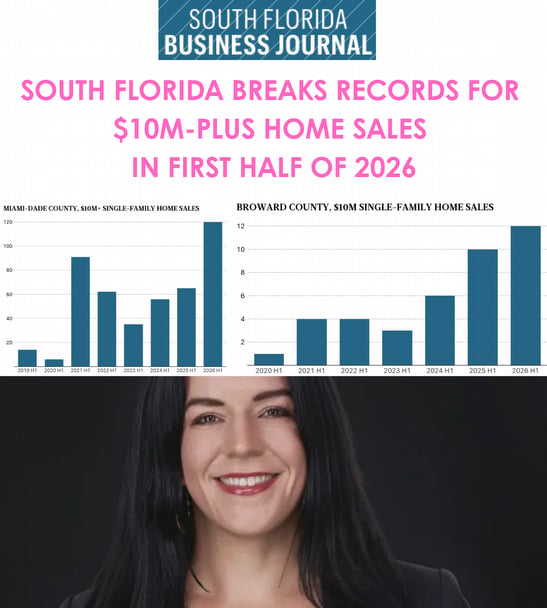
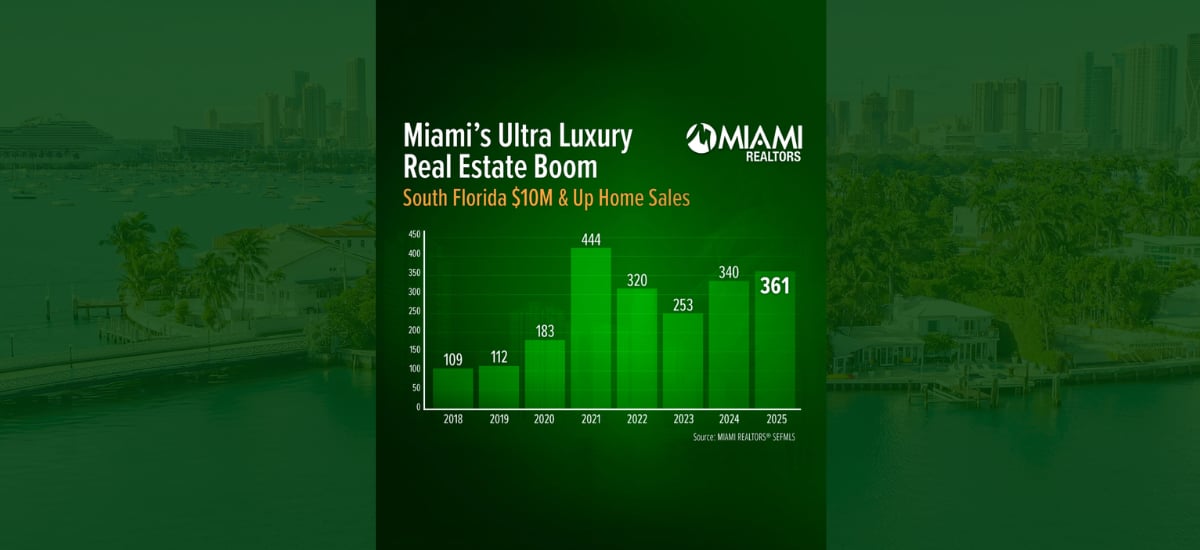
MIAMI REALTORS recorded 361 residential sales priced at $10 million or more across South Florida during full-year 2025.
According to the association'sNovember 2026 housing analysis, that total reached 430 for January–October 2026.
The figures cover Miami-Dade, Broward, Palm Beach, Martin, and St. Lucie counties.
These periods differ in length, and both represent regional activity rather than Miami-Dade alone.
The association also reported that 87% of the $10 million-plus transactions through October 2026 were completed in cash.
That funding characteristic is relevant to luxury negotiations, but doesn't identify which purchasers recently relocated.
What happens when buyers want the same property features?
Suppose several buyers are searching for a waterfront estate with direct boating access, generous frontage, and substantial privacy.
Their requirements may lead them toward a relatively small group of properties.
Other buyers may prioritize contemporary oceanfront condominiums with services, large terraces, and fewer maintenance responsibilities.
Both groups can influence Miami luxury housing demand. Yet they compete in different property segments.
The same distinction appears when comparingMiami waterfront condos with waterfront homes.
A completed condo offers one ownership structure. A detached waterfront home places more maintenance directly under the owner's responsibility.
Record sales aren't neighborhood-wide price guarantees
An exceptional transaction may reflect an unusual floor plan, protected waterfront access, or distinctive architectural features.
Those characteristics can limit the number of comparable properties.
But a record sale can't establish what an ordinary neighboring residence will command.
Joelle's discussion ofrecord sales in Bal Harbour and Miami Beach examines these differences.
When evaluating wealth migration to South Florida, closed sales help establish market activity. Property-level comparisons determine whether a particular asking price is justified.
Turn the Trend Into a Relocation Plan
For someone considering a move, the first practical decision often concerns timing.
Should you purchase immediately, rent for several months, or maintain flexibility while assessing different neighborhoods?
The answer depends on how settled your requirements are.
Start with your actual weekly routine
A waterfront residence may look perfect during a weekend visit.
Now imagine an ordinary Wednesday.
You have an early meeting, a flight later that afternoon, and errands between appointments. Does the location still work?
A useful property brief should address five questions:
- How will the home be used? Define whether it's a primary residence, seasonal base, or occasional property.
- Where do you need to travel regularly? Identify workplaces, airports, services, and other frequent destinations.
- Which features are essential? Separate requirements such as privacy and usable space from preferences that can change.
- What will ownership cost? Include taxes, insurance, association expenses, repairs, and regular maintenance.
- How certain is the move? Consider whether renting first would help establish the right location and property type.
A buyer already familiar with Miami may have little reason to delay a suitable purchase.
Someone relocating for the first time might benefit from experiencing different neighborhoods before making a substantial commitment.
Joelle's guide torenting versus buying when moving to Miami explores that decision in greater detail.
Check the costs against the property itself
Two homes with similar purchase prices can involve different recurring expenses.
For Miami-Dade properties, theProperty Appraiser's tax estimator provides a preliminary calculation based on property values and applicable rates.
A buyer's future taxes may differ from the seller's current bill, particularly after changes in ownership or exemptions.
Insurance estimates, building finances, and known repair obligations also deserve review before making an offer.
Keep the initial shortlist flexible
Some buyers begin their search focused entirely on Miami Beach.
After visiting, they may prefer Coconut Grove, Coral Gables, or another coastal location.
Others discover that a serviced condominium meets their requirements better than a detached home.
Joelle's guide towhat changes when moving from New York or California to Miami covers additional practical adjustments.
A relocation search should test your assumptions, not simply confirm your first choice.
Discuss Your South Florida Relocation With Joelle
Wealth migration to South Florida helps explain wider economic and housing activity. Your property decision needs a much narrower focus.
A buyer seeking privacy and boating access will need different comparisons from someone considering a low-maintenance oceanfront condominium.
The right shortlist should reflect how you'll use the residence, what ownership will cost, and which properties genuinely compete.
If you're considering relocating to Miami or another South Florida location,contact Joelle Oiknine to discuss your property requirements and preferred areas.
The most attractive relocation plan is one that still makes sense after the vacation atmosphere wears off.
Frequently Asked Questions
Why are wealthy buyers moving to South Florida?
Lifestyle, business opportunities, international connections, and tax considerations can influence wealth migration to South Florida. Individual households weigh those factors differently.
How does wealth migration affect Miami luxury real estate?
Newcomers can add competition for desirable properties, particularly when suitable inventory is limited. Prices also depend on existing buyers, property condition, available alternatives, and negotiated terms.
What attracts business owners and executives to South Florida?
Miami's financial services presence, international connectivity, and property choices may appeal to business owners and executives. Their preferred locations often depend on office arrangements and travel schedules.
What factors beyond taxes influence luxury buyers relocating to Miami?
Climate, waterfront access, privacy, property size, and building services can all influence decisions. Buyers may also prioritize travel convenience and recurring ownership expenses.
Does buying a Florida home establish tax residency?
Not automatically. Residency and income-sourcing rules depend on individual circumstances, including continuing ties to other states.
Should I rent before buying a luxury home in South Florida?
Renting can be useful when you're unfamiliar with neighborhoods or uncertain about your long-term requirements. Buyers with established preferences and relocation plans may prefer purchasing directly.