Establishing Florida residency is straightforward-file for homestead exemption, update your driver's license, register to vote-but breaking tax residency with California requires deliberate documentation because the Franchise Tax Board actively pursues former residents who don't sever ties completely.
What You'll Learn
-
The specific steps to legally establish Florida residency and the common mistakes that trigger California tax audits
-
How Miami home prices compare to LA, San Francisco, and San Diego-and where your California equity goes further
-
Which Miami neighborhoods match the coastal lifestyle Californians are seeking
-
Insurance, hurricane protection, and climate realities every West Coast buyer must understand
-
Tax-efficient strategies for structuring your California home sale and Miami purchase
The California-to-Florida migration has accelerated dramatically since 2020, but moving to Miami from California involves more than signing a purchase agreement and booking a moving truck. Whether you're browsing Miami waterfront listings or still calculating whether relocating to Miami from California makes financial sense, understanding residency rules is step one.
Buying property in Miami doesn't automatically make you a Florida resident for tax purposes. California maintains one of the most aggressive tax enforcement mechanisms in the country, and the Franchise Tax Board has developed sophisticated methods for tracking former residents who attempt to claim Florida residency while maintaining substantial California ties. Thousands of high earners moving to Miami from California have discovered this reality only after receiving audit notices years after their supposed departure.
This guide addresses the residency establishment process, tax compliance requirements, and practical realities of the West Coast to Florida relocation that California buyers need to understand before making the move.
Why Are Californians Moving to Miami?
The U.S. Census Bureau's state-to-state migration data shows California experienced net domestic outmigration exceeding 340,000 residents in recent years, with Florida consistently ranking as the top destination state. The San Francisco to Miami move has become particularly common among technology professionals, while the broader pattern includes finance executives, entrepreneurs, and established families seeking lower costs and tax advantages through their California to Miami move.
Three factors dominate the decision calculus. Tax elimination represents the most quantifiable benefit-California's top marginal income tax rate of 13.3% disappears entirely in Florida. Housing affordability provides the second driver, with coastal California's median prices substantially exceeding comparable Miami markets. Remote work flexibility enables the third factor, allowing professionals to maintain West Coast employment while establishing Florida residency and completing their transition of moving to Miami from California.
Is Remote Work Causing the Migration to Miami?
Remote and hybrid work arrangements function as the primary enabler for those moving from LA to Miami and other California cities. Technology companies including major Silicon Valley firms formalized permanent remote work policies starting in 2020, eliminating the geographic constraint that previously anchored high earners to expensive coastal markets.
The result created salary arbitrage opportunities. Software engineers, financial professionals, and executives discovered they could maintain six-figure California compensation while paying zero state income tax. A senior developer earning $350,000 annually saves approximately $40,000 in state taxes when moving to Miami from California-equivalent to an 11% raise without negotiating new compensation.
Miami's emergence as a legitimate tech hub has accelerated beyond remote work arbitrage. Founders Fund, Atomic, and other prominent venture capital firms opened Miami offices. Blockchain.com, Spotify, and Microsoft expanded their local presence, creating genuine technology employment opportunities for those moving to Miami from California rather than functioning solely as a remote work destination.
What Are the Tax Benefits of Moving From California to Florida?
The financial case for those leaving California for Miami centers on tax elimination across multiple categories. Florida imposes no state income tax, no capital gains tax at the state level, and no estate or inheritance taxes. California maintains the nation's highest marginal income tax rate and taxes capital gains as ordinary income.
|
Tax Category |
California |
Florida |
Annual Savings ($400K income) |
|
State Income Tax |
1%–13.3% (top bracket) |
0% |
$35,000–$45,000+ |
|
Capital Gains Tax |
Taxed as ordinary income (up to 13.3%) |
0% state tax |
Significant on home sale |
|
Property Tax |
~0.73% (but high assessments) |
~0.89% (with homestead cap) |
Varies |
|
Sales Tax |
7.25%–10.75% |
6%–7.5% |
~$1,000–$2,000 |
|
Estate/Inheritance Tax |
None |
None |
Neutral |
The income tax differential creates the most immediate impact. A married couple earning $400,000 annually saves between $35,000 and $45,000 in state taxes by moving from LA to Miami. Capital gains treatment matters significantly for anyone selling appreciated California real estate or liquidating investment positions after establishing Florida residency.
Critical compliance consideration: California's Franchise Tax Board maintains notoriously aggressive audit practices targeting former residents who claim Florida domicile. The FTB employs a "closest connections" test examining 19 distinct factors to determine true tax residency. Simply purchasing a Miami property doesn't terminate California tax obligations-the state requires comprehensive evidence that you've genuinely severed California ties and established Florida as your permanent home.
The FTB presumes continued California residency for anyone who maintains significant connections to the state. Audit defense requires documenting the intentional severing of California connections and establishment of Florida ties across multiple dimensions of your life.
How Can Californians Structure a Tax-Efficient Move When Selling a Home and Purchasing Property in Miami?
Tax-efficient structuring of your California to Miami move requires coordination between timing, residency establishment, and property transactions. The federal capital gains exclusion ($250,000 for individuals, $500,000 for married couples) applies regardless of which state you reside in, provided you meet the ownership and use requirements for your California primary residence.
Timing considerations favor establishing Florida residency before selling your California home when possible. This approach positions you to claim Florida residency status for the tax year of the sale, though California will still tax gain attributable to the period when you were a California resident unless you qualify for safe harbor provisions.
1031 exchange provisions don't apply to primary residence sales, limiting tax deferral options for most buyers moving to Miami from California. Investment property owners can potentially utilize 1031 exchanges to defer California gains, though strict timing requirements and identification rules apply.
Professional guidance is essential. Cross-state tax compliance, California FTB audit defense, and optimal transaction structuring require expertise that general-practice accountants typically don't possess. Expect to invest $3,000–$7,000 in specialized tax planning for a complex California exit.
The Residency Rules That Actually Matter
Establishing Florida residency involves administrative steps that any competent adult can complete within weeks. Breaking California tax residency requires proving you've genuinely relocated your life center-documentation, not merely technical compliance with Florida's minimal requirements.
|
Action |
Why It Matters |
Timeline |
|
File Declaration of Domicile |
Official statement of intent (recorded with county clerk) |
Within 30 days of move |
|
Florida Driver's License |
Primary ID evidence |
Within 30 days |
|
Register to Vote in FL |
Strong residency indicator |
Immediately |
|
File for Homestead Exemption |
Tax savings + residency proof |
By March 1 of following year |
|
Update Vehicle Registration |
Ties to FL |
Within 10 days |
|
Change Bank/Financial Accounts |
Sever CA ties |
Within 60 days |
|
Update Professional Licenses |
If applicable |
Varies |
Florida's requirements are straightforward. File a Declaration of Domicile with the Miami-Dade County Clerk, obtain a Florida driver's license within 30 days of establishing residency, register to vote, and apply for homestead exemption by March 1 of the year following your purchase.
California's "closest connections" test examines substantially more than administrative paperwork. The FTB investigates where your primary home is located, where your spouse and family reside, where you maintain professional relationships (doctors, dentists, accountants), where you bank, where you participate in social and religious organizations, where you vote, and which state issued your driver's license. These factors become critical considerations for anyone moving to Miami from California.
California looks at the totality of your life, not just where you sleep. Keeping a California property, maintaining California bank accounts, or returning frequently for business can trigger continued tax liability.
Common mistakes that trigger California FTB audits include maintaining California property, spending insufficient time in Florida, continuing California professional relationships, maintaining California bank accounts primarily, and retaining business ties without proper structuring.
Is Miami More Affordable Than California?
Miami has experienced substantial price appreciation, particularly in premium coastal neighborhoods, but remains significantly more affordable than comparable California coastal markets for those moving from LA to Miami or San Francisco.
How Do Miami Home Prices Compare to Major California Cities for Buyers Relocating and Purchasing Property?
|
Market |
Median Home Price |
Median Price/Sq Ft |
What $1.2M Buys |
|
San Francisco |
$1.35M |
$1,100+ |
2BR condo, no parking |
|
Los Angeles (Westside) |
$1.5M+ |
$900–$1,200 |
3BR older home, no pool |
|
San Diego (Coastal) |
$1.1M |
$750–$950 |
3BR townhouse |
|
Miami Beach |
$650K–$900K |
$600–$850 |
3BR condo, water views |
|
Coral Gables |
$950K |
$500–$700 |
4BR home with pool |
|
Brickell |
$550K–$800K |
$550–$750 |
2BR high-rise, bay views |
Price-per-square-foot metrics provide the clearest comparison framework. San Francisco's median of $1,100+ per square foot contrasts sharply with Miami Beach's $600–$850 range. A family selling a $1.5 million San Francisco home can often purchase a larger Miami property outright-no mortgage required. This equity advantage makes moving to Miami from California particularly attractive for those looking to eliminate housing debt while upgrading space.
National Association of Realtors metropolitan pricing data confirms these patterns persist across broader market cycles. Expect less absolute affordability advantage than existed five years ago, but the fundamental differential versus California coastal markets remains substantial.
Which Miami Neighborhoods Are Best for Buyers Moving From California Who Want a Coastal Lifestyle?
California buyers typically prioritize coastal access, outdoor lifestyle, walkability where available, and modern aesthetics. Miami's neighborhood structure differs from California's sprawling coastal developments, but specific areas match the lifestyle preferences West Coast buyers seek.
|
If You Loved... (California) |
You'll Like... (Miami) |
Vibe Match |
Price Range (2BR+) |
|
Santa Monica |
South Beach |
Beach + walkability + dining |
$700K–$1.5M |
|
Malibu |
Key Biscayne |
Secluded coastal, family-oriented |
$1.2M–$3M+ |
|
Venice Beach |
Coconut Grove |
Artistic, bohemian, outdoor cafes |
$600K–$1.2M |
|
Pacific Heights (SF) |
Coral Gables |
Old-money elegance, tree-lined streets |
$900K–$2.5M |
|
Marina del Rey |
Aventura |
Waterfront condos, boating lifestyle |
$500K–$1M |
|
Silicon Beach |
Brickell |
Young professionals, high-rises, tech scene |
$550K–$1.1M |
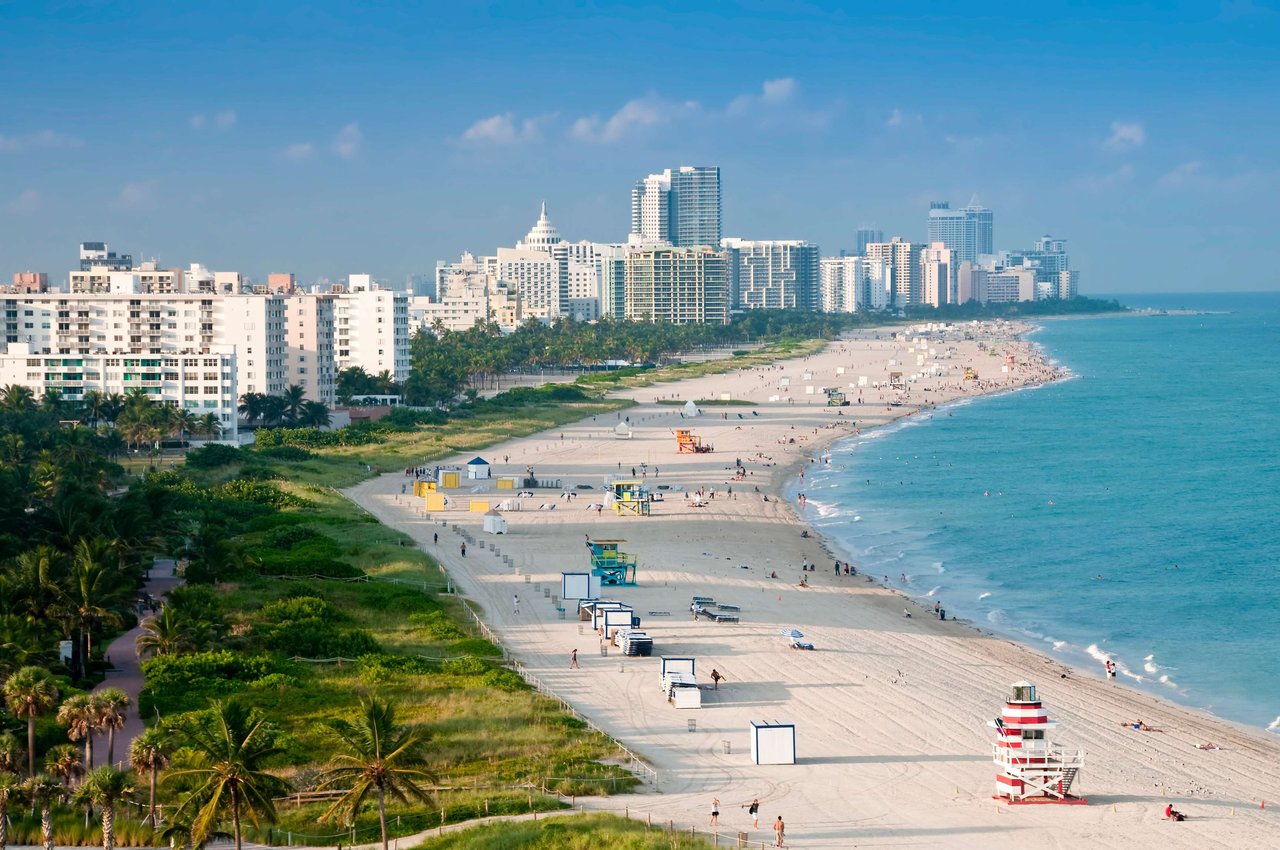
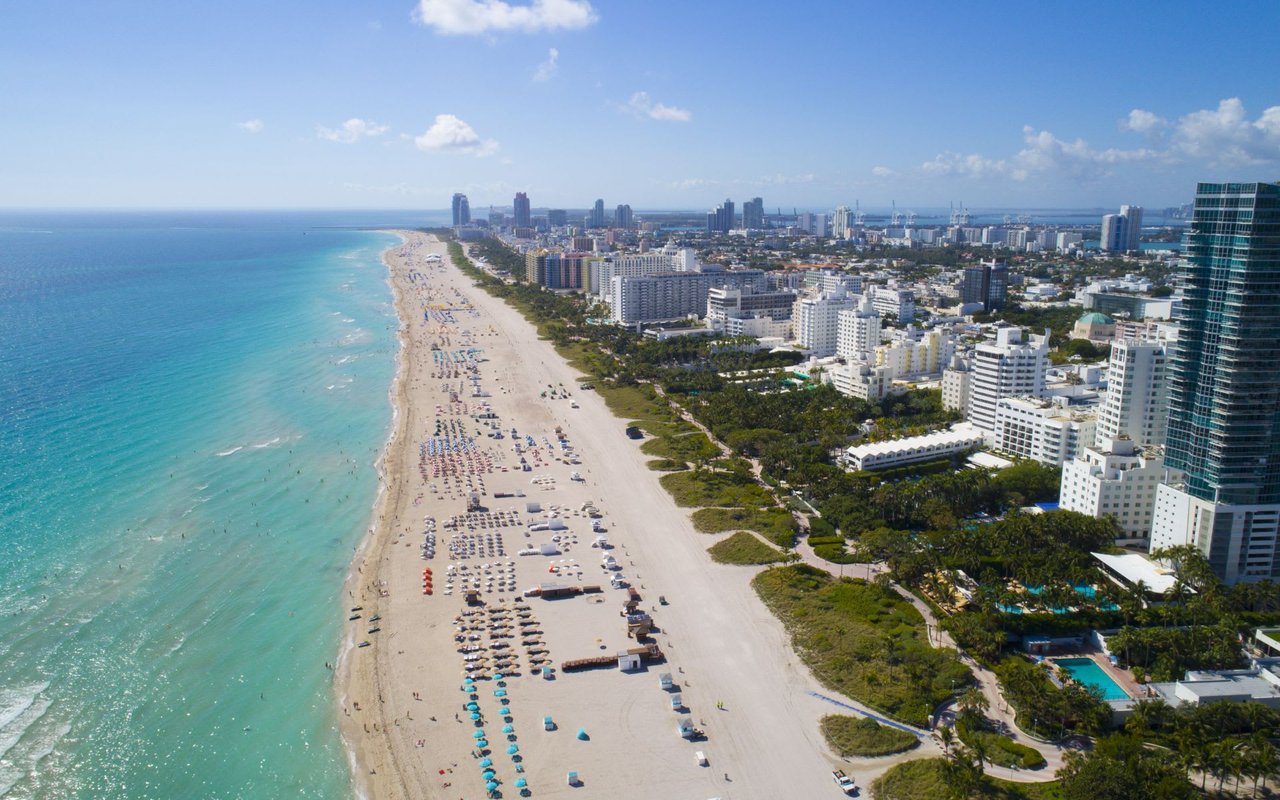
South Beach delivers the closest Miami equivalent to Santa Monica's beach town walkability combined with dining concentration. Key Biscayne mirrors Malibu's secluded coastal village atmosphere. Coconut Grove attracts former Venice Beach residents seeking artistic community and bohemian aesthetic within an upscale setting.
Explore detailed profiles and current listings in our Miami neighborhoods guide.
What Are the Best Miami Areas for Californians Looking to Buy a Modern Condo Near the Water?
Californians accustomed to modern construction standards find Miami's condo market delivers newer inventory than aging California high-rises:
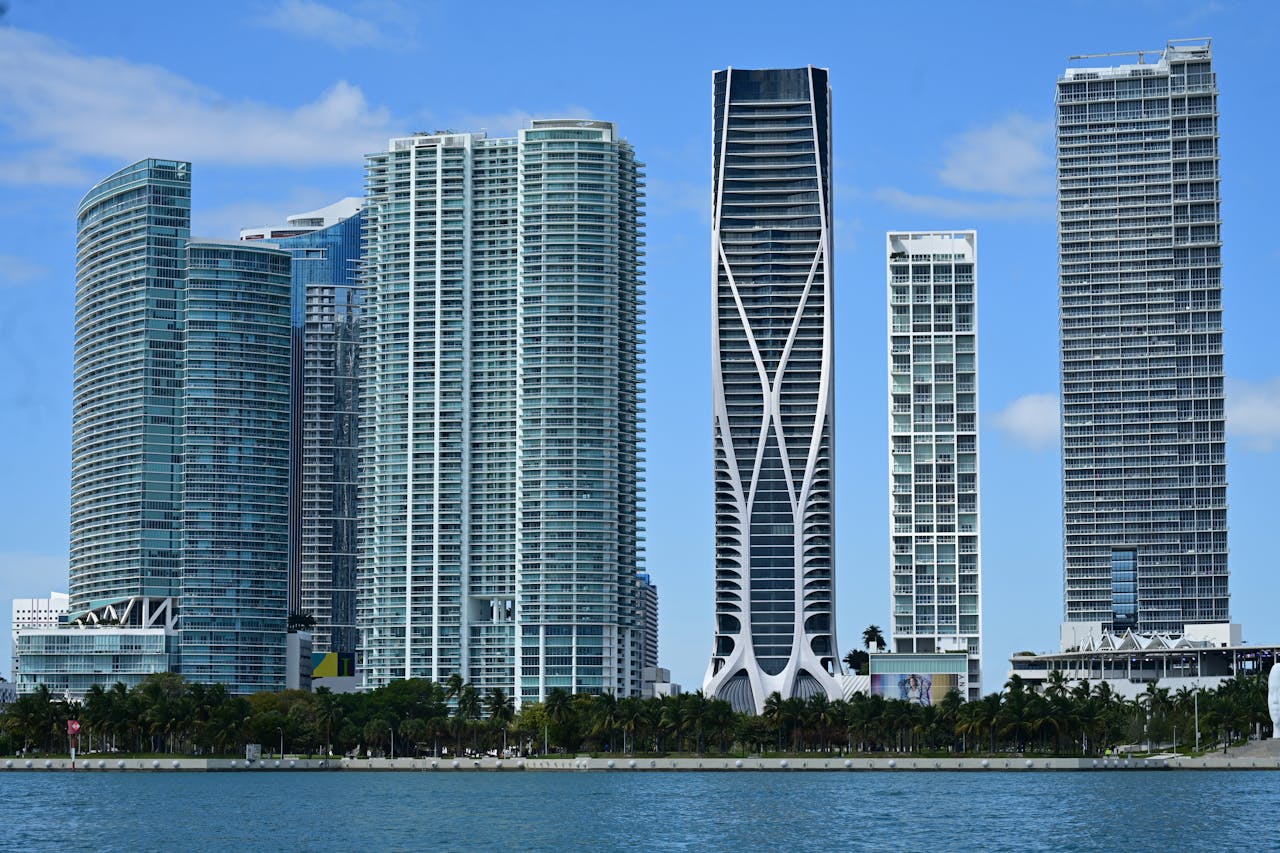
Edgewater offers the best value proposition for modern waterfront condos. The neighborhood sits along Biscayne Bay north of downtown, with numerous glass towers built after 2010. Two-bedroom units start around $450,000, delivering bay views and building amenities at prices substantially below Miami Beach.
South of Fifth (SoFi) in Miami Beach commands premium pricing but delivers ultra-luxury modern construction closest to the ocean. Entry starts around $900,000, with penthouse pricing exceeding $10 million.
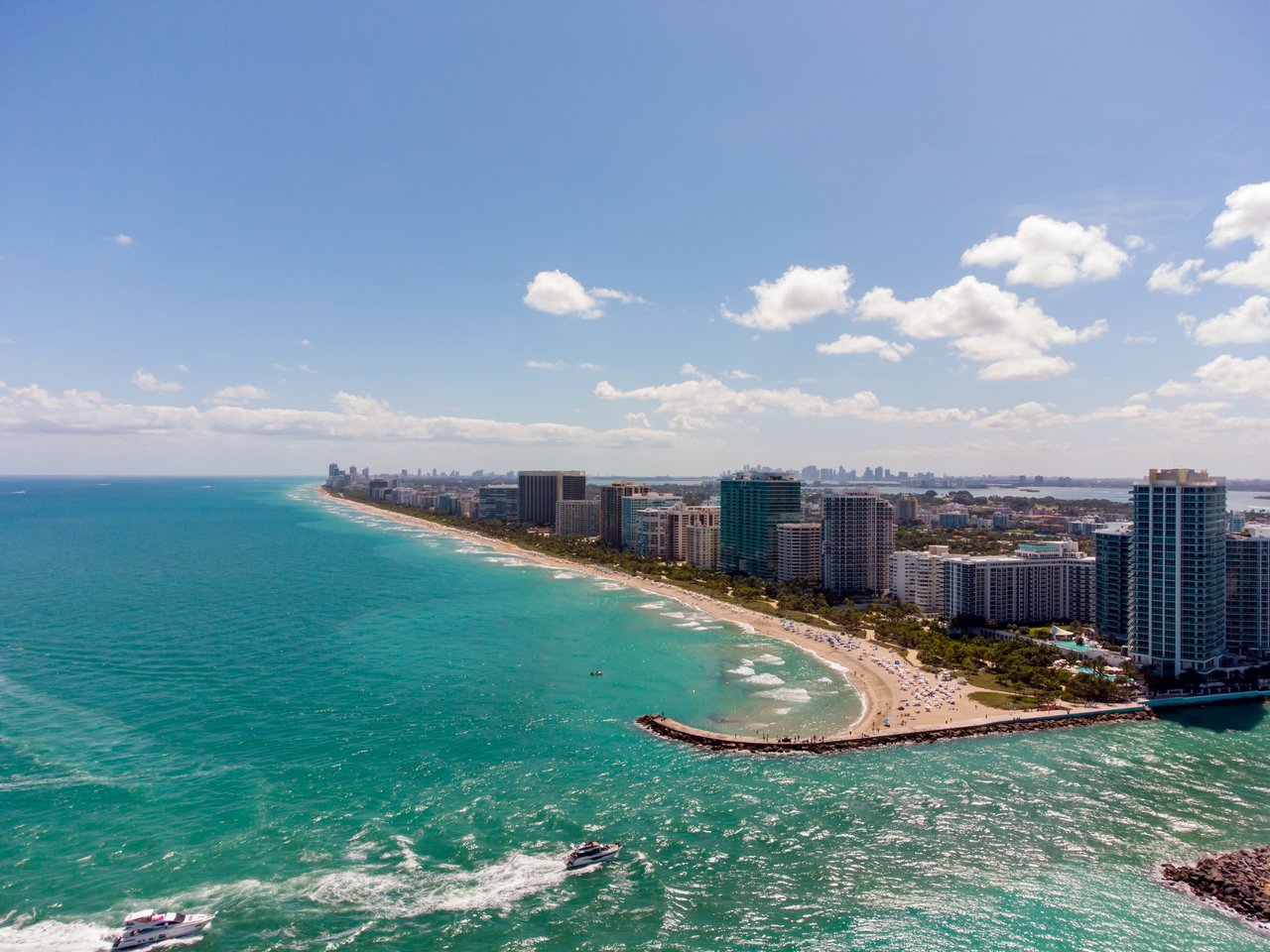
Surfside and Bal Harbour provide quieter alternatives to South Beach's intensity while maintaining beachfront access. Recent developments including Surf Club Four Seasons Residences deliver modern luxury with lower density. Pricing reflects the exclusivity: $1.5 million+ for two-bedroom units.
Sunny Isles Beach specializes in high-rise beachfront towers with international appeal. Developments by major luxury brands offer modern construction and full-service amenity packages. Price range spans $600,000 to multi-million dollar penthouses.
Where Can Californians Find Waterfront Properties for Sale in Miami With Good Boating Access?
Boating access requires specific infrastructure beyond mere water adjacency:
Coral Gables Waterway provides protected canal access leading to Biscayne Bay, with many single-family homes including private docks accommodating vessels up to 40-60 feet. Properties start around $1.5 million for canal-front homes with dock access.
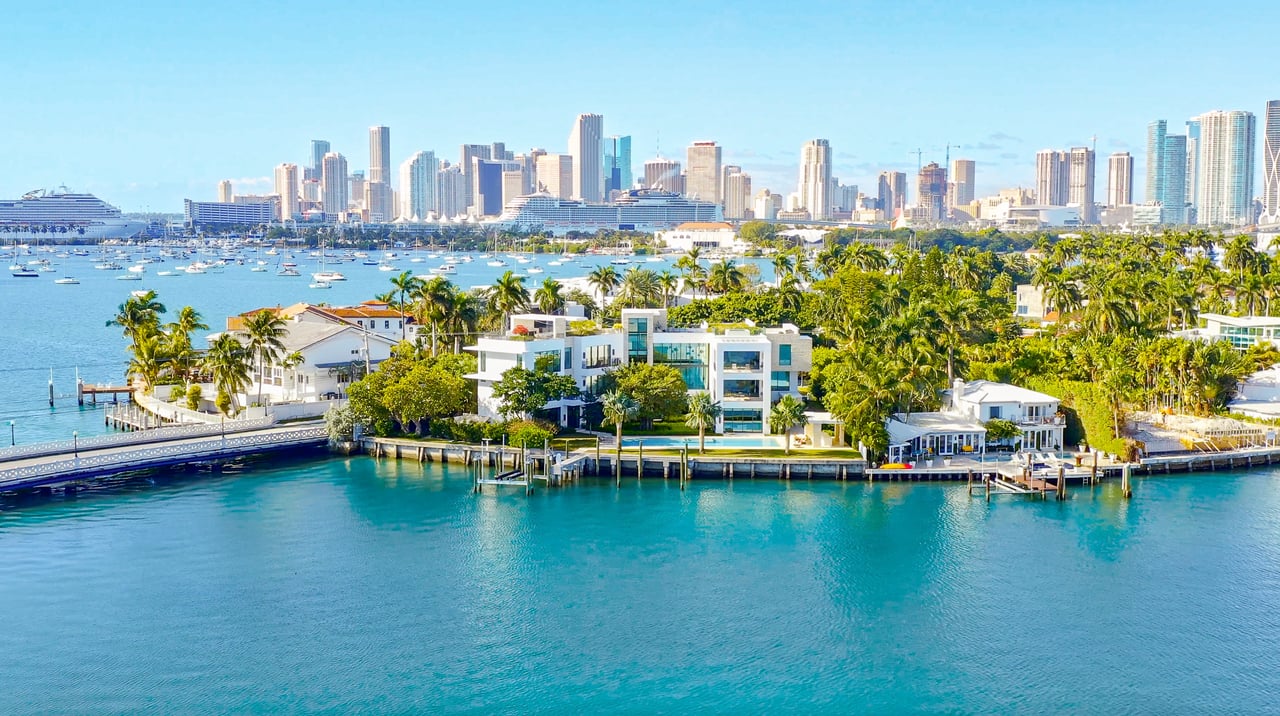
Coconut Grove offers both marina-based access and canal-front single-family homes. The neighborhood appeals to sailors and powerboaters alike, with quick access to Biscayne Bay. Waterfront properties range from $1.2 million to $10 million+.
Key Biscayne provides ocean and bay access with less congested waterways than mainland Miami. Many single-family homes include private docks, while condo communities offer marina slips.
North Bay Village represents the most affordable waterfront option with boating access. The small island community offers canal-front homes and condos starting around $500,000, with most properties providing boat dock potential.
Which Miami Suburbs Are Best for Californians Who Want to Buy a Larger Home at a Lower Price Point?
California buyers selling expensive coastal properties can purchase substantially larger suburban homes in Miami's family-oriented neighborhoods:
Pinecrest delivers excellent public schools, large lots (many 15,000+ square feet), and established tree canopy. Single-family homes start around $800,000 for older properties, with new construction exceeding $2 million. The premium reflects school ratings and lot sizes.
Palmetto Bay offers similar family orientation with more affordable entry points and waterfront access to Biscayne Bay. Homes start around $600,000, with waterfront properties commanding $1.5 million to $3 million+.
Doral attracts families seeking newer construction, master-planned communities, and proximity to Miami International Airport. Entry-level homes start around $500,000, with larger properties in gated communities reaching $1.2 million.
Weston (Broward County) provides top-rated schools and master-planned community infrastructure. Single-family homes range from $600,000 to $1.5 million.
Homestead represents the most affordable family suburb with reasonable school options. Single-family homes start around $400,000, delivering space California buyers can't access in coastal markets.
Which Miami Neighborhoods Appeal Most to Californians Looking to Buy Eco-Friendly or Energy-Efficient Homes?
Sustainability-minded California buyers discover Miami's market lags behind West Coast green building adoption, but specific neighborhoods and developments prioritize energy efficiency:
Coconut Grove maintains historically progressive character with higher solar adoption rates than most Miami neighborhoods. The tree canopy provides natural cooling, and many recent renovations incorporate energy-efficient systems.
Brickell high-rises include numerous LEED-certified buildings constructed since 2010. Buildings like Icon Brickell and SLS Brickell achieved LEED certification, appealing to environmentally conscious professionals.
Pinecrest attracts eco-minded families who install solar panels, native landscaping, and energy-efficient systems during custom home construction. The suburb's large lots accommodate sustainable features impractical in high-density areas.
What Should Californians Know About Insurance and Hurricane Protection When Purchasing a Home in Miami?
Insurance costs represent the most significant negative surprise for California buyers completing their West Coast to Florida relocation:
|
Insurance Type |
California Equivalent |
Miami Reality |
|
Homeowners (annual) |
$1,500–$3,000 (wildfire zones higher) |
$4,000–$15,000+ (varies by location/age) |
|
Flood Insurance |
Rarely required |
Often required ($500–$3,000+) |
|
Wind/Hurricane |
N/A |
Built into homeowners or separate policy |
|
Condo (HO-6) |
$300–$600 |
$800–$2,500+ (plus master policy assessment) |
Florida's homeowners insurance market has experienced severe disruption. Multiple national carriers have exited or limited Florida exposure, driving buyers toward smaller regional insurers or Citizens Property Insurance Corporation, the state-backed insurer of last resort.
Flood insurance requires separate evaluation. Many coastal and low-lying properties require flood coverage as mortgage condition. FEMA's flood map service allows property-specific zone verification before purchase. This represents a cost category most buyers moving to Miami from California haven't encountered, making early budget planning essential.
Building age dramatically affects insurance costs. Properties constructed after 2002 meet stronger building codes including hurricane impact requirements, qualifying for substantially lower premiums. Budget an additional $20,000–$50,000 for impact window installation on older properties.
Hurricane preparedness becomes lifestyle factor rather than abstract risk. June through November brings heightened weather monitoring, potential evacuation orders, and preparation routines.
How Is the Climate in Miami Compared to California?
Both markets offer year-round mild weather, but seasonal patterns differ substantially:
Winter (December-March) provides Miami's ideal season. Daytime temperatures range 70-80°F with low humidity. California's winter is slightly cooler and wetter, but both climates allow outdoor living throughout the season.
Summer (June-September) creates the dividing line. Miami's summer brings oppressive humidity, daily afternoon thunderstorms, and temperatures in the 90s with heat indices exceeding 100°F. California's summer remains dry and temperate.
Hurricane season (June 1-November 30) overlaps summer, adding weather monitoring to daily routine. California faces earthquake risk and wildfire season, creating different but comparable hazard profiles.
What Is the Home Buying Process in Miami for Cash Buyers Relocating From California?
Many California buyers arrive as cash purchasers after selling expensive West Coast properties, giving them significant advantages when moving to Miami from California:
Timeline compression: Cash transactions close in 2-3 weeks versus 30-45 days with financing. Cash offers win bidding competitions even against higher financed offers.
Due diligence requirements remain: Cash purchase doesn't eliminate inspection, title search, insurance binder, and HOA document review requirements. Focus inspection attention on roof condition, HVAC systems, plumbing, electrical, and flood zone verification.
Title company process: Florida uses title companies rather than attorneys for closings in most residential transactions. The title company coordinates closing, handles escrow, and issues title insurance.
Wire fraud protection: Verify all wire instructions by phone using independently verified contact information before transferring funds. Confirm routing and account numbers verbally with title company.
How Can Someone Moving From California to Miami Find a Real Estate Agent Experienced in Cross-Country Relocations?
Relocation specialist credentials matter less than practical experience with California buyer expectations:
Questions to evaluate expertise: How many California-to-Miami relocations have you handled recently? Can you coordinate virtual showings with same-day video tours? Do you understand California FTB residency concerns? What's your approach to insurance cost estimation before purchase?
What Are the Pros and Cons of Moving From CA to Miami?
Advantages: Significant tax savings across income, capital gains, and estate planning make leaving California for Miami financially compelling. More space for the money allows lifestyle upgrades. No state income tax on retirement distributions. Business-friendly environment. Year-round outdoor lifestyle. Growing tech and finance sectors support the San Francisco to Miami move for professionals.
Disadvantages: Insurance costs of $4,000-$15,000+ annually partially offset housing price advantages. Summer humidity proves oppressive June through September. Hurricane preparedness becomes ongoing lifestyle factor. Car dependency exceeds even Los Angeles sprawl. Cultural adjustment includes different political climate. California FTB audit risk requires careful compliance-this single factor creates the most financial uncertainty for those moving to Miami from California without proper guidance.
Are There Job Opportunities in Miami for Tech Professionals?
Miami's technology sector growth is genuine but remains early-stage compared to Silicon Valley's mature ecosystem:
-
Industry strengths: Fintech represents Miami's most developed tech segment. Healthcare technology has grown significantly. Blockchain and cryptocurrency companies maintain notable presence.
-
Major employers: Microsoft, Spotify, Blockchain.com, Chewy, and numerous startups maintain Miami operations. The scale remains substantially smaller than Bay Area.
-
Venture capital: Miami tech VC funding and employment growth has increased dramatically since 2020, supporting startup ecosystem development.
-
Salary expectations: Compensation typically runs 15-20% below Bay Area levels for equivalent roles, though no state income tax partially closes the gap.
-
Remote work reality: Most California tech professionals moving to Miami from California maintain their existing positions rather than seeking local employment.
What's the Lifestyle Difference Between California and Miami?
Cultural differences exceed what real estate price comparisons suggest:
-
Pace and intensity: Miami maintains relaxed Caribbean-influenced tempo but accelerates dramatically for nightlife. The city parties later and harder than California's more moderate social culture.
-
Language and culture: Spanish language prevalence exceeds what most California buyers anticipate. Many businesses operate primarily in Spanish.
-
Outdoor culture focus: Water sports, boating, beach access, and pool lifestyle replace California's hiking and mountain recreation.
-
Food and dining: Cuban, Latin American, and Caribbean cuisine dominate rather than California's Asian, Mexican, and farm-to-table focus.
-
Fashion and presentation: Miami maintains more glamorous, appearance-conscious culture than California's tech-influenced casual aesthetic.
-
Political environment: Miami leans more conservative than coastal California, particularly within Cuban-American and Venezuelan communities.
The financial case for your California to Miami move remains compelling for high earners despite insurance costs and lifestyle trade-offs. Tax savings of $30,000-$60,000+ annually create substantial long-term wealth accumulation advantages, while housing affordability allows significant lifestyle upgrades.
Success requires proper execution. Residency establishment demands documentation and genuine severing of California ties, not merely technical compliance with Florida's minimal requirements. The California Franchise Tax Board audits former residents aggressively, requiring professional guidance.
Not ready to buy yet? Many Californians rent first to test the market and verify neighborhoods before committing to purchase.
Ready to explore your options? Browse current Miami Beach listings or schedule a relocation consultation to plan your move from California to Miami.
Frequently Asked Questions
Why are Californians moving to Miami?
Zero state income tax, lower housing costs, remote work flexibility, and year-round warm weather are the primary drivers.
Is Miami more affordable than California?
Yes-median home prices in Miami are 30-50% lower than comparable coastal California markets, and there's no state income tax.
What are the tax benefits of moving from California to Florida?
Florida has no state income tax, which saves high earners 10-13% annually on wages, capital gains, and retirement distributions.
How does Miami real estate compare to California?
Miami offers 40-60% more square footage per dollar than Los Angeles or San Francisco, with newer construction and more waterfront access.
Which Miami neighborhoods are ideal for Californians?
Key Biscayne mirrors Malibu's seclusion, Coconut Grove matches Venice's artistic vibe, and Brickell parallels Silicon Beach's tech energy.
What's the lifestyle difference between California and Miami?
Miami is more water-focused, Spanish-speaking, nightlife-oriented, and politically moderate compared to coastal California's hiking culture and progressive politics.
Are there job opportunities in Miami for tech professionals?
Miami's tech sector is growing rapidly with VC funding and startup relocations, though many California transplants work remotely and keep their West Coast jobs.
How is the climate in Miami compared to California?
Miami has milder winters but significantly hotter, more humid summers (June-September), plus hurricane risk instead of California's earthquakes and wildfires.
Is remote work causing the migration to Miami?
Yes-remote and hybrid work arrangements are the single largest enabler of California-to-Miami relocations since 2020.
What are the pros and cons of moving from CA to Miami?
Pros include major tax savings and more affordable housing; cons include higher insurance costs, summer humidity, and California FTB audit risk if residency isn't established properly.
What should Californians know about insurance and hurricane protection in Miami?
Homeowners insurance in Florida costs $4,000-$15,000+ annually (2-5x California rates), flood insurance is often required, and newer construction gets significantly better rates.