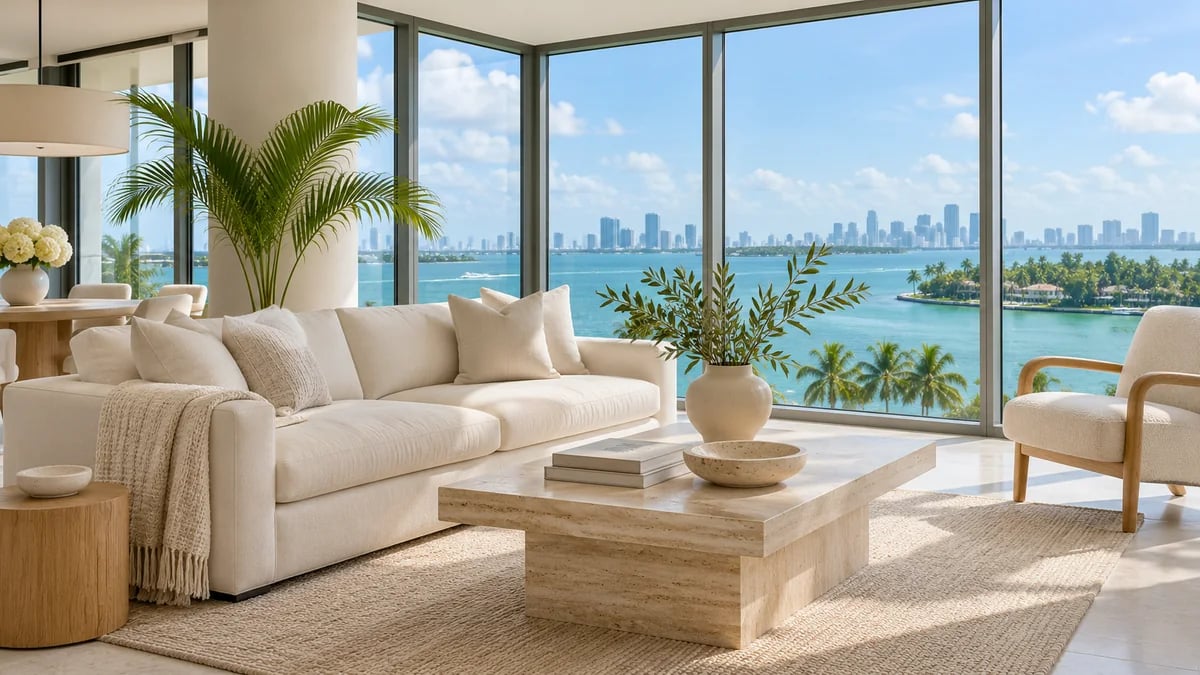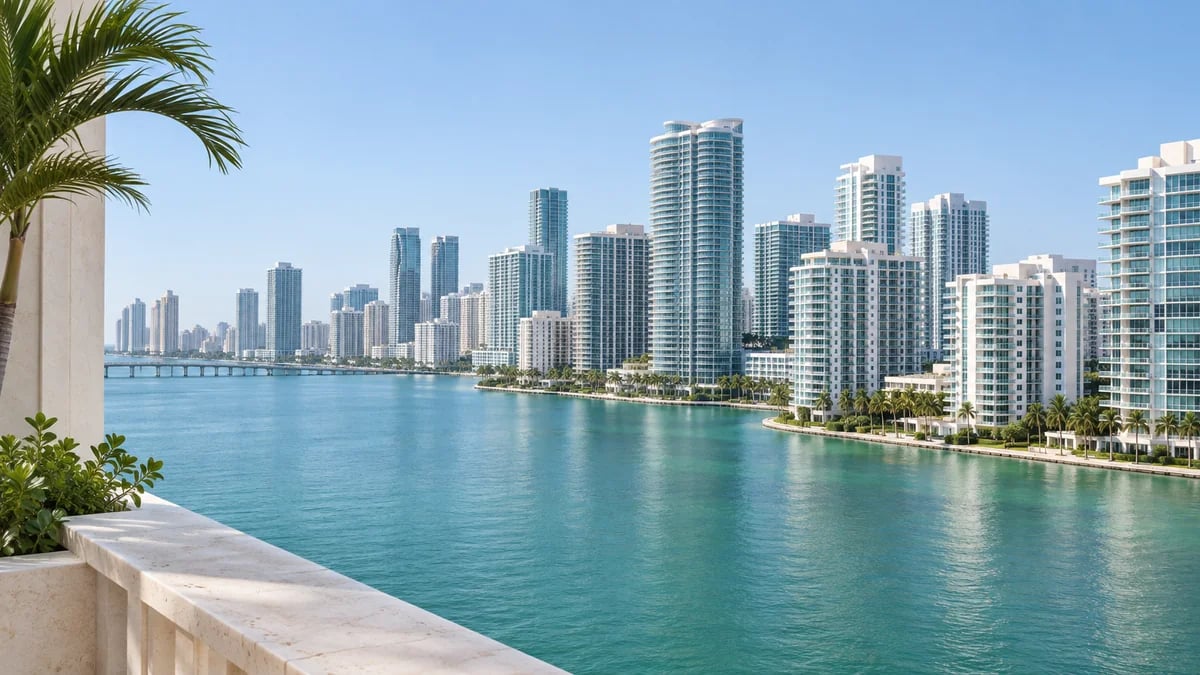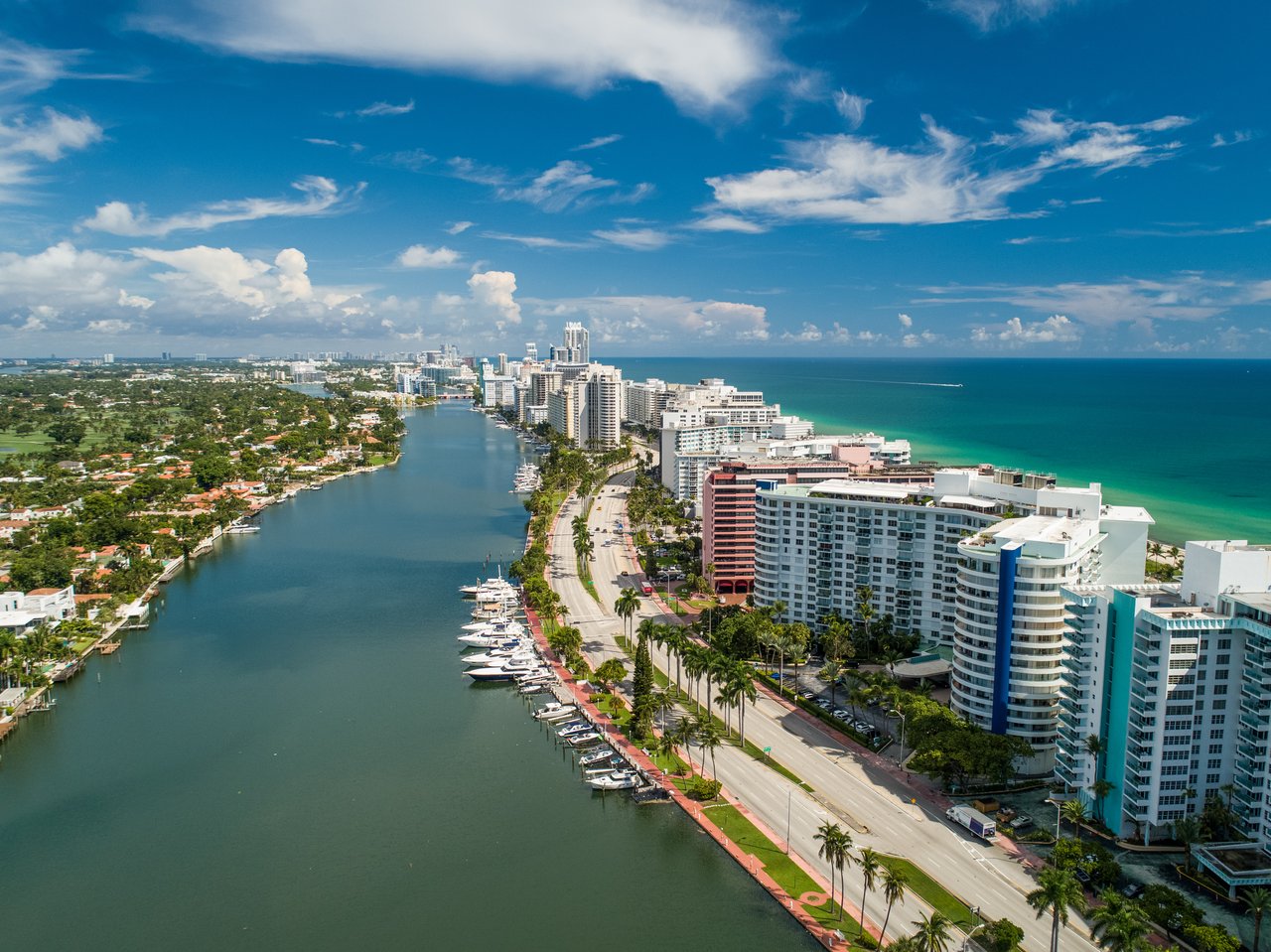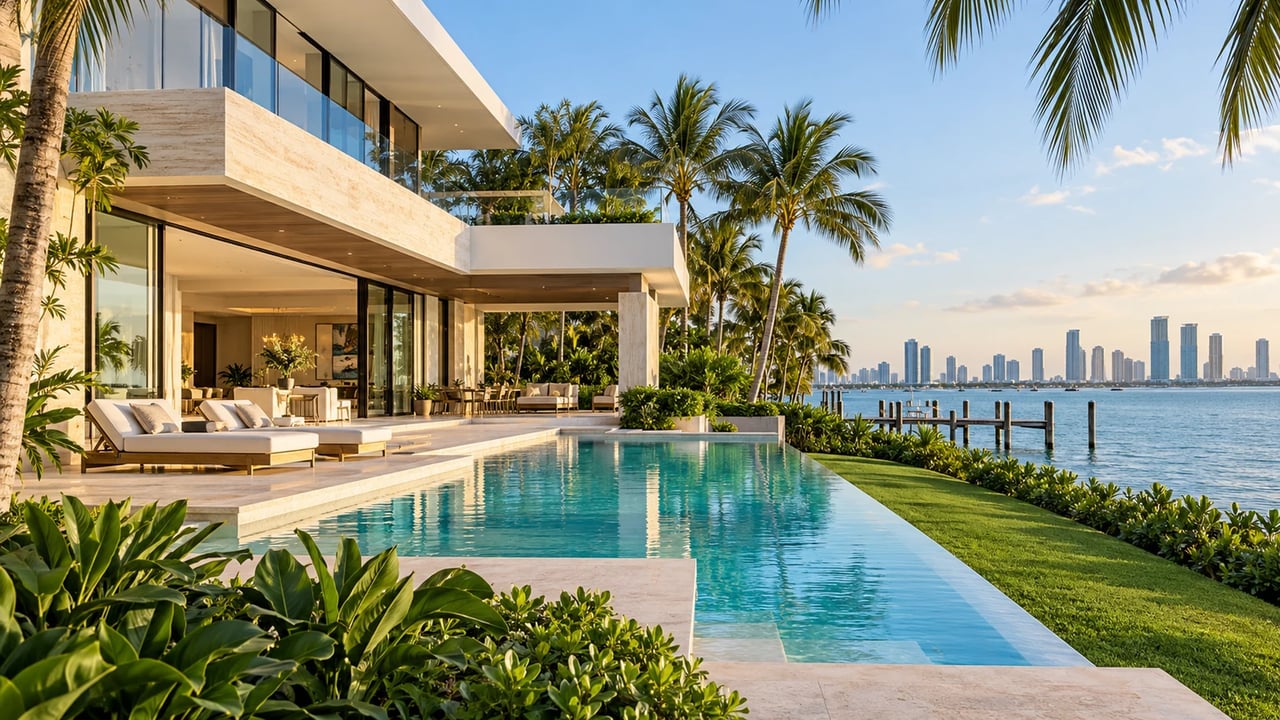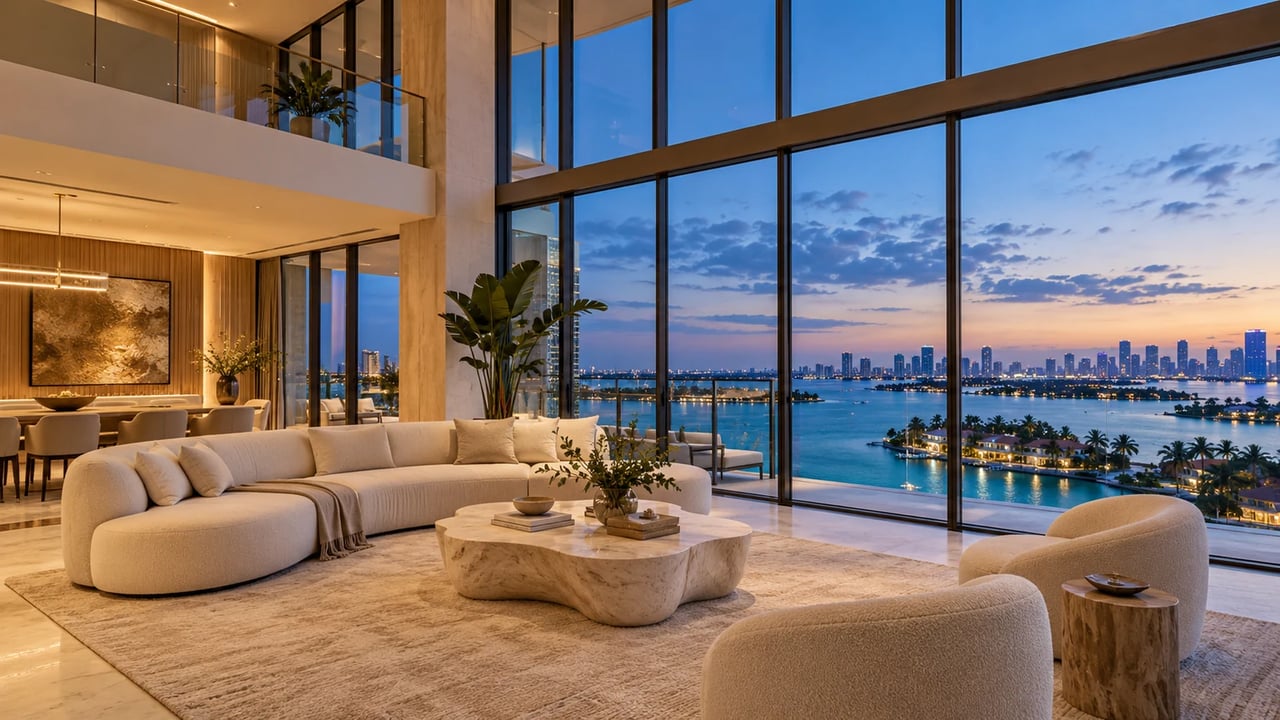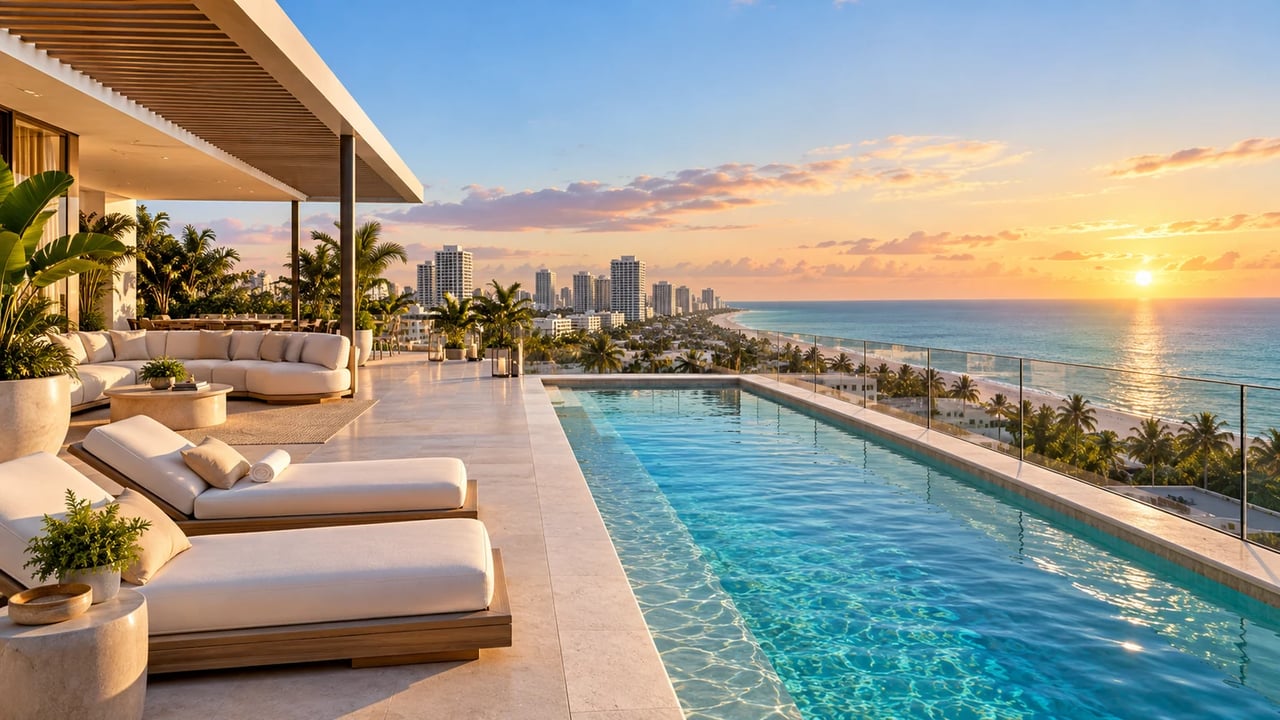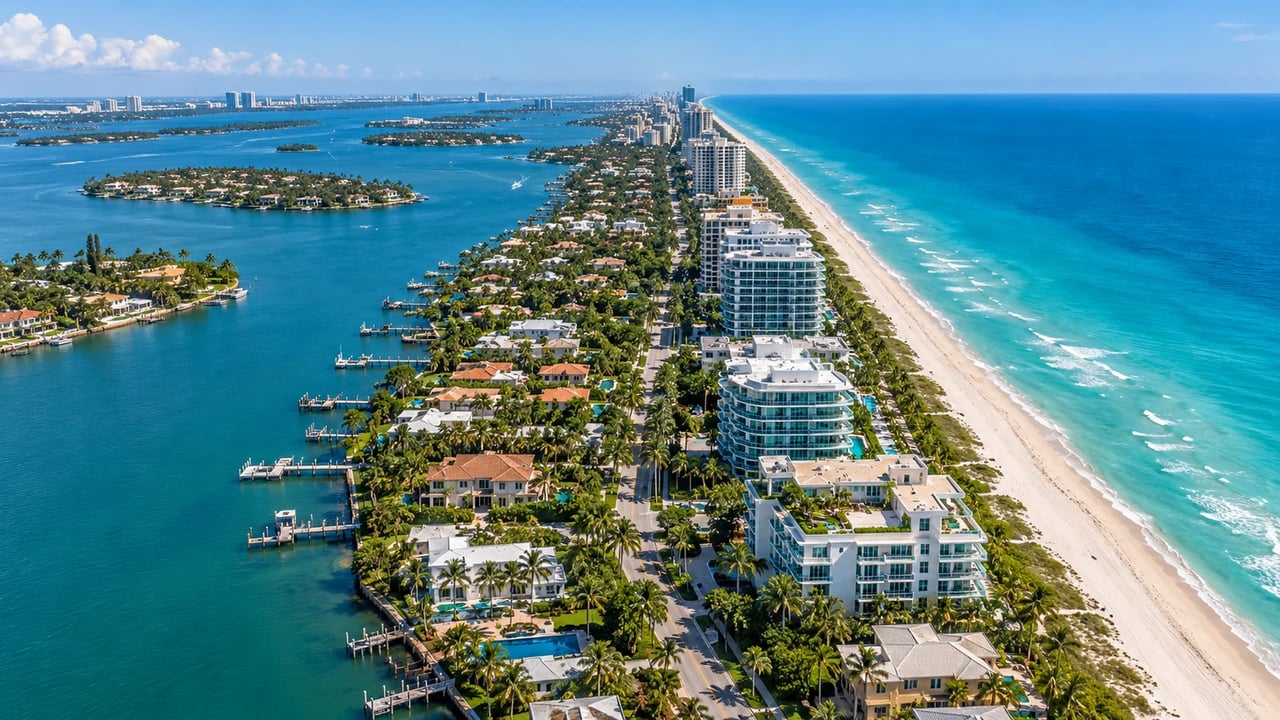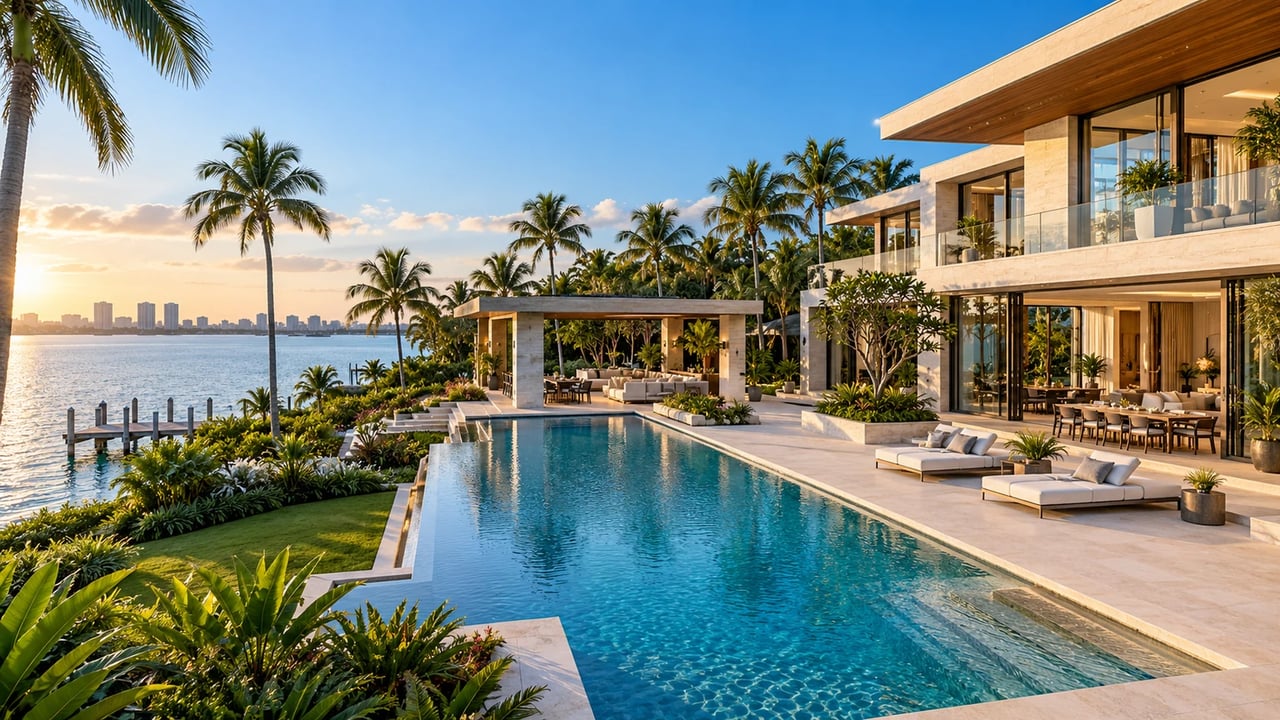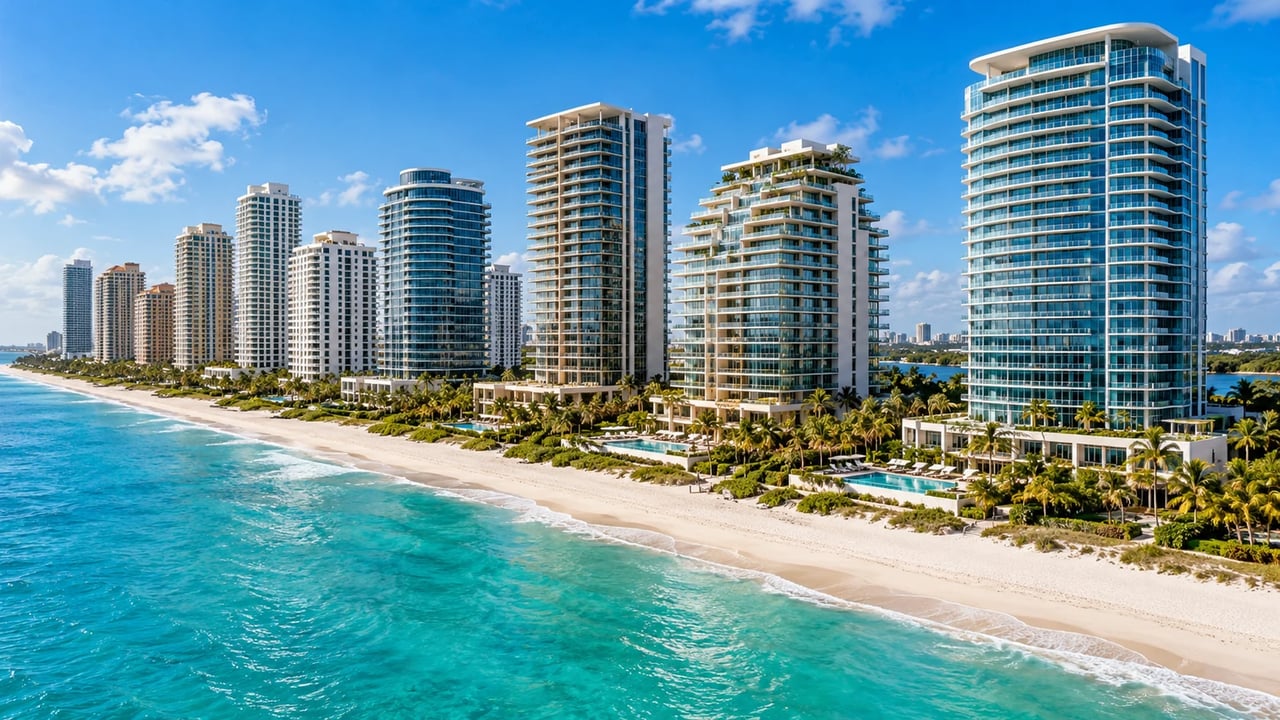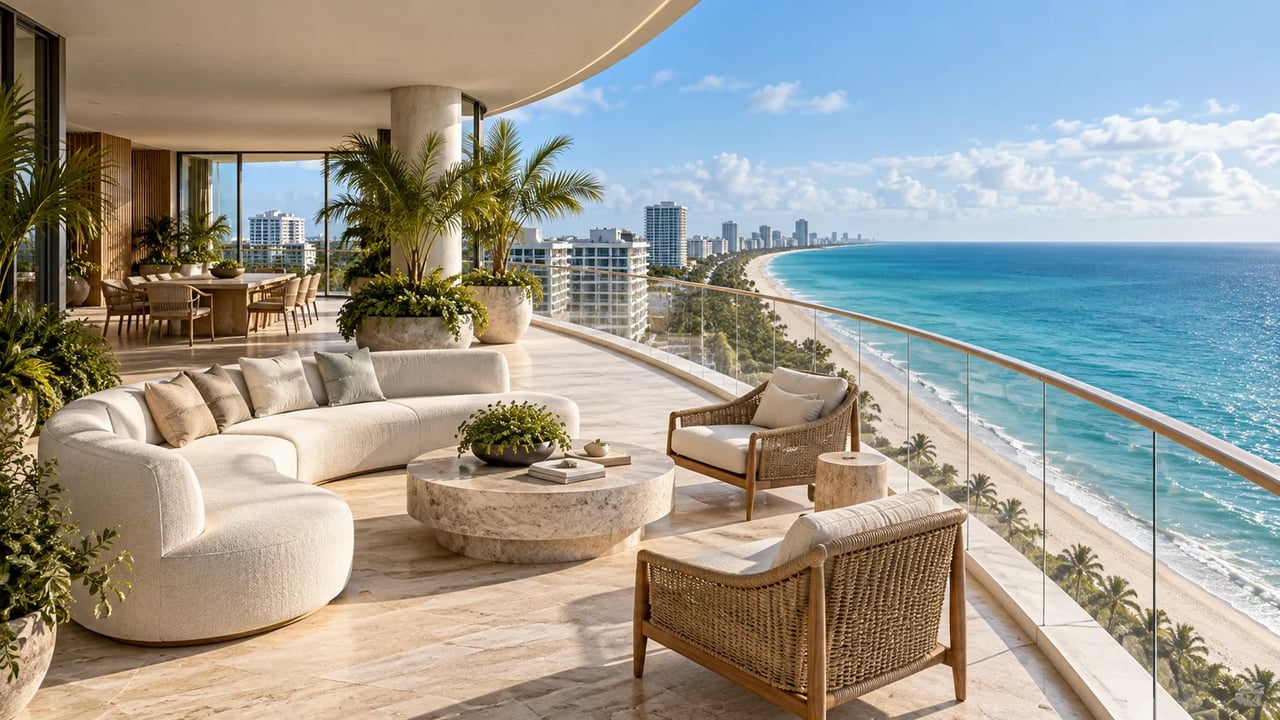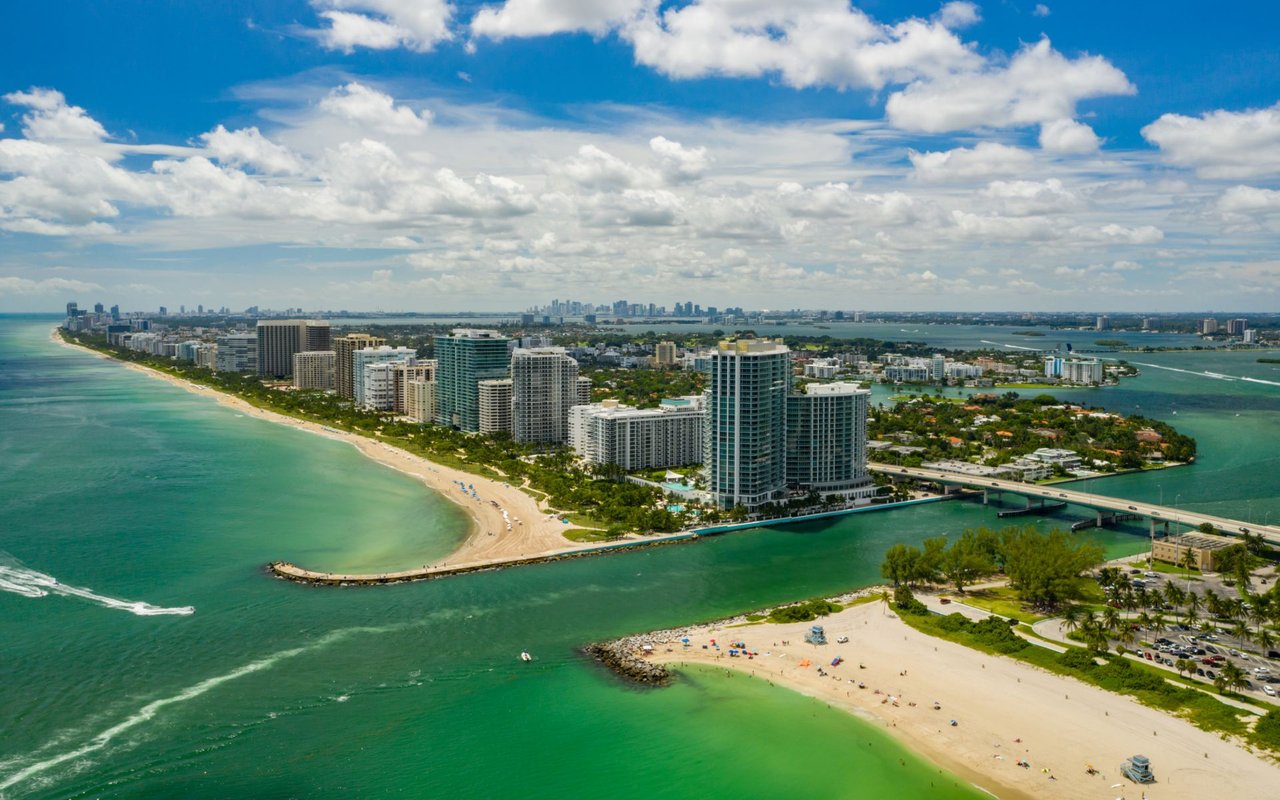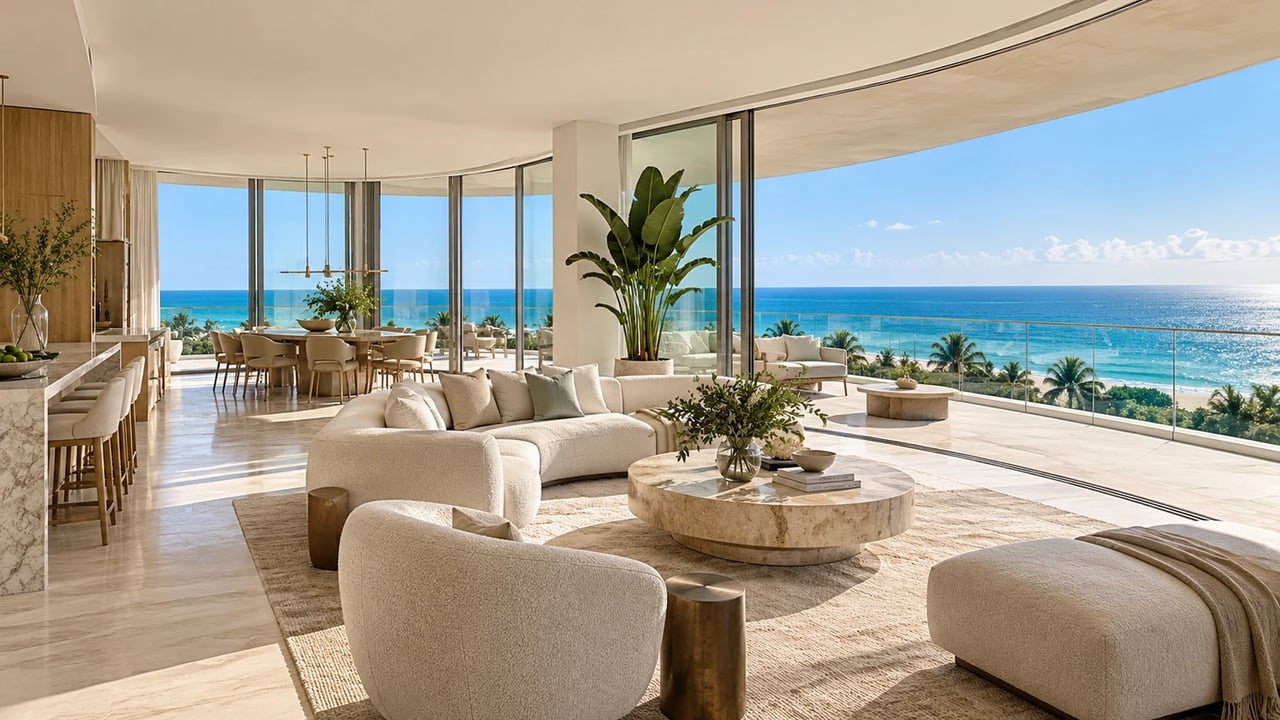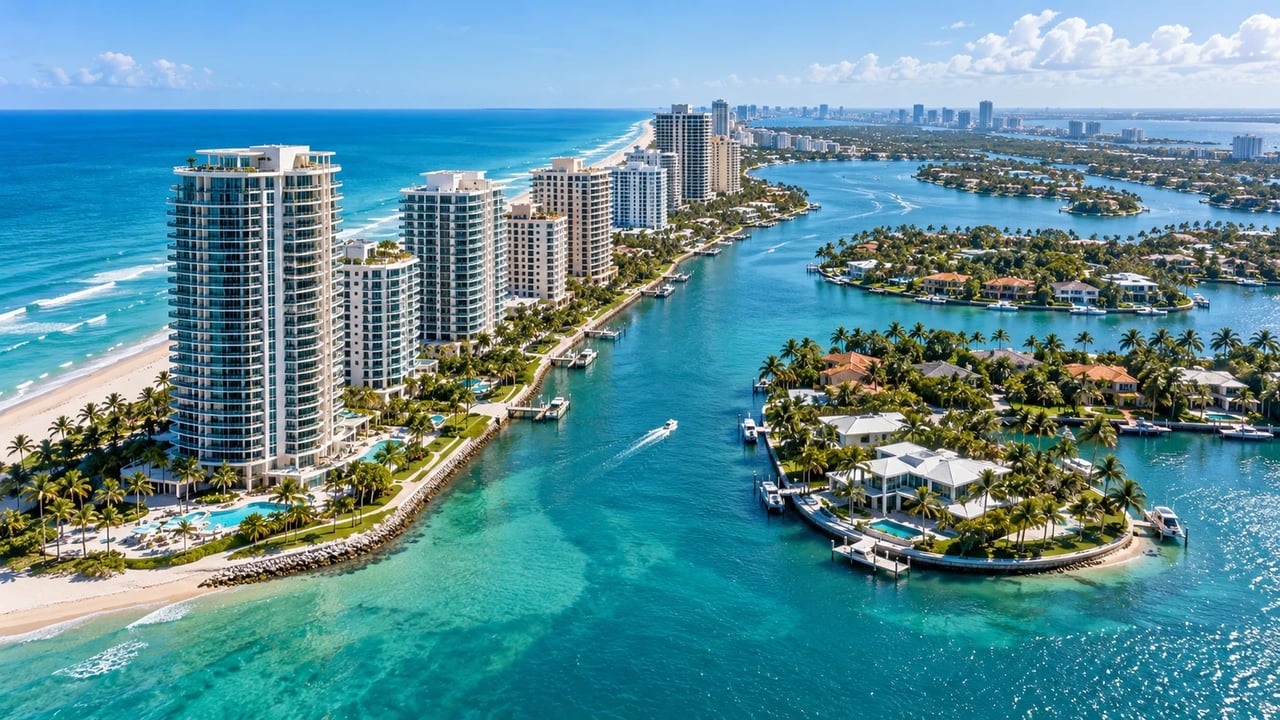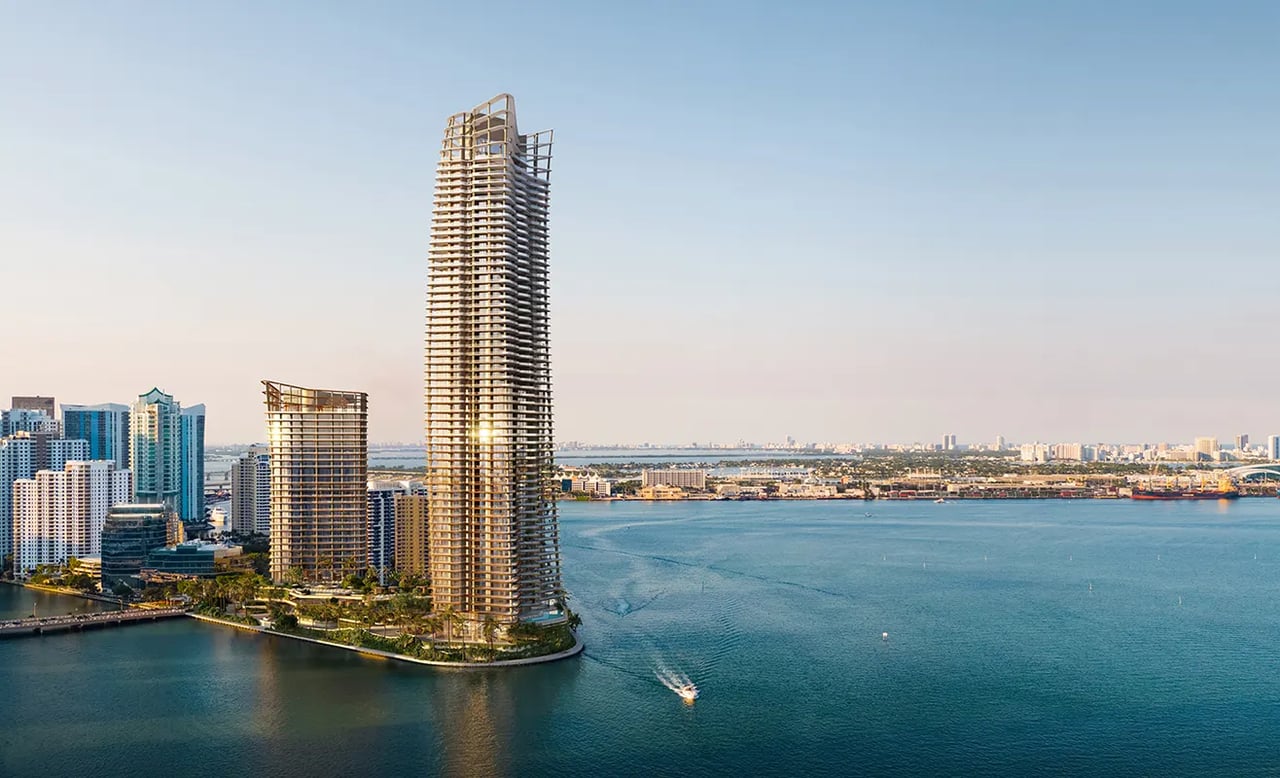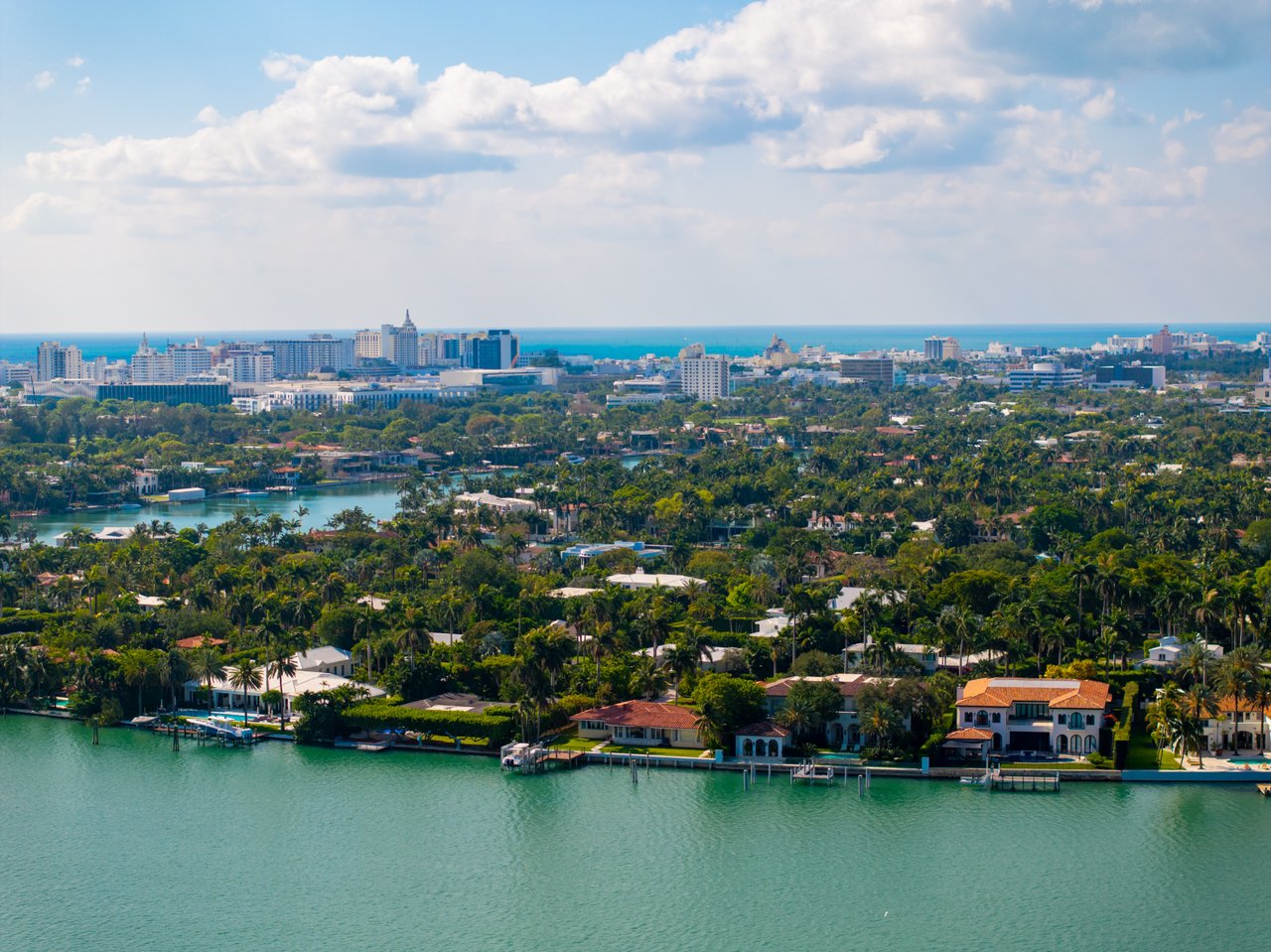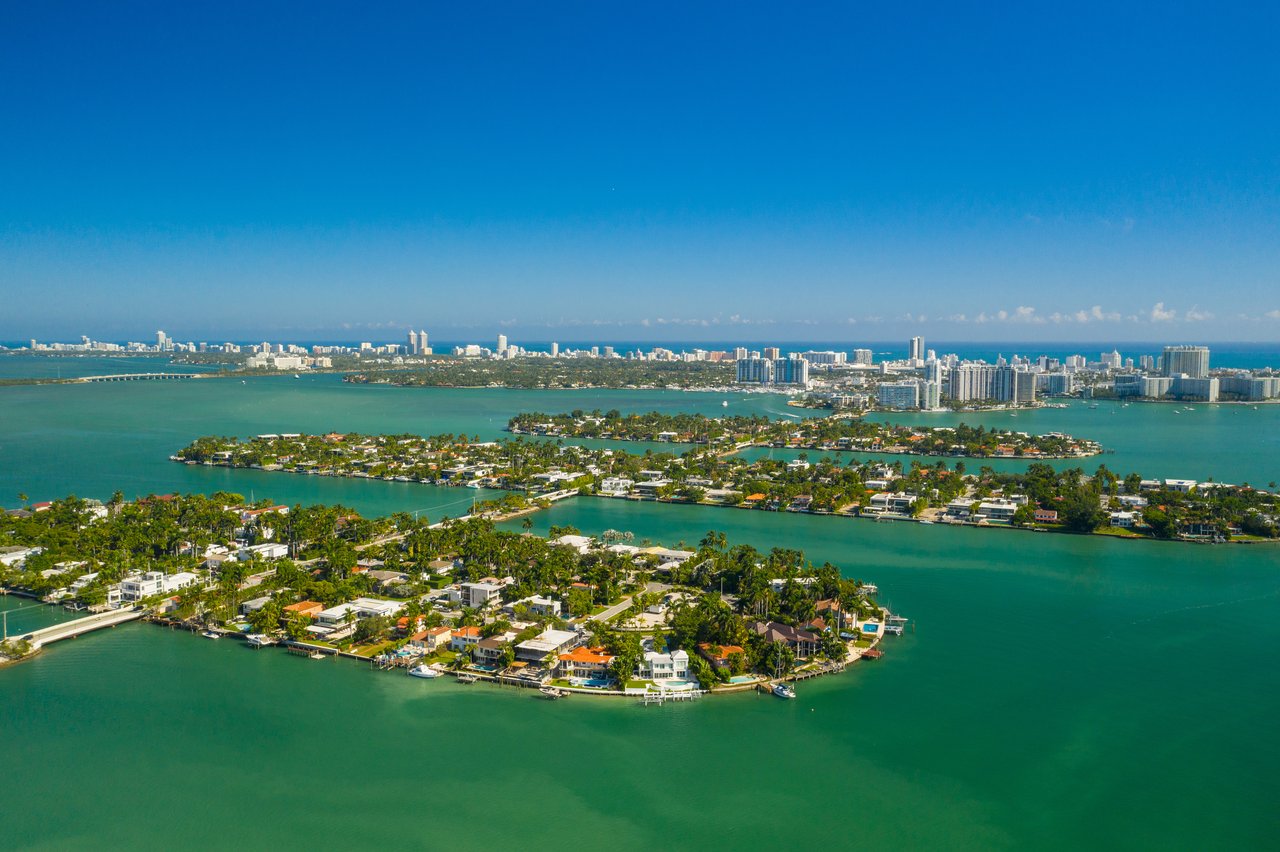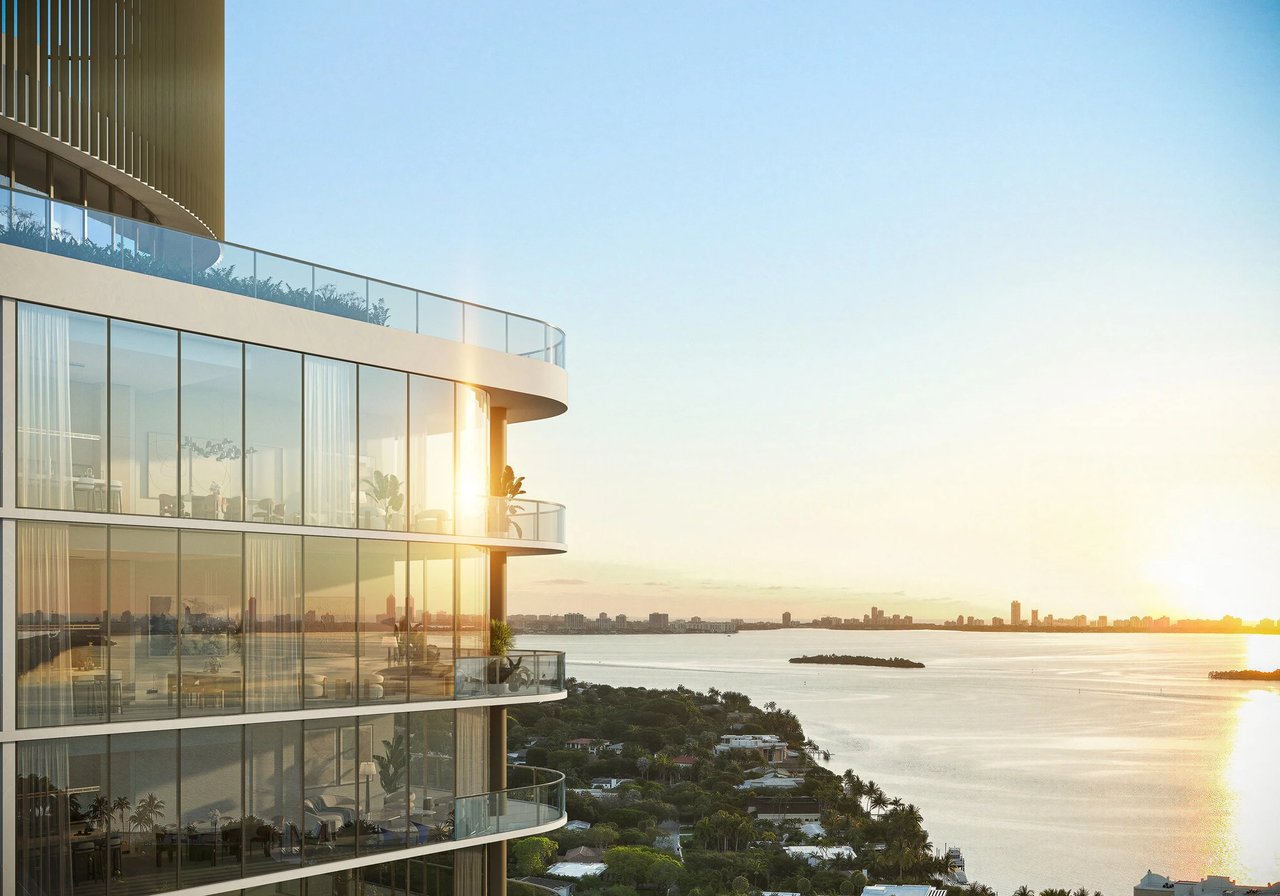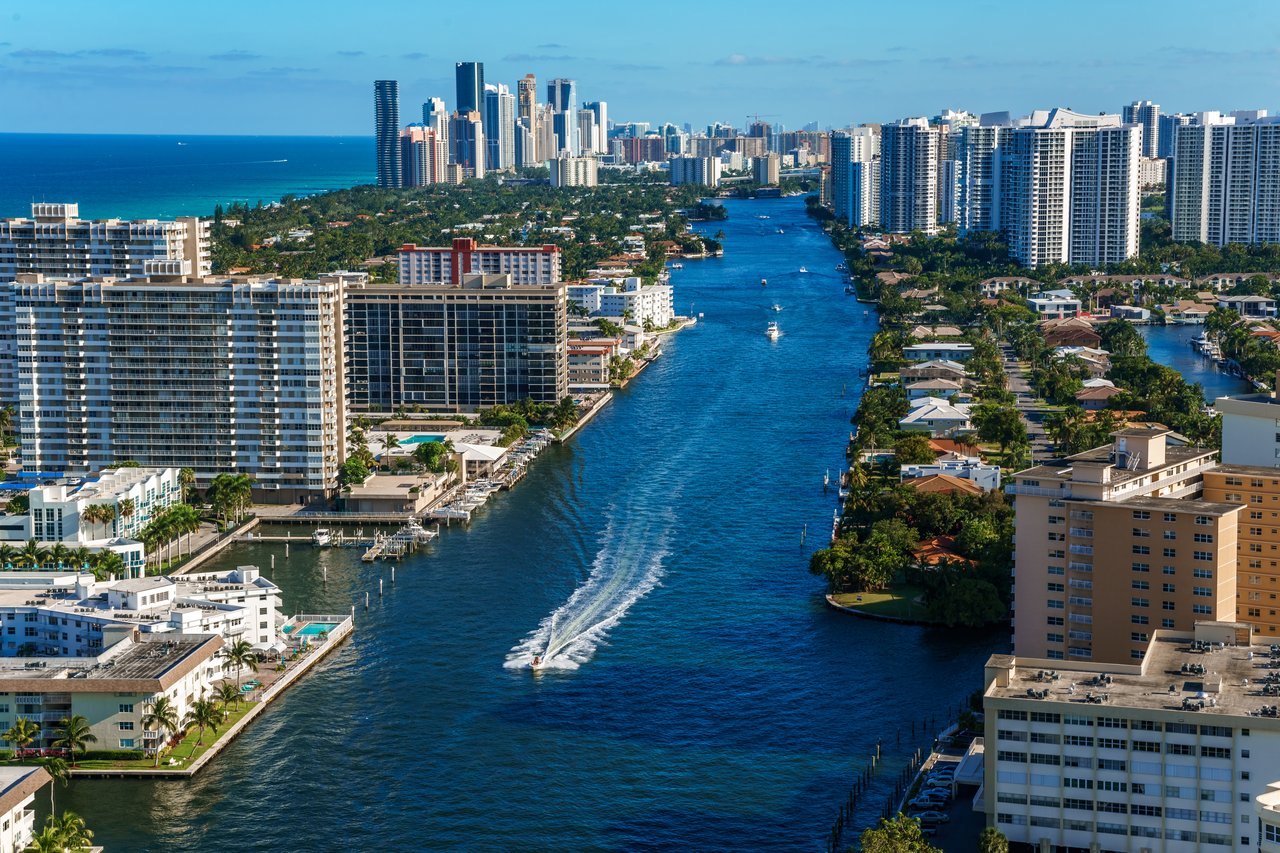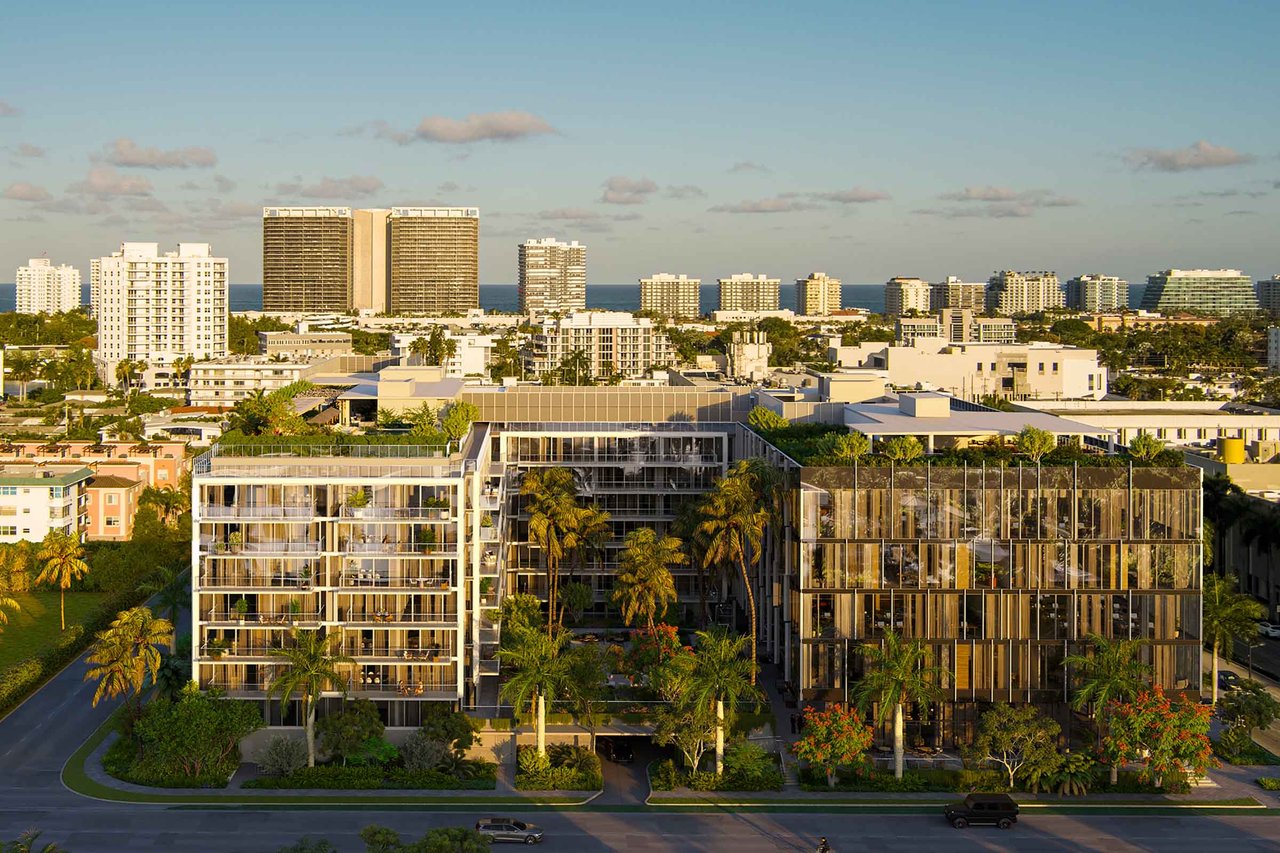
Imagine owning a $3.5 million oceanfront condo with five similar residences for sale nearby. Now picture an $18 million waterfront estate with no close substitute.
The second seller appears to have the stronger position. But what if the estate needs expensive seawall repairs? Or a comparable property recently sold for substantially less?
That's where the $10 million dividing line starts to lose its usefulness.
The Miami luxury real estate market has several layers of competition, and the asking price tells only part of the story. Buyers and sellers need to know which properties they're genuinely competing against.
What the Two Market Story Explains
The idea of two Miami luxury markets captures a genuine difference between widely available luxury properties and exceptional trophy residences. Still, the dividing line changes depending on whether you're discussing a condominium or a house.
Consider Miami-Dade's luxury sales thresholds.
According to MIAMI REALTORS' luxury market research, the top 1% of condominium sales began at $9.4 million during January–September 2026. For single-family homes, that threshold was $14 million.
Property Type | Top 5% | Top 1% |
Single-family homes | $4.2M | $14M |
Condominiums | $3.1M | $9.4M |
Source: MIAMI REALTORS, January–September 2026 closed transactions in Miami-Dade County.
A $10 million condo already sits among the county's highest-priced transactions. A house selling for the same amount occupies a different position.
Geography complicates the picture further.
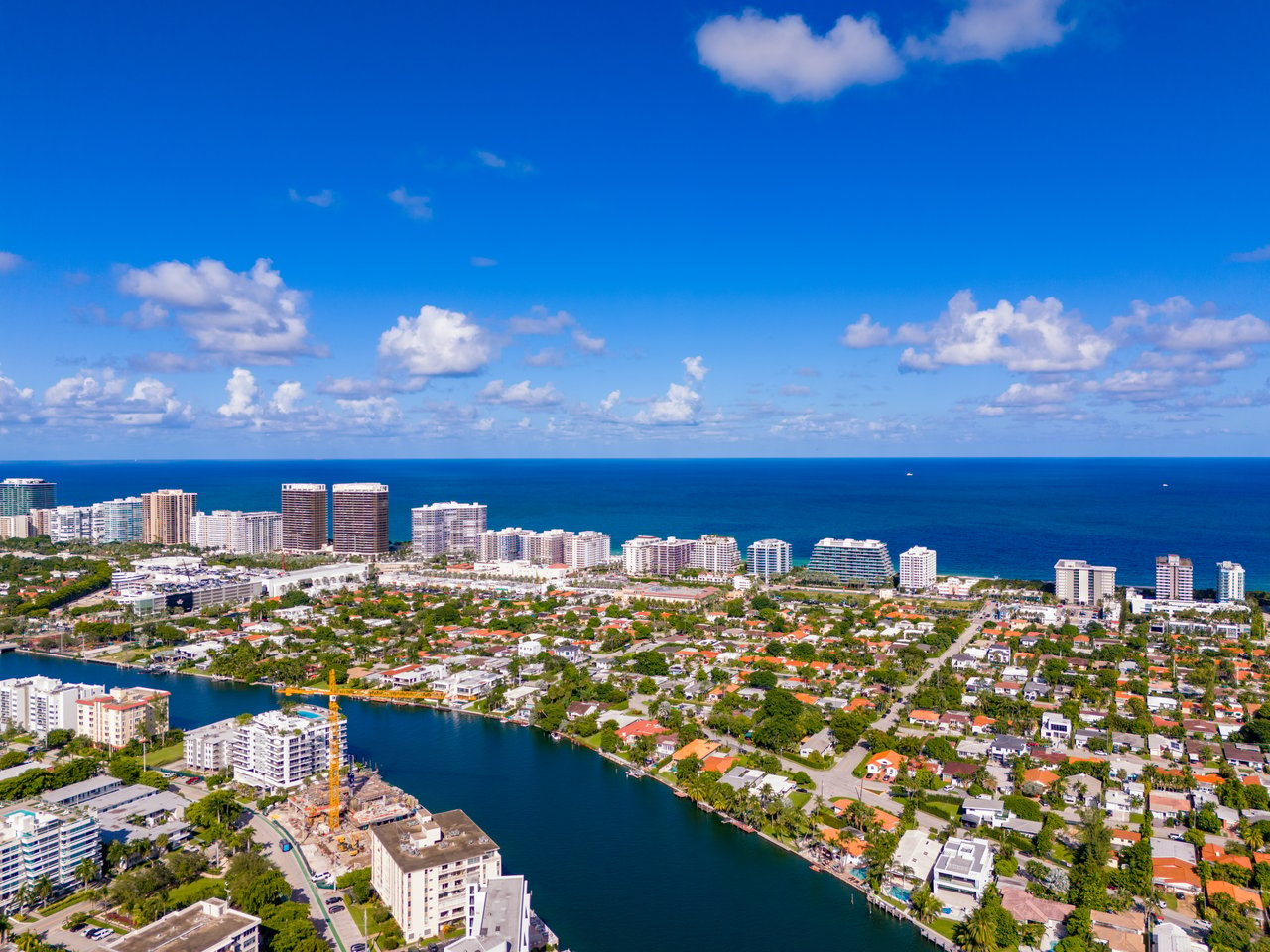
Miami-Dade includes Miami Beach, Bal Harbour, Surfside, Sunny Isles Beach, and other distinct residential markets. Regional South Florida reports generally include Broward, Palm Beach, Martin, and St. Lucie counties as well.
Their sales totals and inventory figures cover different markets.
Even within Miami-Dade, identical budgets produce different choices. A buyer with $10 million might compare Bal Harbour oceanfront living with a larger Sunny Isles residence.
Joelle's comparison of what $10 million, $20 million, and $50 million buys examines those differences across three coastal markets.
For the Miami luxury real estate market, the more revealing question is how easily a buyer could replace the property being offered.
Compare Price Tiers and Property Types
The Miami luxury real estate market looks different when divided into three price ranges. Within each one, condos and houses compete on different features.
What changes between $1M, $5M, and $10M+?
The following Miami real estate price tiers help identify the characteristics buyers commonly compare.
Price Range | Condo Priorities | House Priorities |
1M-5M | Views, fees, condition | Lot, location, upkeep |
5M-10M | Space, views, services | Waterfront, privacy, design |
$10M+ | Scarcity, scale, terraces | Frontage, land, privacy |
Comparison factors vary by property. These aren't fixed features or performance categories.
A $4 million condominium might have several alternatives in its building. Meanwhile, a house costing the same amount could have an unusual lot or architectural style.
At $5 million to $10 million, buyers may scrutinize terrace space, water frontage, renovation quality, and building services.
Beyond $10 million, some properties have no straightforward counterpart. Others still face meaningful competition from similarly priced homes.
What the October 2026 figures reveal
Miami-Dade's broader housing statistics offer some perspective on available inventory.
The October 2026 figures from MIAMI REALTORS show considerably different supply conditions for houses and existing condominiums.
Market Measure | Houses | Condos |
Closed sales | 782 | 907 |
Active listings | 4,739 | 11,989 |
Supply (months) | 5.4 | 12.7 |
Median sale price | $706,000 | $397,500 |
Median closed $/sq. ft. | Unavailable | Unavailable |
Source: MIAMI REALTORS, Miami-Dade County, October 2026. Figures cover all price ranges. Closed-sale counts provide the transaction sample sizes.
Months of supply estimates how long existing inventory would last at the recent sales pace, assuming no new listings.
Countywide, existing condos had 12.7 months of supply. Houses had 5.4 months.
Yet a condominium building with no comparable listings may offer a seller more pricing flexibility than those county figures suggest.
Closed sales, active inventory, supply, and price per square foot must come from the same location, property type, and reporting period.
The public county release doesn't break those measures into all three luxury price ranges. A filtered MLS report is needed for that analysis.
For example, a seller considering an asking price of $6 million needs recent transactions involving comparable residences. A countywide median below $1 million won't help establish that property's value.
Oceanfront and bayfront residences can also command different prices. Joelle's Miami luxury condo price-per-square-foot comparison explores those distinctions.
Why Trophy Homes Can Behave Differently
At the trophy end of the Miami luxury real estate market, a property's individual features can outweigh neighborhood averages.
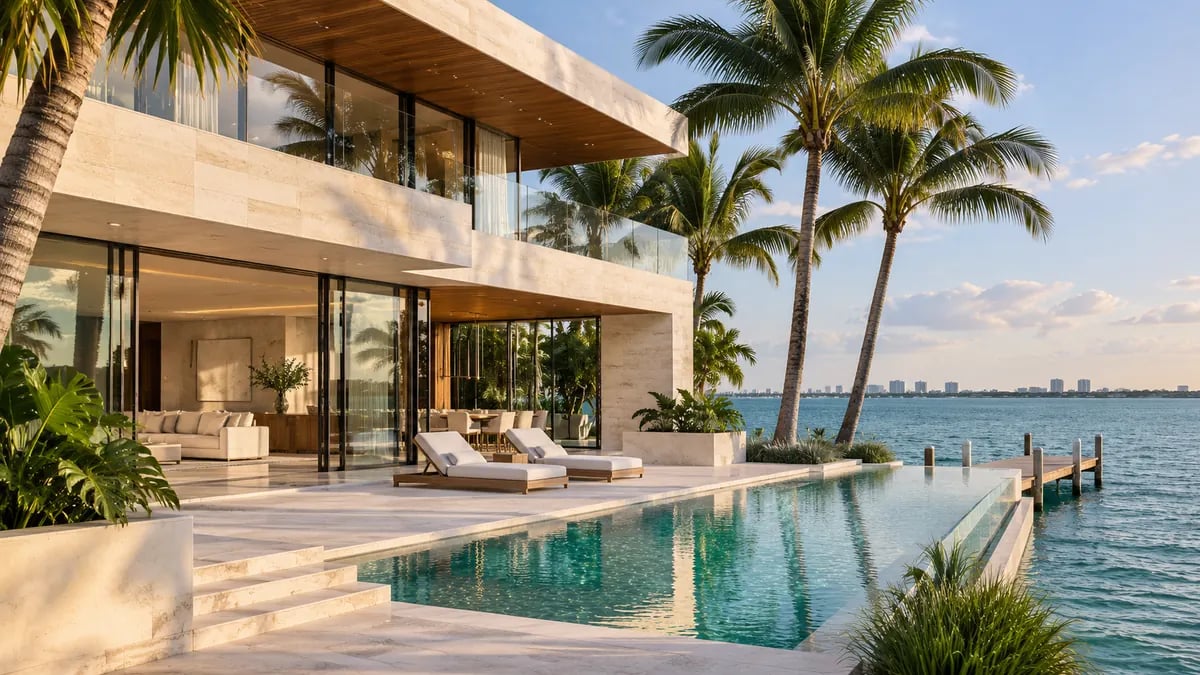
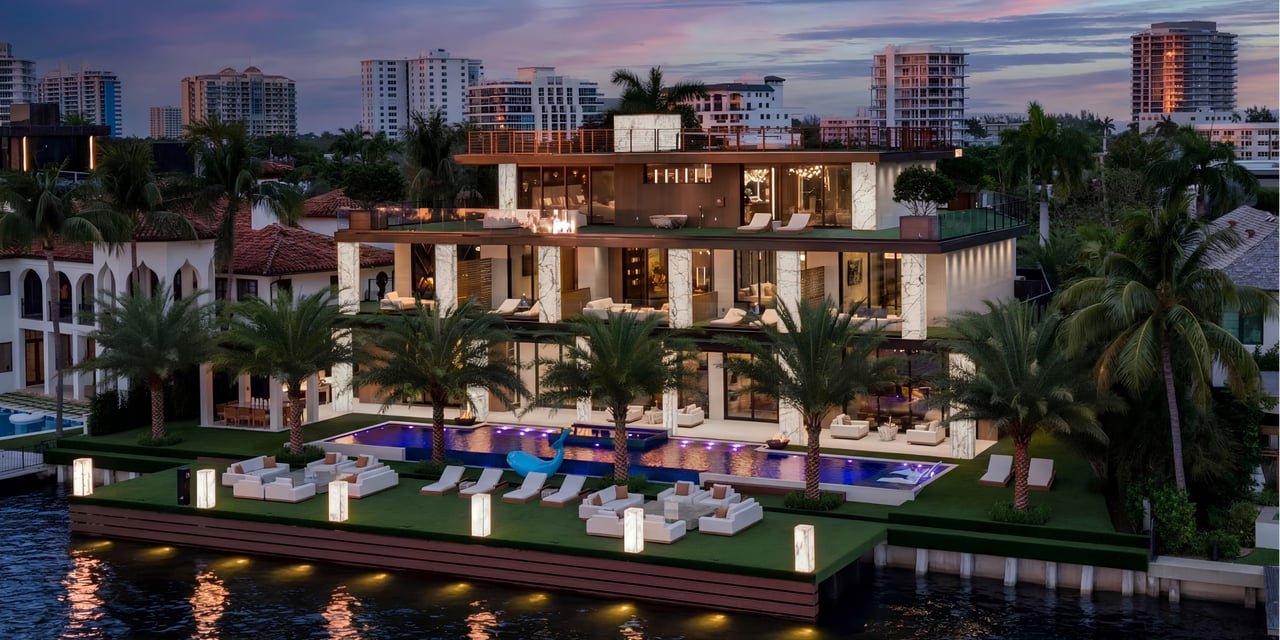
A waterfront house may offer protected dockage, wide frontage, and separation from neighboring estates. Reproducing that combination elsewhere could prove difficult.
Buyers interested in privacy may also compare gated access, neighboring sightlines, and the exposure of outdoor living areas.
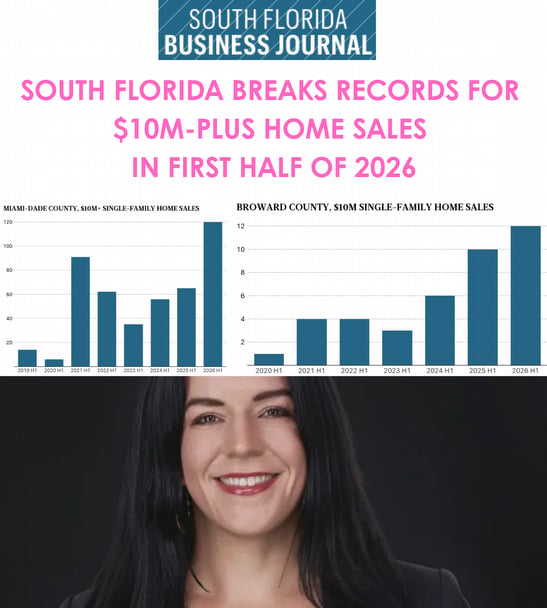
How much activity is there above $10 million?
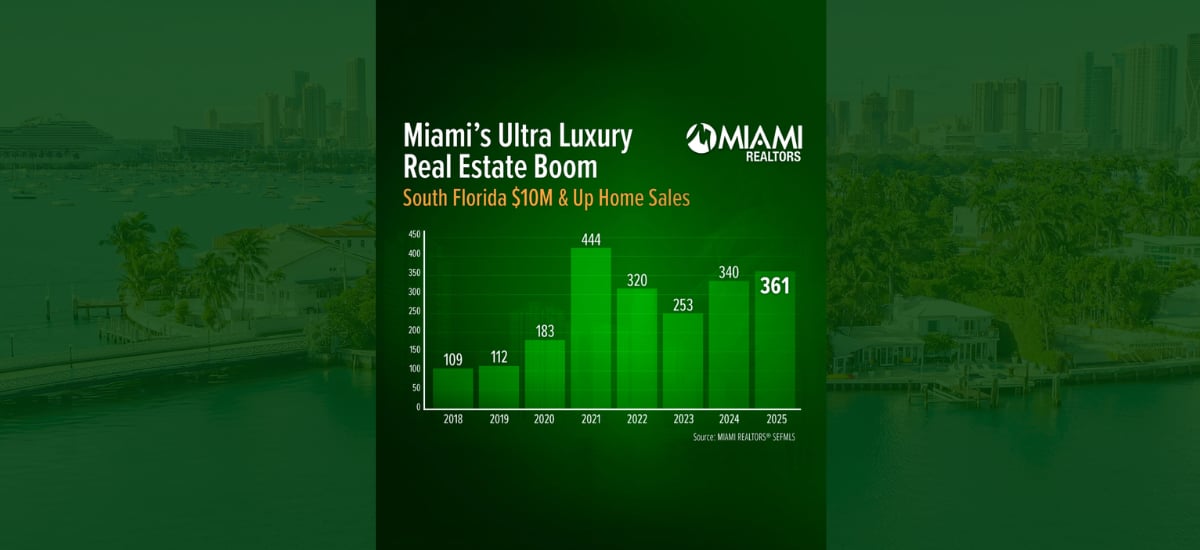
MIAMI REALTORS recorded 430 residential sales of $10 million or more across South Florida's five-county region from January through October 2026.
Its regional market analysis also found that 87% of those transactions were completed in cash.
Cash buyers may face fewer financing obstacles, but cash doesn't settle every negotiation.
An all-cash purchaser can still question a property's valuation, request inspections, or walk away over repair costs.
Those regional figures also don't provide the transaction count or cash share for Miami-Dade's $10 million-plus properties alone.
There's another complication with trophy sales: the closest comparable property may have sold months earlier.
Suppose a waterfront estate includes a private dock and unusually wide frontage. A nearby sale without those features won't provide a direct valuation match.
The same problem appears with trophy penthouses. Terrace size, elevator arrangements, and unobstructed exposure can make two residences difficult to compare.
A record sale is useful evidence, particularly when the property's characteristics are understood. Joelle examines several examples in her analysis of record sales in Bal Harbour and Miami Beach.
An exceptional closing is one piece of evidence. The property's features and competing inventory still need examination.
Where Condo Sellers Face Competition
For condominium owners, competition can be surprisingly close.
Another residence in the same line may offer nearly identical square footage and views. Perhaps its kitchen was renovated recently, while the competing unit still has older finishes.
Both sellers may be asking $4 million.
A buyer touring those properties will notice the condition difference immediately. Association expenses and planned building work can widen the gap.
Building expenses can change a purchase decision
Consider a recently renovated condo with predictable maintenance expenses. Compare it with an older residence facing a substantial special assessment.
The second property may have a lower asking price, but the buyer needs to account for the additional expense.
Florida's condominium regulations are relevant here.
Qualifying buildings must undergo structural integrity reserve studies, which assess major components and anticipated repair funding. The Florida Department of Business and Professional Regulation explains the applicable requirements.
For a condo purchase or sale, examine these details together:
- Recent closings: Compare floor levels, layouts, views, renovations, and recorded sale prices.
- Competing inventory: Look for similar units in the same building and nearby developments.
- Association finances: Review reserve funding, planned repairs, and special assessments.
- Ownership rules: Confirm rental restrictions and applicable approval requirements.
- Renovation needs: Estimate the work required to match comparable residences.
A seller can't assume a neighboring unit's asking price supports their own. The condition and ownership costs may differ considerably.
Those differences also matter when comparing separate buildings.
Joelle's Bal Harbour condo pricing breakdown examines price-per-square-foot differences among luxury properties.
In this part of the Miami luxury real estate market, the closest competing unit may influence an offer more than the latest countywide headline.
What the Split Means for a Purchase or Sale
Two hypothetical purchases show how negotiations can change across the Miami luxury real estate market.
A $3.4 million Miami Beach condo
Imagine a buyer considering a $3.4 million oceanfront residence.
Two comparable units have sold recently. Another remains available in the same building, although its interior hasn't been updated.
The buyer likes the first residence, but the asking price is considerably higher than the recent closings.
Before making an offer, the buyer wants to understand the difference.
Was the renovation extensive? Does the residence offer a better view? Were concessions included in the previous sales?
The seller has questions to answer, too. If the renovation justifies a premium, the quality and cost of that work should be documented.
A lower offer might be reasonable. So might a stronger offer if the residence provides features unavailable elsewhere.
The negotiation begins with the individual units, not an assumed countywide discount.
An $18 million waterfront estate
Now consider a buyer searching for a waterfront home at approximately $18 million.
One estate meets the buyer's preferred location, layout, and privacy requirements. There aren't many alternatives.
However, the seawall is older, and the buyer intends to keep a large boat at the property.
That introduces questions beyond the home's appearance.
The buyer needs information about seawall condition, dock permissions, water depth, and bridge clearance. Insurance costs and flood exposure also deserve attention.
The seller may point to the property's scarce waterfront characteristics. The buyer can still negotiate over documented repair needs or differences from recent closings.
A limited supply of suitable estates doesn't eliminate the need for property-specific due diligence.
Purchase price isn't the entire budget
The Miami condos vs luxury homes comparison becomes more complicated once recurring expenses enter the picture.
With a waterfront house, the owner may pay directly for landscaping, seawall work, exterior maintenance, and insurance.
A luxury condominium generally involves shared building expenses, association fees, and possible special assessments.
The distinction is covered in Joelle's waterfront condo versus waterfront home ownership guide.
Pre-construction adds another set of decisions. Deposits, delivery timing, projected operating expenses, and contractual provisions require careful review.
Buyers comparing new developments with completed properties can also consider why working with a luxury buyer's agent differs from purchasing directly from a developer.
How to Evaluate Your Own Segment
A useful assessment of the Miami luxury real estate market starts with a much smaller group of properties.
For a Bal Harbour condo, that might mean recent closings within the building and competing oceanfront residences. For a waterfront estate, the comparison may extend across several neighborhoods.
Before deciding on an asking price or offer, establish:
- The right comparable properties. Look beyond asking prices to closed transactions, interior condition, location, and distinctive features.
- The actual competition. Identify active listings a buyer would seriously consider instead.
- The complete ownership cost. Include insurance, maintenance, assessments, taxes, and expected repairs.
- The purchase terms. Financing, contingencies, closing dates, and inspection findings can affect negotiations.
- The holding period. Consider renovation plans, resale flexibility, and expenses that may arise during ownership.
Property taxes deserve their own calculation.
Miami-Dade's Property Appraiser tax estimator helps estimate potential taxes using property values and applicable rates.
A seller's current bill may be considerably lower than the taxes assessed after a change of ownership.
Discuss your property with Joelle Oiknine
The right comparison depends on the property itself.
A buyer evaluating Miami Beach penthouses may need an entirely different set of comparable sales from someone purchasing a Bal Harbour waterfront estate.
Similarly, sellers need to know which current listings compete for the same buyers and how their property's condition affects pricing.
For a property-specific discussion, contact Joelle Oiknine about the location and price range you're considering.
Before relying on another luxury market headline, consider one question: Would the buyer behind that headline have seriously considered your property?
That question can help narrow which sales are worth investigating.
Frequently Asked Questions
How does Miami's luxury market differ below and above $10 million?
Properties below $10 million may face more direct competition, particularly within established condominium buildings. Trophy estates and penthouses can have fewer close alternatives. However, the Miami luxury real estate market varies considerably by property type and location. A $10 million condo occupies a different position from a house selling for the same amount.
Are ultra-luxury homes performing differently from other Miami properties?
South Florida's $10 million-plus segment recorded 430 sales during January–October 2026, with cash accounting for 87% of those transactions. That activity doesn't establish uniform price growth across Miami-Dade. Individual properties still depend on asking prices, condition, available alternatives, and buyer preferences. Recent comparable sales offer stronger evidence for a particular purchase or sale.
What should buyers know about Miami's different luxury price tiers?
The Miami luxury real estate market includes condos and houses with very different ownership structures and competitive conditions. Buyers should examine closed sales, competing inventory, recurring expenses, and financing requirements within their chosen segment. For distinctive properties, the closest useful comparisons may extend beyond one building or neighborhood.