The best time to negotiate a Miami condo might arrive before the seller makes a single price reduction.
Imagine finding three residences with nearly identical floor plans in the same oceanfront tower. One is newly renovated, another has been relisted, and the third carries a pending assessment.
They don't deserve the same offer.
The Miami luxury condo market is giving buyers more choices heading into 2027, but those choices come with different risks and expenses. Knowing where the competition sits can matter more than waiting for another price cut.
Give a Direct and Qualified Market Answer
Yes, the broader Miami luxury condo market currently favors buyers. Miami-Dade recorded 16 months of supply for condominiums and townhomes priced at $1 million or more in October 2026.
That's considerably more inventory than a balanced market would typically carry.
However, the figures cover a wide range of residences. A $1.2 million apartment in an older building faces different competition from a $12 million oceanfront penthouse.
Miami's higher-priced condo market at a glance
Market Indicator | October 2026 |
Active listings ($1M+) | 2,477 |
Months of supply | 16 |
Year-to-date sales growth | +9.3% |
Source: MIAMI REALTORS, October 2026 South Florida Housing Market Report. Miami-Dade condos and townhomes priced at $1M+. Sales growth compares January–October 2026 with the same period in 2025.
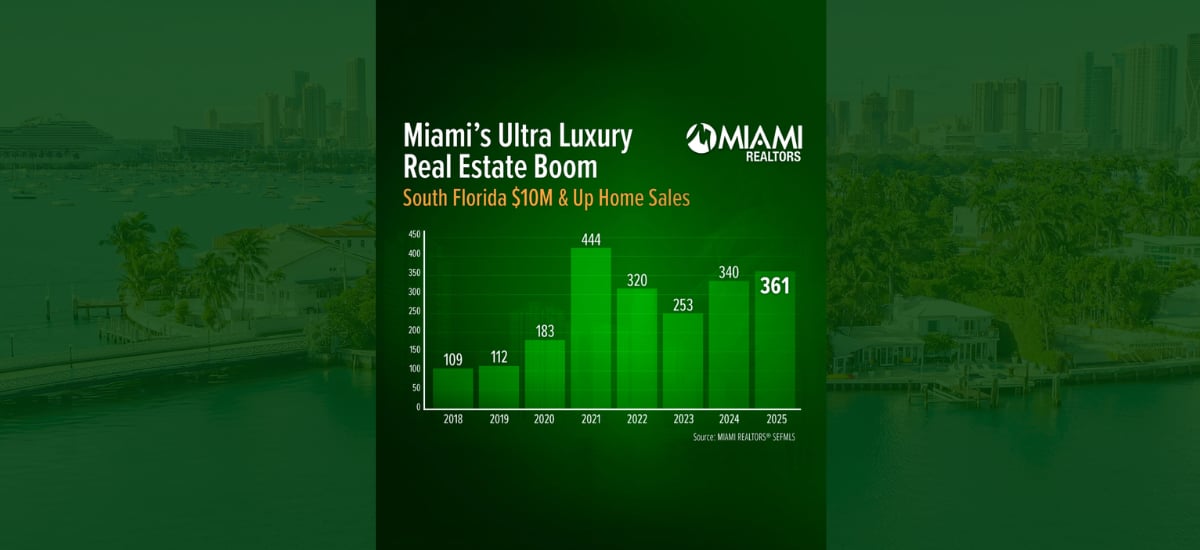
The combination is interesting. Buyers have considerable inventory to choose from, yet higher-priced transactions increased during the first ten months of 2026.
The $1 million threshold also includes properties outside the county's highest luxury tier.
Separate MIAMI REALTORS luxury research places the top 5% of Miami-Dade condominium sales at approximately $3.1 million or more during January–September 2026.
A buyer exploring that smaller segment needs comparable sales and inventory filtered specifically for it.
In Bal Harbour, for example, the same budget can produce very different residences depending on the building. Joelle's Bal Harbour condo price-per-square-foot comparison examines those differences.
The countywide figures give buyers a reason to investigate. The individual building determines how far negotiations can go.
Read the Indicators Together
A listing that has spent six months on the market may look negotiable. But its history becomes much more useful when compared with recent sales and competing residences.
Several indicators help establish the conditions behind an asking price.
Months of supply and active inventory
Months of supply measures how long existing inventory would take to sell at the prevailing sales pace, assuming no additional listings.
Florida Realtors' methodology divides active inventory by the average monthly closed sales over the previous 12 months.
Using a full year helps reduce seasonal distortions.
Florida Realtors uses approximately 5.5 months as a conventional balanced-market benchmark. Different organizations may use slightly different thresholds.
At 16 months, Miami-Dade's $1 million-plus condo and townhome segment has substantial available supply.
Still, buyers should distinguish listings in the same building from those elsewhere.
Three nearly identical units may offer genuine alternatives. Three residences with different layouts, views, and ownership arrangements may not.
Pending sales and closed transactions
Pending sales show properties that have gone under contract but haven't closed.
A rising number of pending contracts can indicate improving demand. Closed transactions reveal the prices buyers ultimately agreed to pay.
For the Miami luxury condo market, both measures deserve attention.
An asking price of $4 million tells a different story when comparable residences recently closed near $3.5 million.
However, a lower closing price may reflect an inferior view, outdated interiors, or other differences.
The same issue arises when comparing oceanfront and bayfront luxury condominium prices. The type of waterfront exposure can substantially affect value.
Days on market and sale-to-list ratios
Days on market measures how long a property is marketed before going under contract.
The full listing history matters here.
A residence might appear newly listed despite having been withdrawn and reintroduced at a different price.
The sale-to-list ratio compares the final sale price with an asking price. Reports may use either the original or final asking price, so the definition matters.
When negotiating Miami condo prices, request both the original listing history and the final contract terms.
A sale-to-list ratio alone won't reveal every seller concession or repair credit.
Identify Where Negotiation Is Realistic
A Miami condo buyer's market becomes most useful when several properties compete for the same purchaser.
Suppose two residences occupy the same line in an oceanfront building.
Both offer similar interior space, but one has renovated bathrooms and a newer kitchen. The other retains older finishes and has spent considerably longer on the market.
The buyer now has a concrete basis for comparing price and condition.
Three situations that may favor buyers
- Several similar residences are available
When competing units offer comparable layouts and views, sellers must distinguish their properties through pricing, condition, or terms.
A buyer can compare those options without immediately increasing an offer.
- A listing has undergone repeated reductions
Price reductions can indicate that earlier asking prices failed to attract an acceptable offer.
They don't reveal the seller's minimum acceptable price.
Look at the full marketing history, including canceled listings, before drawing conclusions.
- The unit needs work
Older interiors, dated mechanical systems, or documented repairs may justify adjustments when comparable properties require less investment.
Contractor estimates provide stronger negotiating evidence than assumptions about renovation costs.
When buyers may have less leverage
An unusually desirable residence can attract serious interest even in a supply-heavy market.
Consider a penthouse with expansive terraces, a private elevator, and uninterrupted ocean exposure.
If there are no close substitutes, a buyer may have limited room to negotiate.
That distinction is especially relevant to boutique properties such as Seaway at The Surf Club in Surfside, where individual layouts and ownership arrangements require careful comparison.
Price isn't the only negotiating term
A seller may be unwilling to accept a lower price but more flexible about the closing schedule.
Other possible terms include repair arrangements, inspection contingencies, or responsibility for an approved assessment.
Those details should be documented in the purchase contract.
A long marketing period doesn't prove a seller needs to move quickly. Negotiating leverage comes from evidence of competing options, not guesses about the owner's circumstances.
Look Past a Lower Asking Price
A discounted condo isn't necessarily less expensive to own.
Imagine a waterfront residence with an attractive asking price but substantial repairs planned for the building. The buyer may face a special assessment shortly after closing.
Another unit with a higher purchase price might have more predictable expenses.
What to examine before making an offer
Florida's condominium regulations require qualifying buildings to complete certain structural inspections and reserve studies.
A Structural Integrity Reserve Study, or SIRS, evaluates major building components and the funding needed for future repairs.
The Florida Department of Business and Professional Regulation explains these requirements.
A buyer should request and review the relevant documents, including:
- Association budgets and reserves: Examine available funds, recurring expenses, and future obligations.
- Inspection reports: Review applicable milestone inspections and identified structural concerns.
- Special assessments: Confirm approved amounts, payment schedules, and outstanding balances.
- Insurance coverage: Examine the association's master policy and relevant deductibles.
- Association rules: Understand rental restrictions, renovations, and approval procedures.
Florida's condominium guidance and reserve requirements provide additional information about the records and obligations involved.
A high association fee isn't automatically a warning sign. It may cover substantial services, maintenance, and properly funded reserves.
Conversely, a lower fee can accompany deferred expenses.
Joelle's Miami waterfront condo guide examines building expenses and ownership restrictions across different properties.
Financing deserves attention, too
A mortgage lender may evaluate the condominium project alongside the borrower's finances.
Certain structural problems, insufficient insurance, or other project issues can affect eligibility under conventional financing programs.
Fannie Mae's condominium project guidance identifies conditions that may make a project ineligible.
Jumbo lenders and other financing sources have their own requirements.
For buyers considering long-term expenses, Joelle's waterfront condo versus waterfront home cost comparison explores the different financial obligations.
The purchase price gets you into the building. The association's finances affect what ownership will cost afterward.
Monitor the Market Into 2027
The Miami luxury condo market could develop in several ways during 2027.
October 2026 provides a substantial inventory baseline, but it doesn't establish future prices or sales activity.
Instead of trying to identify a perfect purchase month, buyers can follow three developments.
More listings without stronger sales
If inventory grows while pending contracts remain weak, buyers could have additional alternatives.
Repeated price reductions or withdrawals among comparable properties may strengthen that position.
The important comparison is between similar residences, not every condominium across the county.
Faster sales and fewer available units
An alternative scenario involves stronger demand and declining inventory.
If suitable listings begin selling more quickly, buyers may need to make decisions with less time available.
The most desirable residences could become competitive before the overall market changes noticeably.
New construction competing with resales
New developments may give buyers another reason to reconsider older residences.
At The Perigon Miami Beach, buyers can compare planned contemporary residences with completed Mid-Beach inventory.
Boutique developments such as Ocean House Surfside offer another type of oceanfront property.
The comparison involves more than design.
Pre-construction buyers must examine deposits, projected association expenses, contractual protections, and delivery provisions.
Completed residences have existing operating records and can generally be inspected in their current condition.
New construction can introduce competition, although developer asking prices shouldn't be treated as completed resale transactions.
Watch the trend, not one quiet month
Seasonality can affect Miami condominium activity.
Compare equivalent months or quarters across years, then examine changes within the relevant price range.
For luxury condo inventory in Miami, a persistent rise in competing listings matters more than a temporary seasonal increase.
Build an Evidence-Based Offer
Before making an offer, narrow the Miami luxury condo market to the residences that would genuinely compete with your chosen property.
The strongest offer isn't necessarily the lowest one. It reflects what the buyer knows about the building, recent transactions, and available alternatives.
A hypothetical $4.1 million condo purchase
Consider a Miami Beach residence listed at $4.1 million.
A similar unit recently sold, although it had newer interiors and a less obstructed ocean view. Another comparable residence remains available nearby.
The buyer also discovers that the association is planning significant building work.
The next step is to gather evidence before settling on an offer.
- Compare recent closings. Adjust for differences in views, floor level, condition, and interior space.
- Examine competing listings. Review their asking prices, marketing histories, and available alternatives.
- Review building documents. Confirm reserve funding, inspection findings, and assessment obligations.
- Estimate additional costs. Obtain relevant renovation estimates and calculate recurring expenses.
- Prepare the offer terms. Establish price, contingencies, closing preferences, and responsibility for known obligations.
The hypothetical buyer might negotiate on price or request specific terms concerning an approved assessment.
The outcome would depend on the seller's position and the evidence supporting the offer.
When should a buyer walk away?
Sometimes the best negotiating decision is not to purchase.
Unexpected repair obligations, financing problems, or restrictive building rules could make a residence unsuitable.
A different unit in the same neighborhood may offer fewer complications.
Buyers who have several acceptable options generally have more flexibility than those focused on a single address.
Discuss your Miami condo search with Joelle
The Miami luxury condo market offers opportunities, but evaluating them requires more than finding reduced asking prices.
A Surfside penthouse and a Bal Harbour resale may face entirely different competition. Building finances and individual property features can also influence their value.
For help comparing specific residences, recent sales, and purchase terms, contact Joelle Oiknine about the buildings you're considering.
Before making an offer, ask yourself one question: Would this still be the right residence without the advertised price reduction?
Frequently Asked Questions
Is it a buyer's market for luxury condos in Miami?
Yes, the broader Miami luxury condo market favors buyers, with 16 months of supply for Miami-Dade condos and townhomes priced at $1 million or more in October 2026. Conditions vary among individual buildings.
Can buyers negotiate on Miami luxury condos?
Yes, particularly when several comparable residences are available or a listing has undergone repeated reductions. Price, closing dates, repairs, and assessment obligations may all be negotiable.
What should luxury condo buyers watch in 2027?
Monitor active listings, pending contracts, completed sales, marketing periods, and building expenses. Compare equivalent reporting periods to identify persistent changes.
How does condo inventory affect negotiating power?
More comparable listings generally give buyers additional choices and negotiating leverage. A residence with few suitable alternatives may remain competitive despite high countywide inventory.
Is it better to buy a Miami luxury condo now or wait until 2027?
Neither option guarantees a better price. The decision should reflect available properties, building condition, ownership expenses, and the buyer's circumstances.
Do high HOA fees make a Miami luxury condo a bad investment?
Not necessarily, because fees may cover extensive amenities, maintenance, services, and reserve funding. Review the association budget, financial condition, and upcoming expenses before judging the cost.