The rules around condo financing are shifting — and if you work in South Florida's condominium market, staying ahead of these changes isn't optional. A recent briefing shared by City National Bank through the Master Brokers Forum Miami/Gold Coast outlined a series of significant updates to condo lending guidelines that will affect how deals are structured, reviewed, and closed. Some of these changes create new opportunities. Others introduce new friction. All of them demand your attention.
Here's a breakdown of what's changing and when.
Reserve Requirements Are Going Up
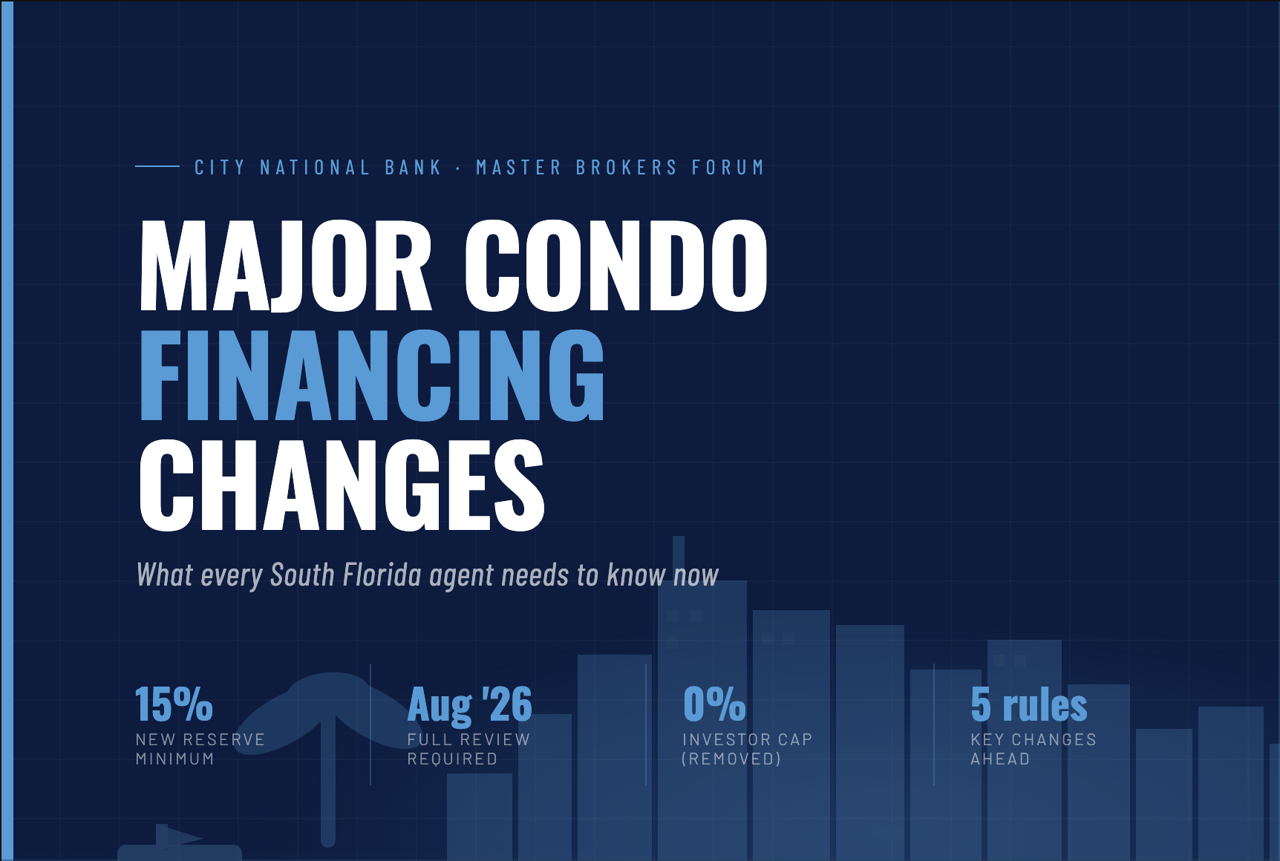
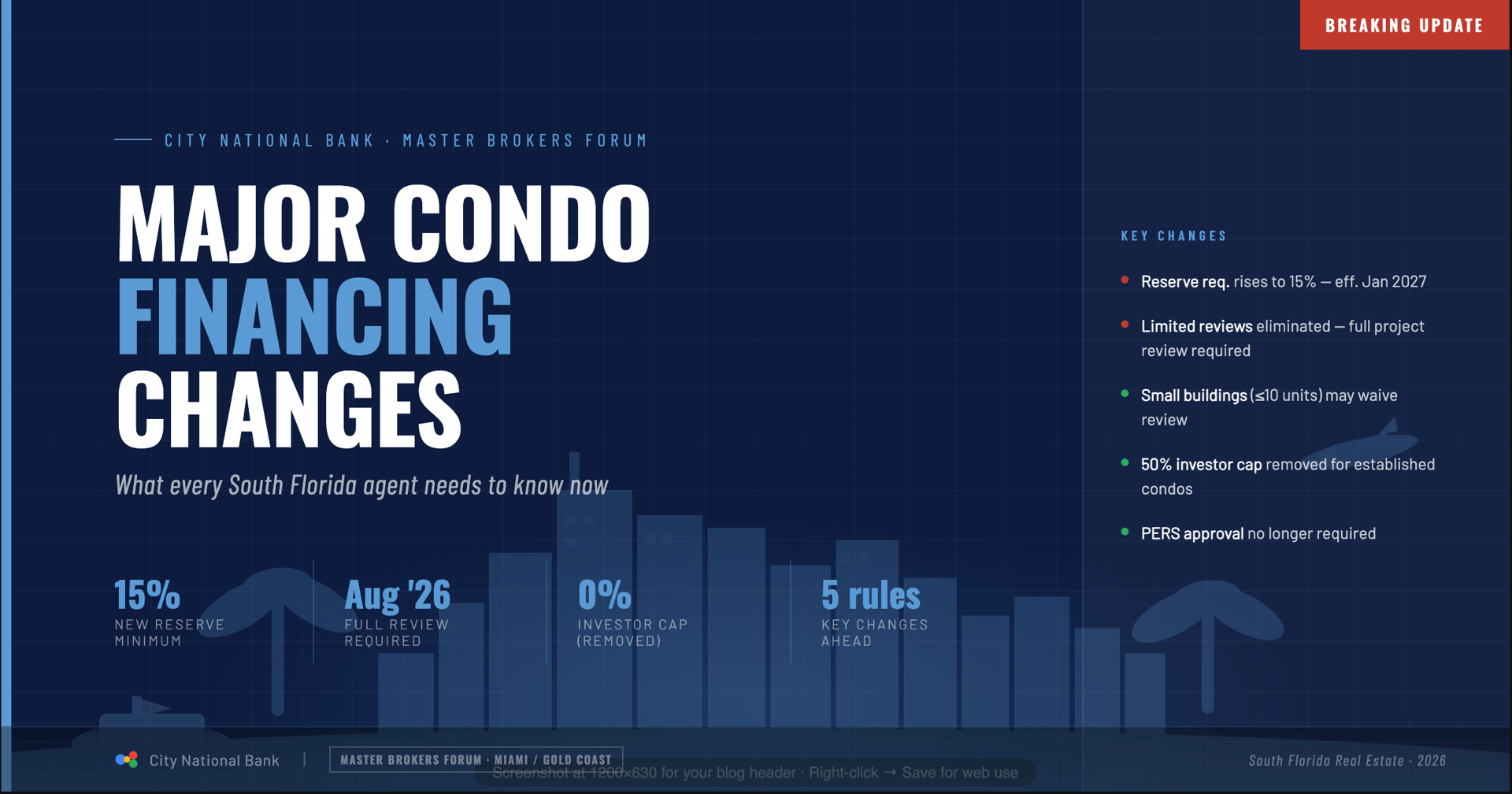
Starting January 4, 2027, condominium budgets will be required to allocate a minimum of 15% toward reserves — up from the previous 10% threshold. This change is designed to ensure that buildings maintain adequate financial cushion for long-term maintenance and repairs, a concern that has grown significantly in the wake of structural safety legislation across Florida.
There is one key exception: buildings that have completed a reserve study within the past three years and are funding at the highest recommended level will not be subject to this new requirement. If your buyers are eyeing a building that hasn't recently conducted a reserve study, that's a conversation worth having now — before this rule takes effect.
Limited Reviews Are Going Away
This is one of the more impactful changes on the horizon. Beginning August 3, 2026, limited condo project reviews will no longer be available for conventional financing. All condo loan transactions will be required to go through a full project review.
For agents, this means more documentation, more time, and potentially more deals that face complications during the lending process — particularly in buildings that have deferred maintenance, litigation, or financial irregularities on record. Getting ahead of project eligibility early in the transaction is now more important than ever.
Small Projects Get a Break
There is some good news, particularly for boutique buildings. Condominium projects with 10 units or fewer may now qualify for a waiver of the project review process altogether — and this change is already in effect. For agents working in smaller, low-rise, or villa-style communities, this is a meaningful streamlining that could reduce friction significantly.
The 50% Investor Cap Is Gone
Another immediate change: the 50% investor concentration limit for established condominium projects has been removed. Previously, if more than half of a building's units were investor-owned, conventional financing could be restricted for prospective buyers. That barrier no longer applies to established projects, which is particularly relevant in South Florida's investor-heavy condo landscape.
PERS Approval No Longer Required
The Fannie Mae Project Eligibility Review Service (PERS) — a formal pre-approval process that some lenders required before financing could move forward — is also no longer mandatory. Projects can now proceed directly through the standard full review process, which simplifies the pathway to financing approval without the added layer of pre-certification.
Florida-Specific Requirements for New Projects Removed
For new condominium developments, Florida-specific financing requirements have been eliminated, making it easier for newly built projects to qualify for conventional financing. This is welcome news for agents and developers navigating pre-construction and new development sales in a market that has seen a surge of inventory coming to market.
The Bottom Line
These changes are a mixed bag. The removal of investor caps and the PERS requirement are clearly buyer- and agent-friendly moves that should open up financing options in buildings that previously faced limitations. The elimination of limited reviews and the increase in reserve requirements, on the other hand, will add complexity and scrutiny to a larger portion of condo transactions.
The takeaway: condo deals in South Florida just became more nuanced. Working with a knowledgeable lender from the earliest stages of a transaction — not as an afterthought — is now a critical part of deal strategy.
If you're navigating a condo transaction and have questions about how these guidelines apply to a specific building or buyer scenario, reach out to your lending partner early. There are always solutions — but they're much easier to find before a deal is under contract.
Information sourced from City National Bank and the Master Brokers Forum Miami/Gold Coast. For deal-specific financing questions, contact your condo lending specialist.