Over the past three years, Florida’s once record-breaking migration surge has slowed dramatically. Net domestic migration into the state has declined by 93% from its pandemic peak — a significant shift from the extraordinary growth Florida experienced between 2021 and 2022.
However, while overall migration numbers have cooled, Miami continues to stand out as a magnet for high-earning professionals relocating for career opportunities.
A Sharp Slowdown from Pandemic Highs
Florida’s net domestic migration has fallen considerably:
-
2022: 310,892 new residents
-
2023: 183,646
-
2024: 58,411
-
2025: 22,517
This sharp moderation reflects a return to more normalized mobility patterns following the pandemic boom.
Several factors have contributed to the slowdown:
-
Employers requiring in-office work again
-
Higher home prices across the state
-
Rising property insurance premiums
-
Increased awareness of hurricane exposure
The urgency that once drove mass relocation during remote-work flexibility has subsided, resulting in a more selective and economically driven migration pattern.
Miami’s Continued Pull for High-Income Movers
Despite the statewide decline, the Miami metro area remains a strong destination for interstate job movers.
In 2024 alone, more than 55,000 out-of-state workers relocated to Miami for employment opportunities. The largest share of inbound movers came from:
-
New York
-
Texas
-
Georgia
-
California
-
New Jersey
What is particularly notable is the profile of these movers. High-skill, high-income professionals — particularly in finance, technology, and professional services — represent a disproportionately large share of relocations compared to lower-income workers.
This shift signals that Miami’s appeal today is less about pandemic relocation trends and more about long-term career positioning and business expansion.
Economic Impact on South Florida
These inbound professionals brought substantial economic influence with them. Out-of-state job movers relocating to the Miami metro earned approximately $5.1 billion in income during the first three quarters of 2024 alone.
This influx of high-earning residents continues to support:
-
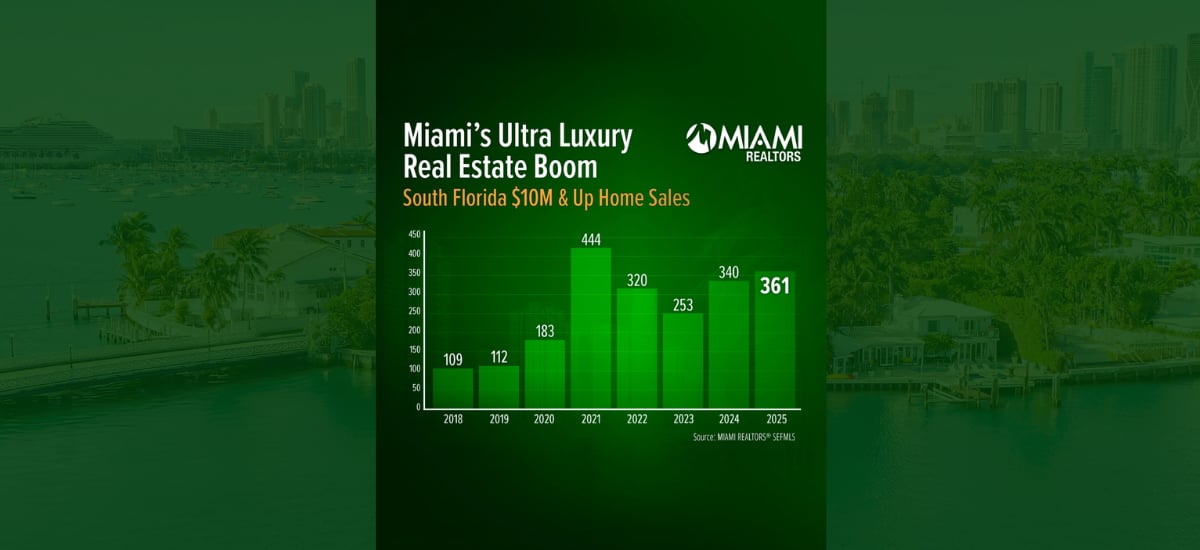
Luxury real estate demand
-
Prime condominium absorption
-
High-end rental activity
-
Growth in financial and tech sectors
At the same time, increased demand places ongoing pressure on housing affordability across many neighborhoods.
What This Means for the Market
While Florida’s overall migration surge has cooled, Miami remains uniquely positioned. The market is no longer being driven by volume migration — it is being driven by strategic, high-earning professionals making calculated career moves.
For real estate, this means:
-
Continued resilience in luxury and waterfront segments
-
Strong demand for prime inventory
-
Selective but qualified buyer activity
Florida may no longer be experiencing pandemic-level inflows, but Miami’s role as a global business hub continues to attract capital, talent, and long-term investment.