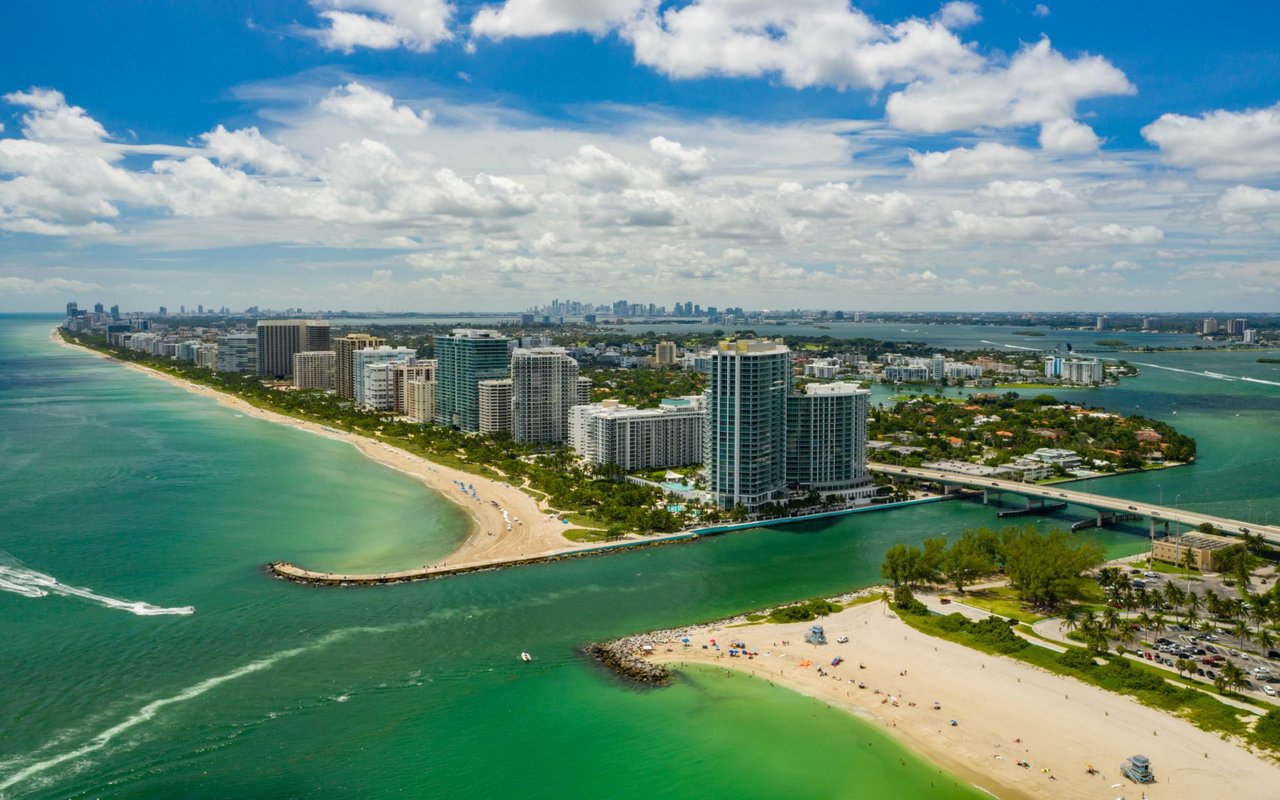
TLDR: Florida remains the premier destination for wealth preservation in the U.S. because it imposes no state luxury tax, state income tax, or estate tax. For high-net-worth individuals, this translates into a 6–13% immediate "discount" on annual earnings compared to high-tax states. Whether you are acquiring a Miami waterfront estate, a custom yacht, or a luxury vehicle collection, Florida’s tax code is designed to protect your capital, not penalize your success.
What You'll Learn in This Guide
-
Florida has no dedicated "luxury tax" on high-end purchases like homes, cars, or boats
-
The absence of state income tax saves wealthy residents an average of 6–13% compared to states like California and New York
-
Property taxes on luxury homes in Florida average 0.86%—significantly lower than the national average
-
Strategic timing and residency establishment can eliminate capital gains and estate tax exposure
-
Working with a Miami-based luxury real estate expert ensures you maximize every tax advantage available
Why Wealthy Americans Are Flocking to Florida: The Numbers Behind the Migration
The wealth migration to Florida has moved past the "trend" phase—it is now a permanent pillar of American financial strategy. By the start of 2026, Florida remains the undisputed leader in net income migration, capturing an staggering $39.2 billion in annual adjusted gross income (AGI) from interstate movers. This represents an inflow of approximately $4.4 million every hour, primarily fueled by high-earning households relocating from the Northeast and West Coast.
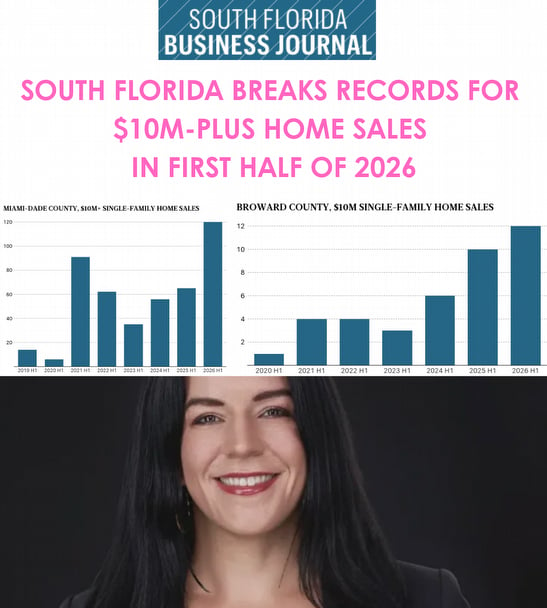
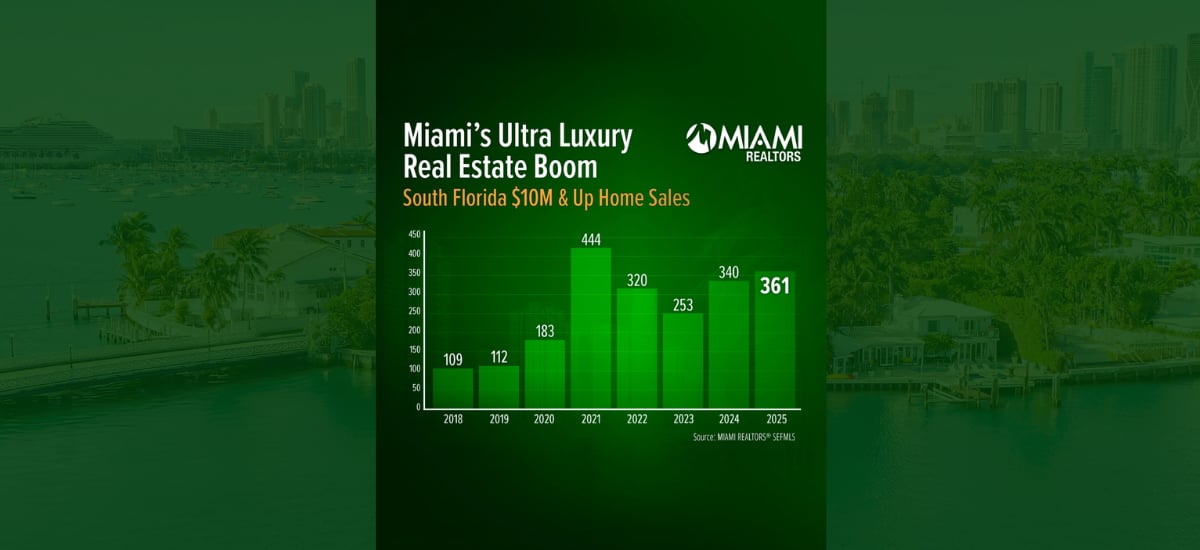
The motivation for this shift is clear: a recent 2025 HNW Relocation Snapshot revealed that tax efficiency remains the #1 driver for 62% of high-net-worth individuals. In Miami’s ultra-luxury sector, the demand is particularly visible; the MIAMI Association of Realtors reports that sales for homes priced over $10 million are currently on a record-breaking pace, projected to hit nearly 430 transactions by the end of 2026—rivaling even the historic pandemic peak of 2021.
|
Statistic |
Source Context |
|
$39.2 Billion net annual income migration into Florida |
|
|
62% of HNW relocators cite tax advantages as their primary driver |
|
|
426+ projected annual luxury home sales over $10M in South Florida |
|
|
165,000+ millionaires expected to change tax residence globally in 2026 |
|
|
147% increase in Miami luxury sales over $1M since 2019 |
The mathematics are straightforward for top earners. The Financial Planning Association notes that with the 2026 return to a 39.6% top federal tax rate, the ability to eliminate state income tax is more critical than ever. Relocating to Florida currently saves high earners $130,000 or more annually for every $2 million in income compared to California or New York. That represents **$1.3 million to $3 million in preserved wealth** over a single decade—capital that remains in your portfolio rather than being lost to state taxation.
Ready to explore tax-advantaged luxury properties in Miami? Browse Our Exclusive Listings
Does Florida Have a Luxury Tax?
Florida does not impose a luxury tax on high-value purchases. The absence of any luxury tax in Florida distinguishes the state from jurisdictions that add surcharges or additional levies on expensive homes, vehicles, or other assets. Florida applies standard tax rates regardless of purchase price, a policy verified by the Florida Department of Revenue’s 2026 tax guidelines.
The term "luxury tax Florida" generates considerable search volume because buyers expect punitive taxation on high-end acquisitions. Many arrive in Miami asking specifically about luxury tax in Florida, assuming they'll face the same mansion taxes, luxury transfer fees, and progressive tax brackets that penalize success in states like New York, New Jersey, and California. Florida operates differently.
When you purchase a $10 million oceanfront estate in Miami Beach, you pay the same documentary stamp tax rate as someone buying a $300,000 condo. In Miami-Dade, this rate is a competitive $0.60 per $100 for single-family residences, as detailed by the Miami-Dade Clerk of Courts. No additional mansion tax. No luxury surcharge.
Compare this to New York, where luxury buyers face a progressive mansion tax that scales up to 3.9% for properties over $25 million, according to New York State tax expenditure estimates for 2026. On a $10 million purchase in Manhattan, that is a minimum 3.25% surcharge—an additional $325,000 in taxes beyond standard fees. In Miami, that $325,000 stays in your account. Similarly, Los Angeles now enforces its "Measure ULA" tax, which imposes a 5.5% surcharge on transactions exceeding $10.6 million (City of Los Angeles Office of Finance).
What Florida Does vs. Doesn't Tax
Florida DOES NOT Tax:
-
Luxury surcharges on high-value homes
-
Mansion taxes or progressive transfer fees
-
State income (including investment income and capital gains)
-
Estates or inheritances, a protection upheld by the Florida Constitution
-
Personal property like vehicles (no annual assessment tax)
Florida DOES Tax:
-
Documentary stamps on real estate transfers (0.7% statewide; 0.6% Miami-Dade residential)
-
Property taxes based on assessed value (historically an 0.86% average effective rate)
-
Sales tax on purchases (6% state rate plus local surtax)
-
Intangible tax on new mortgages (0.2% one-time fee)
Understanding what constitutes a "luxury tax" in Florida—or more accurately, the fact that such a penalty doesn't exist—helps high-net-worth buyers plan purchases without the fear of the punitive surcharges common in other states.
What Luxury Tax Laws Should You Be Aware of When Purchasing High-End Real Estate in Florida?
Florida taxes luxury real estate through transaction-based fees rather than value-based penalties. When sophisticated buyers research luxury tax in Florida, they often expect to find special levies on expensive properties. Instead, they discover a straightforward system that treats all transactions equally regardless of price point.
Documentary Stamp Tax represents the primary state-level cost. Florida charges $0.70 per $100 of purchase price. On a $5 million home, that's $35,000. On a $20 million estate, it's $140,000. This applies to all real estate transfers regardless of value—there's no luxury premium.
Intangible Tax applies to new mortgages at 0.2% ($2 per $1,000 borrowed). Most luxury buyers use cash or minimal financing, which makes this largely irrelevant.
Property Taxes represent the ongoing annual cost. Florida's average effective rate of 0.86% means a $10 million home generates approximately $86,000 in annual property taxes.
Florida Luxury Property Tax Breakdown
|
Tax Type |
Florida |
New York |
California |
|
State Income Tax |
0% |
Up to 10.9% |
Up to 13.3% |
|
Mansion/Luxury Tax |
None |
1–4.15% on $1M+ |
0.45% transfer tax |
|
Estate Tax |
None |
Up to 16% |
None (federal applies) |
|
Property Tax Rate |
~0.86% |
~1.4% |
~0.73% |
|
Documentary Stamp |
0.7% |
0.4–1.4% |
Varies by county |
Real-World Cost Comparison:
$10 Million Property Purchase:
-
Florida: $70,000 documentary stamps + ~$86,000 annual property tax
-
New York: $40,000 transfer tax + $380,000 mansion tax + ~$140,000 annual property tax
-
California: $45,000 transfer tax + ~$73,000 annual property tax
Over ten years, Florida's luxury home tax approach saves $1 million to $5 million compared to New York, depending on purchase price. The complete absence of luxury tax in Florida means every dollar saved compounds through investment growth rather than disappearing into state coffers.
How Does the Luxury Tax Impact Wealthy Investors Buying Property or Yachts in Florida?
Florida's yacht and marine vessel tax structure offers significant advantages. The state charges a 6% sales tax on boat purchases, but caps the maximum tax at $18,000 regardless of vessel price. This represents the closest thing to a luxury tax in Florida, though the cap actually benefits high-end buyers rather than penalizing them.
This cap creates extraordinary savings. A $5 million yacht generates the same $18,000 tax as a $300,000 boat. In California, that same $5 million yacht would incur $300,000 in sales tax. The Florida approach saves $282,000.
The 90-Day Use Provision creates additional planning opportunities. Boats purchased for use outside Florida waters aren't subject to sales tax if they remain out of state for the first 90 days of ownership.
Florida also exempts boats from personal property taxes. Once you've paid the initial sales tax, there's no annual assessment. Compare this to states that levy annual taxes on vessel value.
Yacht Purchase Tax Comparison
|
Purchase Price |
Florida Tax |
California Tax |
Savings |
|
$1M yacht |
$18,000 (capped) |
$60,000 |
$42,000 |
|
$3M yacht |
$18,000 (capped) |
$180,000 |
$162,000 |
|
$5M yacht |
$18,000 (capped) |
$300,000 |
$282,000 |
|
$10M yacht |
$18,000 (capped) |
$600,000 |
$582,000 |
Considering waterfront property with yacht access? Explore Miami's Premier Neighborhoods
What Are the Property Tax Rates for High-End Homes in Miami?
Florida's property tax system provides predictability and protection for primary residence owners through several mechanisms.
Homestead Exemption reduces assessed value by $50,000 for primary residences. This applies regardless of property value—a $20 million estate receives the same $50,000 exemption as a $500,000 home.
More significantly, homestead status triggers the Save Our Homes protection, which caps annual assessed value increases at 3% or the Consumer Price Index, whichever is lower. This creates substantial long-term savings as property values appreciate faster than assessment growth.
Portability allows primary residence owners to transfer their accumulated Save Our Homes benefit to a new Florida property. If your $5 million home has an assessed value of $3.5 million due to years of capped increases, you can transfer that $1.5 million benefit when purchasing a $10 million property.
Luxury Home Property Tax Estimates
Sample Annual Property Taxes (Miami-Dade County):
-
$5 Million Home: ~$43,000/year
-
$10 Million Home: ~$86,000/year
-
$20 Million Home: ~$172,000/year
Note: Rates vary by municipality. Homestead exemption reduces taxes for primary residents. Save Our Homes cap provides long-term protection.
Investment Properties vs. Primary Residences:
Secondary homes and investment properties don't qualify for homestead protection. Their assessed values can increase by up to 10% annually, and they don't receive the $50,000 exemption.
Is Florida Really a Tax Haven for the Wealthy? (An Honest Assessment)
Florida offers substantial tax advantages for high-net-worth individuals, though calling it a complete "tax haven" oversimplifies the reality. The absence of luxury tax in Florida, combined with zero state income tax and no estate tax, creates what many wealth advisors call the most favorable legal tax environment in America.
What Florida Completely Eliminates:
State Income Tax: Zero tax on wages, business income, investment gains, dividends, interest, or any other income. A business owner selling their company for $50 million pays federal capital gains tax but nothing to Florida. California's 13.3% state rate would cost $6.65 million.
Estate and Inheritance Tax: Florida imposes no state-level estate tax. Estates of any size pass to heirs without state taxation. New York's estate tax reaches 16% on amounts exceeding $6.94 million.
What Florida Still Requires:
Federal Income Tax: All federal tax obligations remain unchanged. Your income, capital gains, and estate still face federal taxation.
Property Taxes: Florida funds local government and schools through property taxes. Your luxury home generates annual bills substantially lower than many states, but they're not eliminated.
Sales Tax: Florida's 6% state sales tax plus local surcharges apply to purchases.
Realistic Savings Analysis:
A high-net-worth individual earning $2 million annually in California pays approximately $266,000 in state income tax. Moving to Florida eliminates that entirely. Over 20 years, that's $5.32 million saved. When you factor in the nonexistent luxury tax in Florida on high-value purchases, the total wealth preservation becomes even more significant.
Let's discuss your specific tax situation and find the right property. Schedule a Consultation
What Tax Advantages Come with Establishing Florida Residency?
Establishing legal Florida residency triggers the tax benefits discussed throughout this guide, but proper documentation is essential.
The 183-Day Rule: Most tax professionals recommend maintaining clear evidence that you spend more than half the year in Florida. This creates a defensible position if your former state challenges your residency change.
High-income taxpayers leaving New York have faced audits where the state demanded cell phone location data, credit card statements, and even E-ZPass records to challenge claimed Florida residency.
Florida Residency Checklist for Tax Purposes
-
Spend 183+ days per year in Florida
-
Obtain Florida driver's license within 30 days
-
Register to vote in Florida
-
File Declaration of Domicile with county clerk
-
Update bank accounts and financial institutions to Florida address
-
Establish primary healthcare providers in Florida
-
Maintain detailed records of time spent in-state
Documentation Best Practices:
Keep contemporaneous records of your location throughout the year. Calendar entries, credit card statements, cell phone records, and flight receipts all create evidence. If audited three years after your move, you need records proving where you were on any given day.
What Are the Tax Implications of Relocating a Valuable Car Collection to Florida?
Luxury and exotic vehicle collectors gain specific advantages through Florida residency, primarily the elimination of annual property taxes on automobiles.
No Annual Vehicle Property Tax: Many states assess annual property taxes on vehicle value. Virginia charges approximately 4% annually. A $500,000 Ferrari pays $20,000 per year just to own it.
Florida eliminated vehicle property taxes entirely. Once you've paid the initial sales tax and registered your vehicle, there's no annual assessment.
Sales Tax on Vehicle Purchases: Florida charges 6% state sales tax plus local surtax on vehicle purchases. A $300,000 Lamborghini incurs approximately $19,500 in sales tax.
Real-World Savings Example:
A collector maintaining five exotic vehicles with a combined value of $2 million:
-
Virginia Annual Cost: $80,000 per year in property tax (over 10 years: $800,000)
-
Florida Annual Cost: $0 in property tax
How Does Florida Compare to Other States for High-Income Individuals?
A comprehensive comparison reveals why Florida creates the nation's most attractive environment for high-net-worth individuals.
Florida vs. California:
California's top marginal state income tax rate of 13.3% applies to income exceeding $1 million. A Silicon Valley executive with $5 million in annual income pays $665,000 in California state income tax. That same executive as a Florida resident pays zero. Over 20 years, that's $13.3 million.
Florida vs. New York:
New York combines high income taxes (10.9% top rate) with aggressive mansion taxes and estate taxes reaching 16%. A Manhattan-based hedge fund manager earning $10 million annually pays over $1.4 million in state and city income tax.
Florida vs. Texas:
Texas and Florida share the advantage of zero state income tax. However, Texas property taxes run around 1.6%—nearly double Florida's 0.86%. A $5 million Texas home generates approximately $80,000 in annual property taxes versus $43,000 in Florida.
Comprehensive State Comparison for HNWIs
|
Factor |
Florida |
California |
New York |
Texas |
|
State Income Tax |
0% |
13.3% max |
10.9% max |
0% |
|
Estate Tax |
None |
None |
16% max |
None |
|
Property Tax Rate |
0.86% avg |
0.73% avg |
1.4% avg |
1.6% avg |
|
Luxury Market Growth |
+45% YoY |
Flat |
-12% YoY |
+22% YoY |
Annual State/Local Tax Burden Example ($3M income, $10M home):
-
California: $738,000 annually
-
New York: $685,000 annually
-
Texas: $160,000 annually
-
Florida: $86,000 annually
Over 20 years, the Florida advantage amounts to $13 million compared to California.
See why Miami outperforms other luxury markets. View Available Properties
What Steps Should You Take to Minimize Tax Liability When Investing in Florida Luxury Goods?
Strategic planning transforms Florida's inherent tax advantages into maximum wealth preservation.
Timing Your Property Purchase:
Purchase property late in the calendar year to minimize the first year's property taxes. Florida assesses property taxes based on January 1 ownership. Closing on December 15 means you own the property for just over two weeks but pay a full year's assessment.
Entity Structuring for Privacy and Protection:
Many ultra-high-net-worth buyers purchase property through LLCs or trusts rather than personal names. Benefits include privacy (public records show the LLC name), asset protection, and estate planning advantages.
1031 Exchange Strategies:
High-net-worth investors selling property in high-tax states can defer capital gains through 1031 exchanges into Florida properties. This allows you to redeploy equity without triggering federal capital gains tax.
Qualified Opportunity Zone Investments:
Miami includes several Qualified Opportunity Zones that offer significant tax benefits, including complete elimination of capital gains on Opportunity Zone investment appreciation after 10 years.
Homestead Exemption Timing:
File for homestead exemption by March 1 to receive benefits for that tax year. The $50,000 reduction and Save Our Homes cap provide immediate value.
Does Florida Tax Capital Gains or Estate Transfers?
Florida imposes no state-level capital gains tax and no estate or inheritance tax.
Capital Gains Treatment:
When you sell appreciated property, businesses, or investments, Florida collects nothing at the state level. Federal capital gains tax still applies, but you avoid the additional 13.3% California or 10.9% New York would impose.
A business owner selling their company for $50 million faces federal tax of approximately $11.9 million. California would add $6.65 million in state tax. Florida adds zero.
Estate Tax Advantages:
Florida eliminated its estate tax in 2005. Estates of any size pass to beneficiaries without state-level taxation. Compare this to New York's estate tax structure, which begins taxing estates at $6.94 million with rates reaching 16%.
Estate Planning Advantages in Florida
Key Estate Planning Benefits:
-
No Florida estate tax (saves up to 16% vs. New York)
-
No inheritance tax for beneficiaries
-
Unlimited homestead exemption protects home from creditors
-
Favorable trust laws with strong privacy protections
-
No state capital gains tax on property sales
Asset Protection Through Homestead:
Florida's homestead exemption provides unlimited protection against creditors for your primary residence, regardless of value. A $50 million estate receives the same protection as a $500,000 home.
Where Can You Find Expert Legal Advice on Luxury Tax Rules for High-Value Assets in Florida?
Building the right professional advisory team determines your success in capturing Florida's full tax advantages.
Real Estate Attorneys Specializing in High-Net-Worth Transactions:
Seek attorneys with specific experience in luxury real estate and multi-state taxation. Essential qualifications include understanding of residency establishment, experience structuring LLC and trust purchases, and knowledge of estate planning integration.
CPAs with Multi-State Taxation Expertise:
Your accountant must understand both Florida's tax advantages and your former state's audit procedures. Critical capabilities include residency establishment planning, audit defense experience, and high-net-worth estate planning coordination.
Experienced Luxury Real Estate Advisors:
Seek advisors who regularly handle transactions exceeding $5 million, understand entity structuring, maintain discretion, and know the luxury market's nuances.
Connect with Miami's trusted luxury real estate experts. Contact Joelle Today
Making the Smart Move to Florida's Tax-Advantaged Luxury Market
Florida doesn't impose a luxury tax, and this fundamental difference creates unprecedented wealth preservation opportunities. Questions about luxury tax in Florida typically arise because buyers assume expensive purchases trigger additional taxation. The reality proves far more favorable. Zero state income tax, no estate or inheritance tax, capped taxes on luxury purchases, and favorable property tax treatment combine to create America's most tax-efficient environment for high-net-worth individuals.
High earners save $100,000 to $500,000 or more annually compared to California or New York. Estate tax elimination preserves millions for beneficiaries. Strategic property tax planning reduces ongoing carrying costs substantially.
Miami's luxury real estate market outperforms competitors with 45% year-over-year appreciation in the ultra-luxury segment. International connectivity creates business opportunities unavailable elsewhere.
Moving to Florida means taking advantage of policies the state designed to attract productive, successful individuals. Proper execution requires specialized counsel, systematic residency establishment, and strategic implementation.
Your tax-advantaged luxury property is waiting. Start Your Search Now or Schedule a Personalized Consultation
Frequently Asked Questions
Is there a luxury tax in Florida?
No, Florida does not impose a state-level luxury tax on high-value purchases. The state applies standard tax rates to luxury homes, vehicles, yachts, and other expensive assets without additional surcharges based on price.
Do I pay extra taxes on luxury homes or yachts in Florida?
You pay standard sales tax (6% state rate plus local surtax) on yacht purchases, but Florida caps the maximum tax at $18,000 regardless of vessel price. For luxury homes, you pay documentary stamp tax of 0.7% and annual property taxes with no additional luxury tier.
Are luxury goods taxed differently in Florida?
No, Florida applies the same 6% state sales tax rate to all goods regardless of value. The only exception is the $18,000 cap on yacht sales tax, which benefits luxury buyers.
What are the property tax rates for high-end homes in Florida?
Florida's average effective property tax rate is 0.86% with no additional luxury tier. A $5 million home pays approximately $43,000 annually, while a $10 million home pays approximately $86,000. Primary residences receive a $50,000 homestead exemption and Save Our Homes 3% annual increase cap.
Does Florida tax capital gains or estate transfers?
Florida has no state capital gains tax or estate tax. Federal taxes still apply, but Florida collects nothing at the state level.
Is Florida a tax haven for the wealthy?
Florida offers significant tax advantages including zero state income tax, no estate tax, and no luxury surcharges. A person earning $2 million annually saves approximately $200,000 to $300,000 per year compared to California or New York.
What tax advantages come with Florida residency?
Florida residents benefit from zero state income tax, no estate or inheritance tax, $50,000 homestead exemption, Save Our Homes 3% cap on annual increases, portability of accumulated benefits, and unlimited creditor protection for primary residences.
How does Florida compare to other states for high-income individuals?
Florida eliminates 10% to 13% in state income taxes compared to California and New York. High earners save $100,000 to $500,000 annually. The state has no mansion tax and lower property taxes than most states. Over 20 years, a high-earner saves $10 million to $15 million by choosing Florida.
How can I reduce taxes when buying luxury assets in Florida?
Establish clear Florida residency before major transactions, structure property ownership through LLCs or trusts, file for homestead exemption by March 1, time property purchases strategically, consider 1031 exchanges, and work with specialized professionals.
Where can I find expert advice on Florida luxury tax rules?
Consult with Florida-based real estate attorneys who specialize in high-net-worth transactions, CPAs with multi-state taxation expertise, and experienced luxury real estate advisors. The Joelle Oiknine Group connects high-net-worth buyers with vetted specialists while guiding tax-advantaged luxury real estate transactions in Miami.