TLDR: The "6-month rule" for 2026 relocations. For most newcomers, renting for the first six to twelve months isn't just a convenience; it's also a way to protect their money. As of January 2026, the Miami market has stabilized into a "balanced" state with a 4.9-month supply of inventory. The 2026 market has shifted from the "buy at any cost" frenzy of the pandemic years to a mature environment where patience is rewarded with negotiating power and seller concessions.
-
Rent to preserve your liquidity while verifying neighborhood traffic patterns and 2026 flood zone realities on the ground.
-
Buy only once you’ve secured a 5+ year timeline, have a 20% down payment to avoid PMI, and have identified a property that qualifies for the Florida Homestead Exemption, which remains the most powerful tool for long-term tax predictability in Miami.
What You'll Learn
-
Year-one financial comparison between renting and buying in Miami's current market
-
Break-even timelines and hidden costs that affect your ROI calculation
-
Neighborhood-specific rent-to-price ratios that change the math dramatically
-
Florida-specific considerations including insurance crisis, HOA fees, and homestead exemption
-
Strategic decision framework based on your timeline, certainty, and financial position
Is Moving to Miami a Good Idea in 2026?
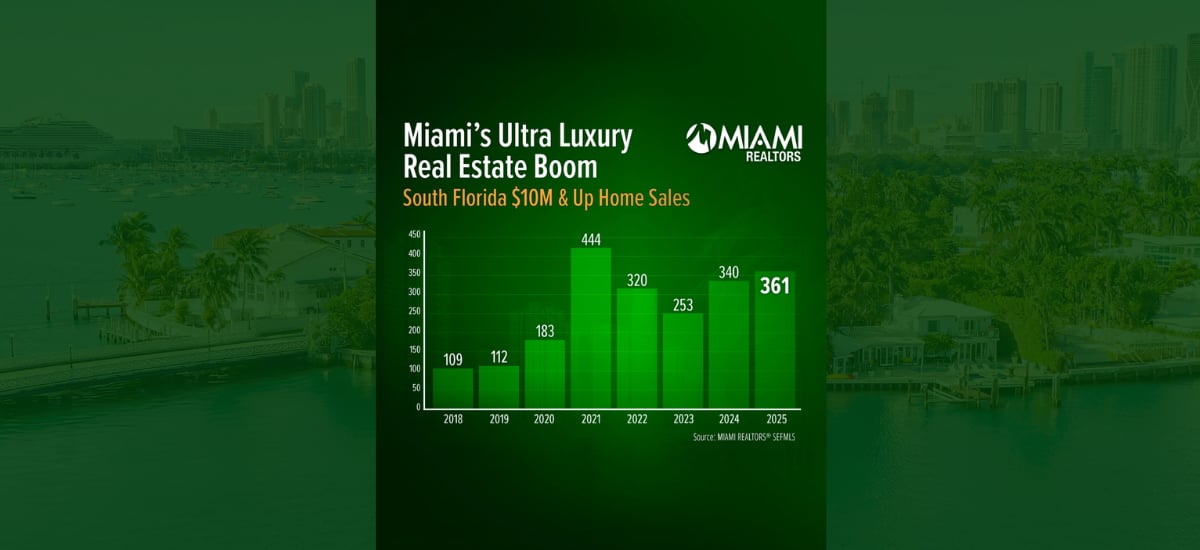
Moving to Miami in 2026 places you at a unique market inflection point. After several years of historic growth, the region has transitioned into a "maturation" phase. According to Q1 2026 forecasts, the median home price in the Miami Metro area has settled at $485,000, representing a sustainable 7.2% year-over-year increase. Unlike the frantic years, current market data shows that inventory levels have returned to their highest point since 2019, finally returning negotiating power to those considering moving to Miami.
The economic case remains strong. Miami-Dade continues to lead the nation in international migration and job growth in tech and finance. However, buyers must now navigate a "higher-for-longer" interest rate environment, with Florida 30-year mortgage rates starting 2026 at approximately 5.99%.
This growth is fueled by:
-
The "Finance Migration": High-net-worth firms from New York and Connecticut continue to capitalize on Florida’s zero state income tax.
-
Remote Work Hub: 28% of newcomers cite work flexibility as their primary motivator for moving to Miami.
-
Healthcare Expansion: High-demand roles in healthcare practitioners and technical occupations now command median salaries between $81,000 and $133,000.
However, moving to Miami also requires a candid assessment of localized costs. While the Florida Office of Insurance Regulation has noted a stabilization in the property insurance market—with dozens of carriers filing for 0% rate increases or even slight decreases in late 2025—the state still faces the nation's highest average premiums. Additionally, the Bureau of Labor Statistics reports that while inflation is cooling, the "Cost of Living" in the Miami-Fort Lauderdale area has seen a 2.5% increase over the past year, with shelter and food costs remaining primary drivers.
Ultimately, whether moving to Miami is a "good" idea depends on your 2026 priorities. If you are seeking a global culture, a #1 ranked job market, and year-round outdoor access, the current recalibration offers a more stable entry point than we have seen in years.
Explore our comprehensive neighborhood guides to understand which Miami communities match your lifestyle and budget.
What's the Real Cost of Living in Miami? (Rent vs. Buy Breakdown)
While moving to Miami often begins with a look at median prices, surface-level comparisons can be deceptive. As of early 2026, the median home price in Miami-Dade has settled at approximately $485,000, while median rent for a two-bedroom apartment has stabilized at $3,200. On paper, a mortgage on a $485,000 home with 20% down at current Florida mortgage rates of 5.99% results in a principal and interest payment of roughly $2,320—seemingly cheaper than rent. However, the "hidden" costs of ownership in Florida significantly shift the math.
|
Expense Category |
Renting (2BR) |
Buying ($485K Property) |
|
Base Payment |
$3,200 |
$2,320 (P&I at 6.0%) |
|
HOA/Condo Fees |
Included |
$850 average* |
|
Property Taxes |
Included |
$700/month** |
|
Insurance |
Renter's: $25 |
Homeowner's: $1,366*** |
|
Maintenance |
$0 |
$200 average |
|
Total Monthly |
**$3,225** |
$5,436 |
*Reflects 2026 increases due to mandatory structural reserve requirements (HB 913).
**Based on Miami-Dade’s 2026 millage forecasts for non-homesteaded $485k property.
***Reflects the 2026 Florida average premium for Miami, which is now the highest in the nation.
The $1,835 monthly difference—or $22,020 annually—is the "premium" of ownership before considering your $123,000 down payment and closing costs. For those moving to Miami, these figures define the lifestyle budget:
-
Single Professionals: Budget $4,800–$6,500 monthly for comfortable urban living.
-
Families of Four: Typically require $8,500–$13,000 monthly, depending on neighborhood and school choices.
Schedule a consultation with our team to build a personalized budget model based on your specific situation.
How Do I Choose the Best Area to Purchase a Home in Miami When Relocating?
Geography determines everything in Miami—your commute, your daily lifestyle, even your insurance premiums. Flood zones alone can swing homeowners insurance by $3,000–$8,000 annually. School district boundaries shift property value by 15–30%. Traffic patterns mean a 6-mile commute can take 15 minutes or 50 minutes.
This is why successful relocations almost universally begin with renting. You need 6–12 months on the ground to understand these nuances. Miami-Dade County spans 2,431 square miles—larger than Rhode Island. What works theoretically on a map fails practically when you're sitting in I-95 traffic at 8:15 AM.
Start by identifying your non-negotiables: commute constraints, school requirements, walkability preferences, cultural priorities. Visit neighborhoods at different times—weekday mornings, evenings, weekends. Brickell pulses with energy on Friday nights but feels sterile on Sunday mornings. Coral Gables offers consistent family-friendly ambiance but lacks nightlife intensity.
Research flood zones through FEMA's Flood Map Service Center. Properties in Special Flood Hazard Areas (Zones A or V) require flood insurance, adding $1,500–$6,000+ annually. Miami's highway system includes tolls that add $150–$300 monthly for typical suburban-to-downtown commuters.
Which Miami Neighborhoods Are Most Popular Among People Relocating for Work or Lifestyle?
|
Neighborhood |
Best For |
Median Price |
Avg Rent (2BR) |
Character |
|
Brickell |
Young professionals |
$520,000 |
$3,400 |
Urban, walkable |
|
Coral Gables |
Families, executives |
$1,200,000 |
$3,800 |
A-rated schools, prestige |
|
Wynwood/Edgewater |
Creatives, remote workers |
$480,000 |
$3,100 |
Artsy, evolving |
|
Doral |
Families, Latin ties |
$450,000 |
$2,600 |
Suburban, bilingual |
|
Coconut Grove |
Families, nature lovers |
$950,000 |
$3,500 |
Village feel, waterfront |
|
Aventura |
Luxury condo buyers |
$575,000 |
$3,300 |
High-rises, shopping |
The rent-to-price ratio varies dramatically. In Brickell, high HOA fees ($500–$900 monthly) make renting financially competitive for 5+ years. In Doral or Kendall, lower HOA fees shift the math toward buying after 3–4 years.
Browse active listings to see what's currently available in neighborhoods that match your criteria.
What Are the Top Considerations for Families Purchasing a Home When Moving to Miami?
School district boundaries trump every other factor for families. Miami-Dade County operates the fourth-largest school district in the United States, with quality varying dramatically between adjacent neighborhoods. An A-rated school versus a C-rated school shifts property values by 20–35% within a one-mile radius.
The highest-rated public schools cluster in Coral Gables (Coral Gables Preparatory Academy, George Washington Carver Middle), Pinecrest (Palmetto Elementary, Palmetto Middle, Palmetto High), and South Miami (Sunset Elementary). Private schools—Gulliver Prep, Ransom Everglades, Palmer Trinity—charge $25,000 to $40,000 annually per child.
Beyond schools, families prioritize outdoor space. Single-family homes with yards concentrate in Coral Gables, Pinecrest, Coconut Grove, Doral, and Kendall. Expect to pay $800,000+ for meaningful yard space in premium neighborhoods, or $450,000–$650,000 in suburban locations.
Is Miami Safe for Newcomers?
Miami's overall crime rate sits near the national average for major metropolitan areas, but neighborhood-level variation is extreme. Violent crime in Coral Gables, Pinecrest, and Key Biscayne remains well below national averages. Review actual crime data through the Miami-Dade Police Department's crime mapping tool rather than relying on reputation. Gated communities add security layers but command 10–15% price premiums.
The practical reality: families moving to established neighborhoods with strong schools report feeling safe and welcomed. Research specific streets, not just zip codes, and visit at various times before committing.
Review our detailed neighborhood profiles that include school ratings, crime statistics, and family-friendly amenities for every major Miami area.
What Are the Key Steps and Costs Involved When Buying a House During a Move to Miami?
Out-of-state buyers face unique complexities: coordinating remote closing, understanding Florida-specific regulations, timing the purchase with your move, and managing dual housing costs during transition.
Year-One Buying Costs (Itemized)
|
Cost Category |
Amount |
|
Down Payment (20%) |
$97,000 |
|
Closing Costs |
$12,000–$14,500 |
|
Home Inspection |
$400–$600 |
|
Moving Costs |
$4,500–$8,000 |
|
First-Year HOA |
$10,200 |
|
First-Year Taxes |
$8,400 |
|
First-Year Insurance |
$16,393 |
|
Total Year-One |
$148,893–$155,093 |
Most out-of-state buyers follow this sequence:
-
Months 1–3: Rent in Miami, explore neighborhoods, research schools, understand commute realities.
-
Months 4–6: Get pre-approved, identify target properties, make offers. Current market conditions (67 days average on market) give you negotiating room.
-
Months 7–9: Under contract, complete inspection, coordinate closing.
-
Month 10+: Close, move in, begin establishing Florida residency for homestead exemption.
Florida operates as a non-disclosure state, meaning actual sale prices aren't always publicly recorded immediately. Your agent's market knowledge becomes essential for accurate pricing. Multiple offer situations have largely disappeared in 2024–2025, returning negotiating power to qualified buyers.
Connect with our Miami specialists who guide out-of-state buyers through every step, from remote property tours to coordinating closings.
What Should Homebuyers Know Before Moving to Miami and Purchasing Real Estate?
Florida's regulatory environment differs substantially from high-tax states like New York, California, or Illinois. Understanding these differences prevents costly surprises and unlocks strategic advantages.
No State Income Tax: Florida imposes zero state income tax. For high earners relocating from New York (top rate: 10.9%) or California (top rate: 13.3%), this creates immediate six-figure annual savings. A $500,000 household income saves approximately $50,000–$65,000 annually in state taxes.
Homestead Exemption: Florida's homestead exemption reduces your property's assessed value by up to $50,000 for primary residences, lowering annual property tax by $1,000–$1,500. You must apply by March 1 of the year following purchase. Additionally, homestead protection caps annual assessment increases at 3% regardless of market appreciation, providing long-term tax predictability.
The Florida Insurance Crisis: What Every Buyer Must Understand
In 2026, we are seeing a shift: while base premiums have stabilized thanks to legislative reforms, the new "soft costs"—specifically mandatory flood insurance and condo reserve funding—now represent the biggest variables for your ROI.
The "insurance crisis" that peaked between 2022 and 2024 has transitioned into a phase of cautious stabilization. According to the Florida Office of Insurance Regulation (OIR), the entry of over 10 new private carriers and a 25% reduction in litigation has led to many homeowners seeing 0% rate increases or even slight decreases in early 2026. However, "moving to Miami" still requires navigating these high-impact variables:
-
Premium Disparity: Homeowners insurance in Miami now averages $5,300 to $7,000 for older properties, but new construction homes built to current codes often qualify for significantly lower rates.
-
The "15-Year Rule": Insurers in 2026 strictly enforce roof age. To secure competitive rates, properties must have a Wind Mitigation Inspection confirming impact-rated windows and secondary water resistance, which can reduce premiums by up to 45%.
-
Mandatory Flood Insurance: As of 2026, Citizens Property Insurance Corp. requires flood coverage for all policies with a dwelling limit of $400,000 or more, regardless of the flood zone. While the average NFIP premium in Miami-Dade is roughly $590, high-risk "V" or "A" zones can reach $2,500–$6,000 annually.
Condo-Specific Structural Reserves & Transparency (2026 Laws)
The deadline for the Structural Integrity Reserve Study (SIRS) has now passed. As of January 1, 2026, condo associations are strictly prohibited from waiving the funding of reserves for structural items like roofs and load-bearing walls.
Furthermore, under the new HB 1021 transparency laws, any association with 25 or more units must now provide you with digital access to these reserve studies and financial records via a mandatory website or app. For buyers in 2026, this means:
-
Fully Funded Budgets: Monthly dues are higher because associations must fund 100% of their structural reserves.
-
Special Assessments: Older buildings that deferred maintenance prior to the 2026 deadline are currently issuing assessments ranging from $25,000 to $150,000+ per unit.
-
Digital Access: You should now be able to review a building's safety reports and budget directly before making an offer.
Access our Florida homebuying checklist designed for out-of-state buyers, covering insurance requirements to homestead exemption applications.
What Are the Pros and Cons of Living in Miami?
Every relocation involves trade-offs. Miami's benefits attract tens of thousands of net new residents annually. Miami's challenges drive others back north after 18–24 months.
Miami Living: Honest Pros & Cons
|
Advantages |
Challenges |
|
Zero state income tax |
Property insurance $16,393 average (Miami) |
|
Year-round outdoor lifestyle |
June–Sept humidity brutal |
|
International culture, cuisine |
Traffic rivals Los Angeles |
|
Strong job growth in tech/finance |
Cost up 23% since 2020 |
|
Beach access 20–30 min |
Hurricane season June–Nov |
|
Thriving nightlife, art scene |
Public transit limited |
|
Remote work hub |
Summer tourism crowds |
The pattern among successful relocations: people who thrive in Miami prioritize the tax savings, international culture, and outdoor lifestyle enough to accept the traffic, insurance costs, and summer humidity. Those who struggle typically underestimated daily traffic impact and summer heat intensity.
Read testimonials from clients who recently relocated to Miami, including honest assessments of what surprised them most.
Do I Need a Car in Miami?
Yes, with one narrow exception. Miami remains fundamentally car-dependent outside a small urban core comprising Brickell, Downtown, and portions of Miami Beach.
If you live and work exclusively in Brickell or work remotely, you can survive without a car. Brickell offers Publix, Whole Foods, CVS, restaurants, and services within walking distance. Uber/Lyft cost $8–$15 for most Brickell-area trips. Budget $300–$500 monthly for ride-sharing if car-free.
Everyone else needs a vehicle. Public transit exists but remains limited and impractical for most commutes. Metrorail runs 23 miles with 23 stations. The Brightline train helps intercity travel but doesn't solve daily commuting.
Plan on owning a reliable, air-conditioned vehicle. Budget $400–$600 monthly for car payment, $150–$250 for insurance (Florida has second-highest auto insurance rates nationally), and $200–$300 for gas and tolls.
Explore neighborhoods where walkability and reduced car dependence are actually possible.
How Is the Job Market in Miami?
Miami's economy transformed dramatically since 2020. The city evolved from tourism-and-trade hub to emerging tech-and-finance center.
Tech Sector Growth: Major companies including Microsoft, Google, and Spotify expanded Miami offices. Tech sector jobs increased 34% between 2020–2024, with median salaries for software engineers ranging $95,000–$140,000. Senior roles command $150,000–$220,000.
Finance Migration: Hedge funds and private equity firms relocated from New York and Connecticut, driven by zero state income tax. Notable moves include Citadel and Elliott Management. Finance sector jobs expanded 19% since 2020. Median compensation for mid-level roles: $120,000–$180,000, with senior positions reaching $250,000–$500,000+.
Healthcare Expansion: Baptist Health, Cleveland Clinic Florida, and University of Miami Health System added thousands of positions. Median salaries: nurses $75,000, physicians $220,000, administrative roles $55,000–$85,000.
Salary Reality: Miami salaries typically run 10–20% below equivalent roles in New York or San Francisco. The zero state income tax partially offsets this gap for high earners. Remote workers maintaining high-cost-city salaries while living in Miami experience the most favorable economics.
Miami-Dade County unemployment stood at 2.8% in late 2024, below national average. Miami offers genuine opportunity in finance, tech, and healthcare. Remote workers gain tax advantages. Entry-level workers face higher cost-of-living challenges relative to wages.
Contact our team to discuss how Miami's job market aligns with your career and financial position.
How Does Miami Compare to Other Florida Cities?
Florida offers multiple markets with distinct characters and economics.
Florida's Major Cities: Comparative Analysis
|
Factor |
Miami |
Tampa |
Orlando |
Fort Lauderdale |
|
Median Home Price |
$615,000 |
$410,000 |
$385,000 |
$565,000 |
|
Median Rent (2BR) |
$3,200 |
$2,100 |
$1,950 |
$2,800 |
|
Primary Industries |
Finance, tech, trade |
Healthcare, tech |
Tourism, tech |
Tourism, marine |
|
Beach Access |
Excellent |
Good |
60 min |
Excellent |
|
International Flavor |
Very high |
Moderate |
Moderate |
High |
|
Traffic |
Severe |
Moderate-High |
Moderate |
High |
Tampa offers 30–35% lower housing costs with comparable job growth. The city lacks Miami's international character but provides easier navigation and shorter commutes.
Orlando serves families prioritizing affordability. The tech sector expanded significantly. Orlando offers lowest housing costs but requires acceptance of tourist-driven economy and summer heat without beach proximity.
Fort Lauderdale functions as "Miami-lite"—similar international character at 10–15% lower cost with less traffic congestion.
Miami offers maximum cultural vibrancy and economic opportunity at maximum cost. Tampa and Orlando deliver 70% of the lifestyle benefits at 65% of the cost. Your choice depends on whether Miami's specific advantages justify the premium.
Compare neighborhoods across South Florida markets to understand pricing and lifestyle differences.
What's the Average Rent or Home Price in Miami?
Miami's housing costs vary dramatically by neighborhood, property type, and proximity to coast.
Rental Market (Current Averages)
Urban Core: Brickell 2BR: $3,400–$4,800 | Downtown 2BR: $3,000–$4,200 | Wynwood 2BR: $3,100–$4,400
Coastal/Beach: Miami Beach 2BR: $3,800–$5,500 | Coconut Grove 2BR: $3,500–$5,000 | Key Biscayne 2BR: $4,000–$5,800
Family-Oriented: Coral Gables 2BR: $3,200–$4,500 | Pinecrest 3BR: $3,800–$5,500 | Aventura 2BR: $3,300–$4,600
Value Areas: Doral 2BR: $2,600–$3,500 | Kendall 2BR: $2,400–$3,200
Rental market softened in late 2024, with landlords offering concessions (one month free, waived fees) absent since 2019.
Sales Market (Current Medians)
Condominiums: Brickell: $450,000–$750,000 | Miami Beach: $550,000–$950,000 | Aventura: $400,000–$650,000
Single-Family Homes: Coral Gables: $1.1M–$2.5M | Pinecrest: $1.2M–$2.2M | Coconut Grove: $900,000–$1.8M | Doral: $450,000–$700,000
Inventory increased significantly in 2024–2025, shifting from seller's market to balanced/buyer's market. This creates negotiating opportunities absent during pandemic years.
View current listings filtered by your price range and neighborhood preferences.
Year-One ROI Analysis: Renting vs. Buying When You Move to Miami
The financial question isn't simply "Is buying better than renting?" but rather "Given my specific timeline, does buying deliver superior returns than renting plus investing my down payment elsewhere?"
The Mathematics: Three-Year Scenario
Renting Path: Total rent paid: $115,200 | Insurance: $900 | Moving costs: $4,000 | Total: $120,100
Buying Path: Down payment: $110,000 | Closing costs: $15,000 | Mortgage (36 months): $104,040 | HOA fees: $19,800 | Property taxes: $20,700 | Insurance: $12,600 | Maintenance: $7,200 | Selling costs: $36,000 | Total: $325,340
After three years, your property value needs to appreciate to approximately $600,000 (9% total appreciation) to break even with renting. At current appreciation rates (averaging 2–4% annually), you'll likely be net negative versus renting if you sell at three years.
Break-Even Timeline
The inflection point typically occurs at 4–5 years, depending on appreciation rate, rent increases, HOA fees, and interest rates.
The Homestead Advantage
Florida's homestead exemption and Save Our Homes assessment cap create asymmetric long-term advantage. Over 10 years, this cap saves owners $15,000–$35,000 in cumulative taxes. Combined with fixed mortgage payment while rent inflates, ownership math improves dramatically after year 5.
The Verdict: When to Rent vs. Buy
RENT IF:
-
Your commitment timeline is under 3 years
-
You're still exploring neighborhoods
-
You have less than 15% down payment
-
You value maximum flexibility
BUY IF:
-
You're committed to Miami for 5+ years
-
You've identified your target neighborhood
-
You have 20%+ down payment
-
You want to lock in housing costs and build equity
-
You qualify for homestead exemption
The financially optimal decision often differs from the emotionally satisfying decision. There's no universal right answer—only the right answer for your specific situation, timeline, and priorities.
Schedule a personalized financial consultation with our team to run these numbers based on your exact budget and timeline.
Making Your Miami Move Decision
Your rent-versus-buy decision crystallizes around three variables: timeline certainty, capital position, and neighborhood knowledge.
If you're arriving in Miami without confirmed long-term commitment, rent first. Spend 6–12 months learning traffic patterns, exploring neighborhoods, confirming the city matches your expectations. The $30,000–$40,000 in rent payments buys invaluable knowledge that prevents expensive buying mistakes.
If you're relocating with high certainty—confirmed job, family commitment, completed neighborhood research—buying makes financial sense on a 4–5 year timeline, assuming you have 20% down payment and qualify for homestead exemption. The combination of fixed housing costs, forced equity building, and Florida's tax advantages creates compelling wealth-building over time.
The market conditions in 2025–2026 favor buyers more than any time since 2019. Inventory is up, days on market extended, negotiating power returned. If you're financially prepared and have identified the right property, conditions support action.
But rushing into homeownership without understanding Miami's unique costs—insurance crisis, HOA fees, flood zones, traffic patterns—sets you up for buyer's remorse. The successful relocations we see invariably involve measured decision-making, thorough research, and honest assessment of priorities.
Your Miami move succeeds when your housing decision aligns with your financial capacity, timeline certainty, and lifestyle priorities—not because you followed generic advice about homeownership.
Ready to make your move with expert guidance? Contact the Joelle Oiknine Group for personalized consultation on rentals, purchases, neighborhoods, and every aspect of your Miami relocation.
Frequently Asked Questions
Is moving to Miami a good idea in 2026?
Yes, if you have stable remote income or a confirmed job, can afford elevated cost of living, and appreciate year-round outdoor access despite summer humidity and hurricane season.
What's the cost of living in Miami?
Single professionals should budget $4,500–$6,000 monthly minimum, while families of four typically need $8,000–$12,000 monthly depending on neighborhood and lifestyle.
What are the best neighborhoods for families in Miami?
Coral Gables, Pinecrest, Coconut Grove, and Key Biscayne consistently rank highest for families due to top-rated schools, safety, and family-friendly amenities.
What are the best neighborhoods for young professionals in Miami?
Brickell, Edgewater, Wynwood, and Miami Beach offer walkability, nightlife, and proximity to downtown employment centers.
Do I need a car in Miami?
Yes, a car is essential for most Miami residents except those living and working exclusively in Brickell or Downtown.
Is Miami safe for newcomers?
Miami's overall crime rate is average for major U.S. cities, but safety varies significantly by neighborhood—research specific areas thoroughly.
How long should I rent before buying in Miami?
Most relocation experts recommend renting 6–12 months to learn neighborhoods, understand traffic patterns, and confirm Miami is right for you long-term.
What's the average down payment needed to buy in Miami?
Plan for 20% down payment ($100,000–$125,000 on median-priced home) to avoid PMI and secure competitive interest rates.
How does Miami compare to Tampa for cost of living?
Tampa offers 30–35% lower housing costs than Miami with similar Florida lifestyle benefits, though Miami has stronger international business connections.
What's the break-even point for buying vs. renting in Miami?
Most buyers need to stay 4–5 years to break even on transaction costs compared to renting, assuming typical appreciation rates and homestead exemption benefits.
What are the hidden costs of buying in Miami?
The biggest variables are HOA fees (which now include mandatory structural reserves), Florida homeowners insurance (which averages over $16,393 annually for Miami homeowners in 2026), and potential special assessments for older condo buildings under new safety laws.
Can I work remotely from Miami if my company is based in another state?
Yes, many remote workers relocate to Miami while maintaining jobs based elsewhere, though verify your company's policies and understand tax implications.
How do I establish Florida residency for homestead exemption?
File homestead application by March 1 following purchase year, obtain Florida driver's license, register vehicles, register to vote, and declare Florida as primary residence.
What should I know about hurricane season before moving to Miami?
Hurricane season runs June–November with peak activity August–October; prepare emergency kit, understand evacuation procedures, maintain adequate insurance, and expect occasional disruptions.
Are there areas in Miami where I don't need flood insurance?
Many properties outside Special Flood Hazard Areas don't require flood insurance, but lenders increasingly require it regardless—check property-specific flood zone designation before purchasing